How to Create a Walk-In Dressing Room That Makes the Most of Every Inch - 14 Ideas
08 august 2026A walk-in dressing room that makes the most of every inch starts with a layout, not another basket. I've watched closets swallow expensive organizers because the rods were wrong and the floor stayed jammed. Measure first. Then give every shirt, shoe, and morning decision a deliberate place.
- Measure your walking closet before you buy anything
- Map your built-in walk-in closet around how you get dressed
- Build the Two-Rod Rhythm for everyday clothes
- Anchor walk in closet design with one deep drawer bank
- Paint the walls before the shelves go in
- Hang one full-length mirror where your eye needs it
- Layer light with the Three-Height Light Stack
- Choose open shelves over deep cubbies for bags
- Float a slim island only if your aisle can handle it
- Mix velvet hangers with a few sturdy wood ones
- Add a seated spot with the Soft Landing Rule
- Frame shoes like a collection, not a pile
- Use baskets for overflow, then label what you can’t see
- Finish your walkin closets with one personal display
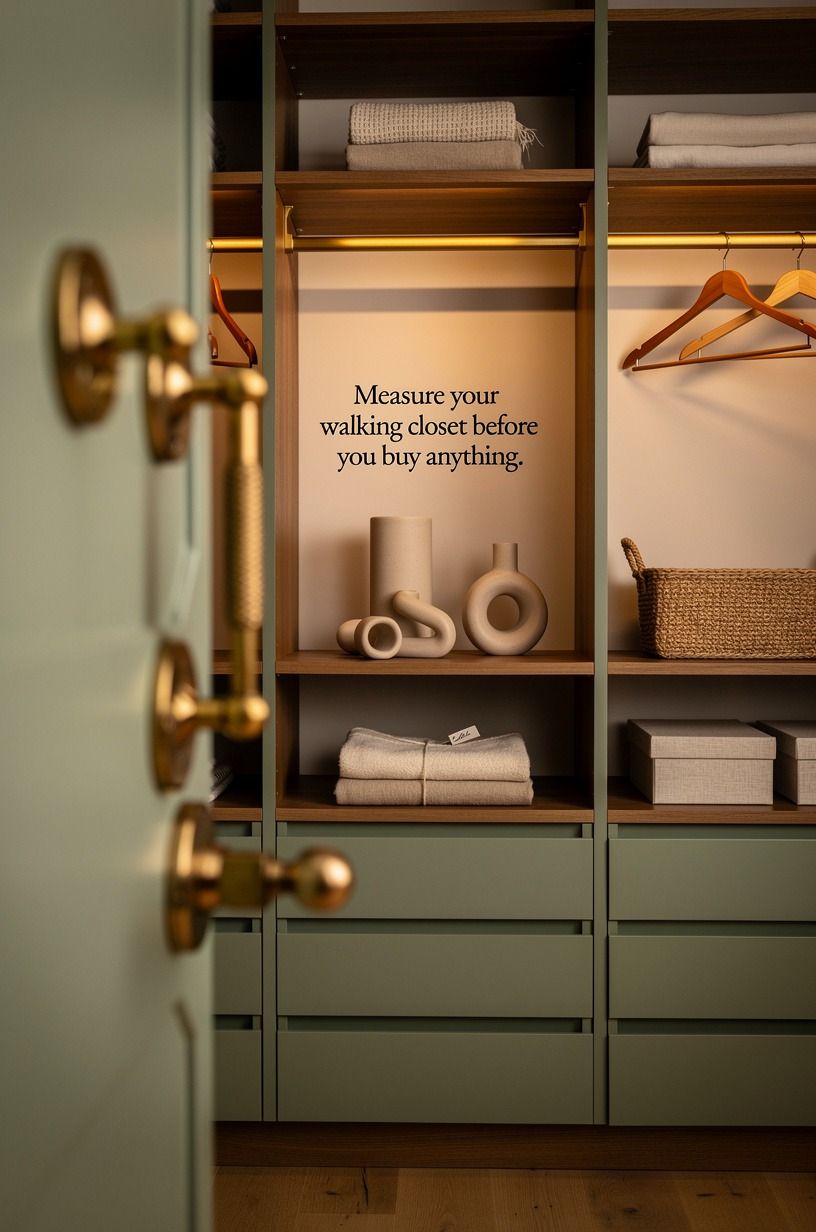
1Measure your walking closet before you buy anything
Start with the room’s clear floor area, door swing, outlet locations, and the awkward corners you’d rather ignore. You need a comfortable 6x8-foot closet for a true dressing-room feel, though a 4x4-foot minimum can still work if you keep the center open. Write it down on paper, including baseboards and window trim.
I’d skip buying a ready-made system before this step. A gorgeous IKEA PAX frame is useless if its doors collide with your entry, and you’ll resent that mistake every rushed Monday.
Keep at least one calm route from door to mirror. Your room should feel airy, not like you’re sidestepping hangers.
And measure twice. The tape measure doesn’t care what looked roomy in a showroom.
2Map your built-in walk-in closet around how you get dressed
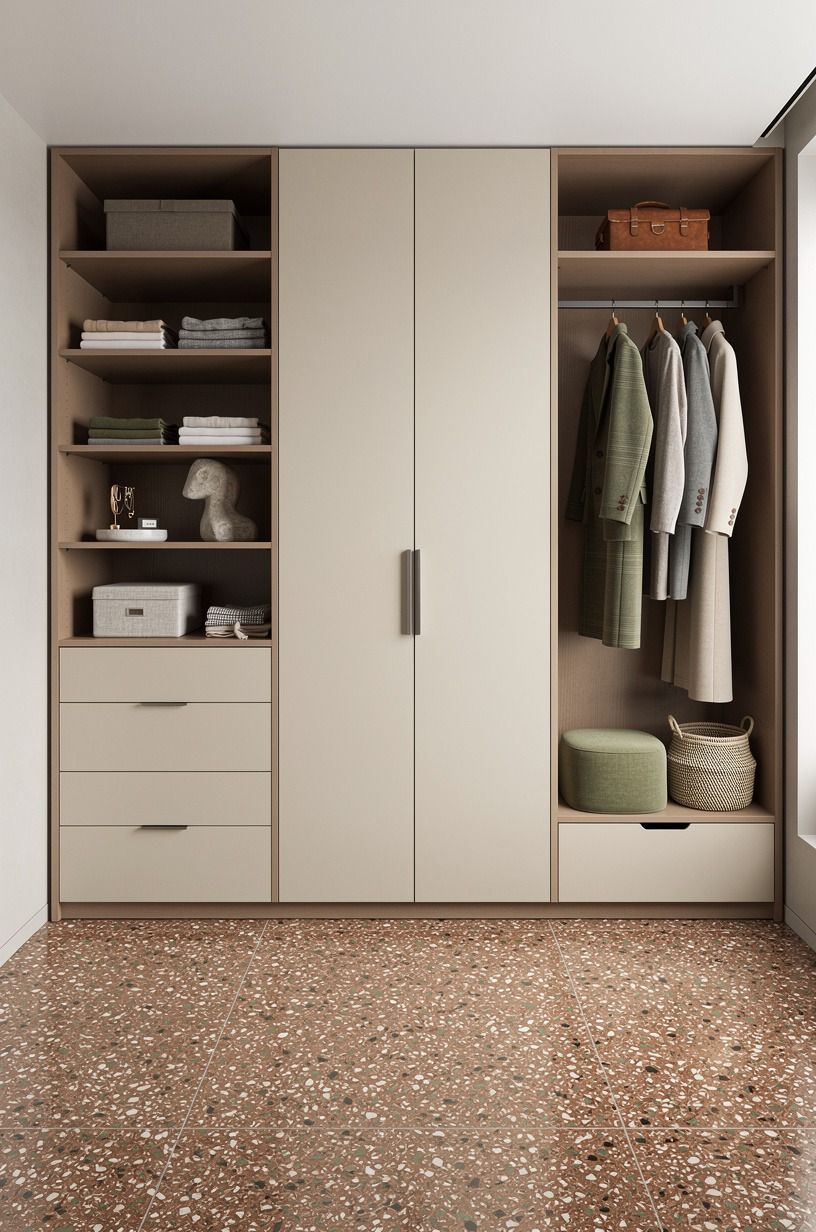
Put daily clothes closest to where you naturally stand, then move occasion pieces farther out. Your jeans, work shirts, and underthings deserve the easy reach; your ski jacket doesn’t. This is the Morning Orbit Method, and it stops you from pulling half your wardrobe out just to find one black sweater.
Give yourself zones: hanging, folding, shoes, accessories, and a small landing spot for tomorrow’s outfit. A 14-inch shelf depth holds folded knits without turning them into a dark cave. I prefer shallow shelves over deep ones because you can see every stack, even when you’re tired.
But don’t create zones based on store labels. Create them around your own habits. If you always drop watches by the door, your drawer should live there.
3Build the Two-Rod Rhythm for everyday clothes
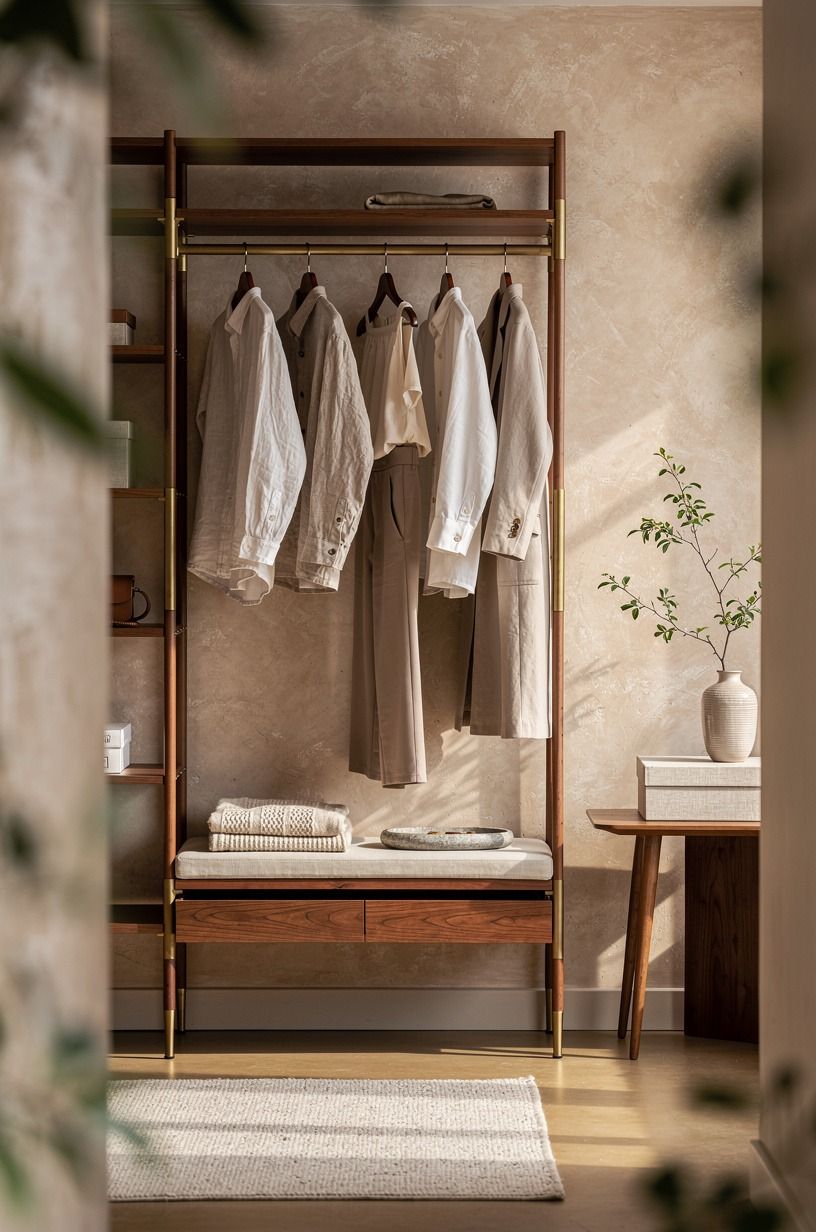
Install double-hang rods at 42 inches and 84 inches when your wardrobe leans toward shirts, skirts, and folded pants. Your eye gets a pleasing vertical rhythm, and your floor stays clear for a bench or hamper. Use aged brass closet rods if you want a refined look that works beautifully with clay walls and hand-applied Venetian plaster.
For longer dresses and coats, leave one full-height bay. You don’t need three.
I made that error once, then watched empty vertical space sit above a few dresses while my T-shirts fought for room below. One long-hang section is usually enough.
Your clothing should move without scraping the wall. That tiny bit of breathing room feels surprisingly calming.
4Anchor walk in closet design with one deep drawer bank
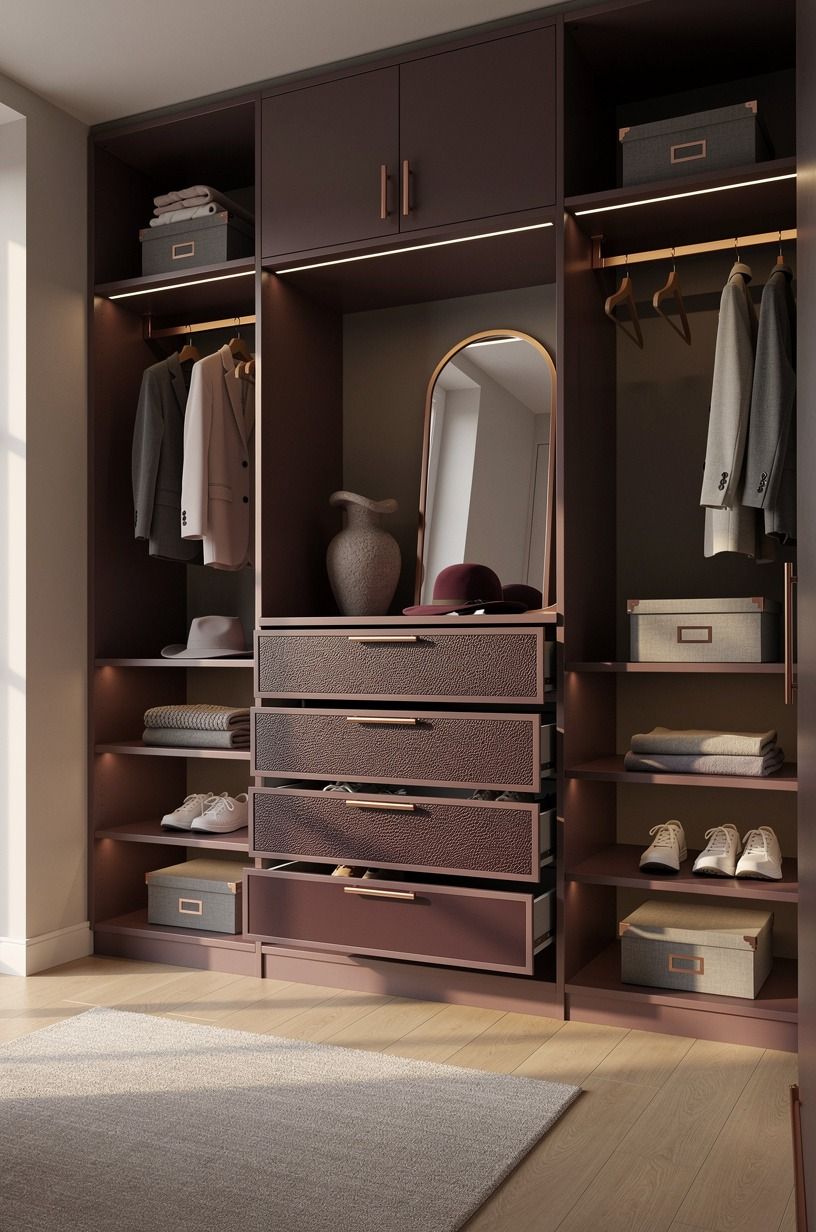
A drawer bank gives your walk in closet design a visual center and hides the small stuff that makes open shelving look messy.
5Paint the walls before the shelves go in
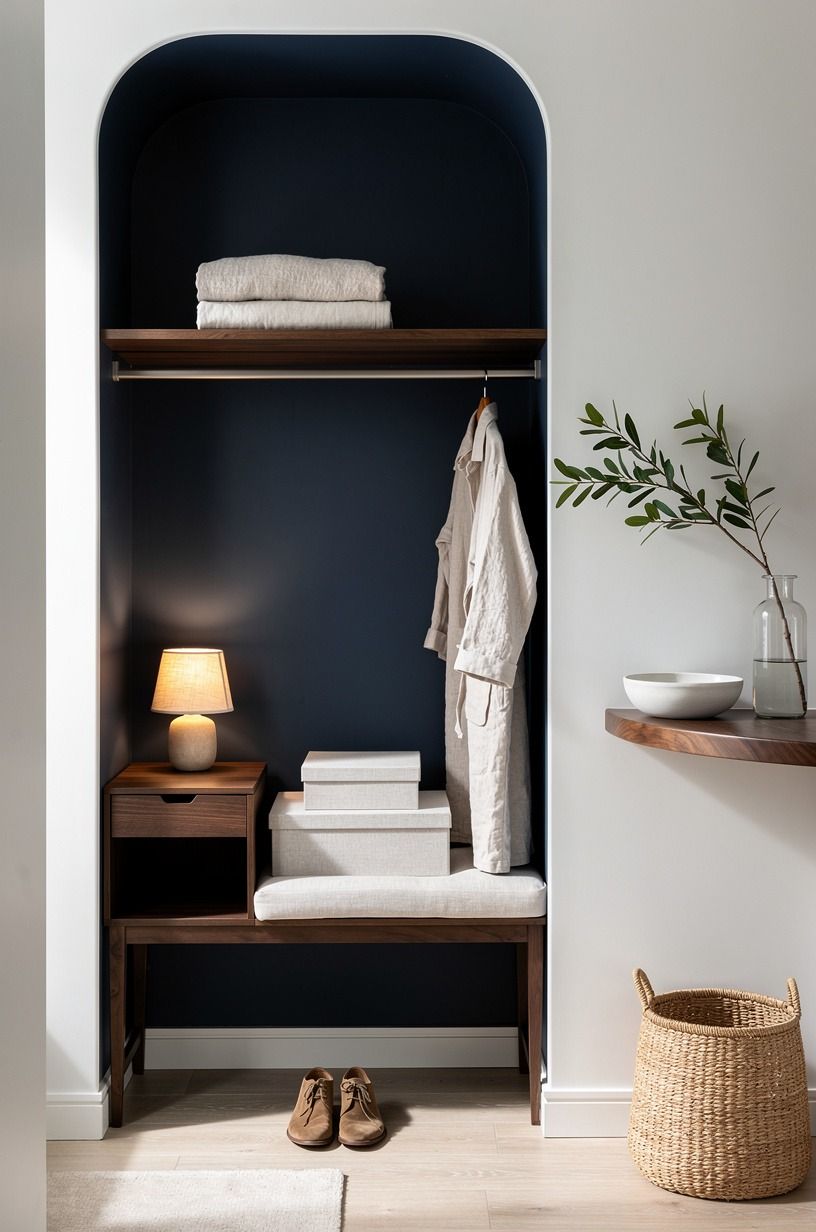
Paint first, especially if you’re installing white shelving. Farrow & Ball All White No. 2005 gives a bright, gentle background that doesn’t turn icy under warm bulbs. If your closet has little natural light, this is the safer call than a dramatic charcoal that eats the corners.
Use Sherwin-Williams Alabaster SW 7008 when you want a slightly creamier wall behind walnut shelving. Your clothes will read more accurately, and the room will feel softer at night. I’ve seen people choose stark white because it sounds clean, then wonder why their beige sweaters look gray.
And leave the ceiling light too. A painted ceiling makes the whole room feel finished, not merely fitted out.
6Hang one full-length mirror where your eye needs it
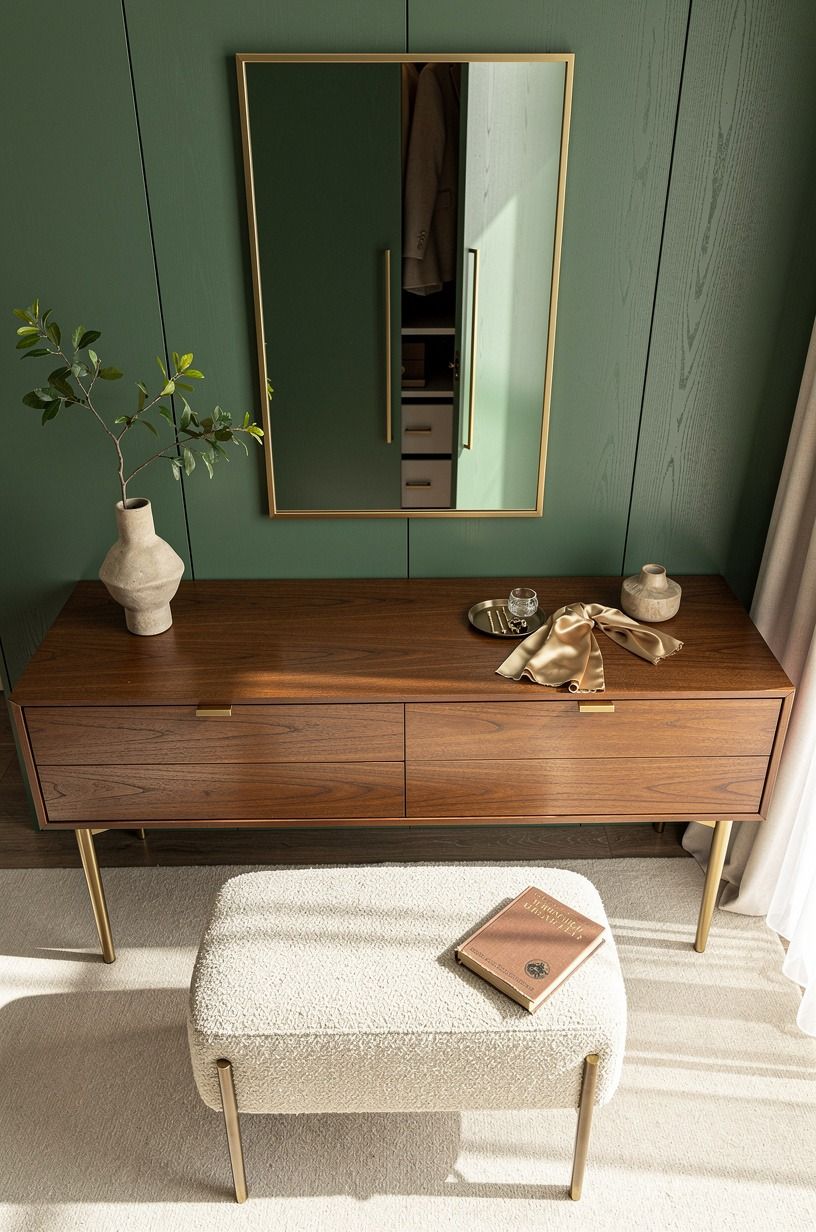
Place a full-length gold-framed mirror at the end of your sightline or beside the dressing zone. You want to step back without blocking a drawer, so a narrow wall is often better than the obvious one. A mirror also catches light and makes a small walk in wardrobe design feel more open.
Mount it securely if the room is busy, or lean it only where it can’t slide behind a door. Your reflection needs enough distance to show an outfit from head to toe, not just your shoulders and a pile of shoes. Who wants to judge trousers from six inches away?
I’d avoid mirrored closet doors here. They multiply visual clutter, while one intentional mirror gives you the useful view and nothing more.
7Layer light with the Three-Height Light Stack
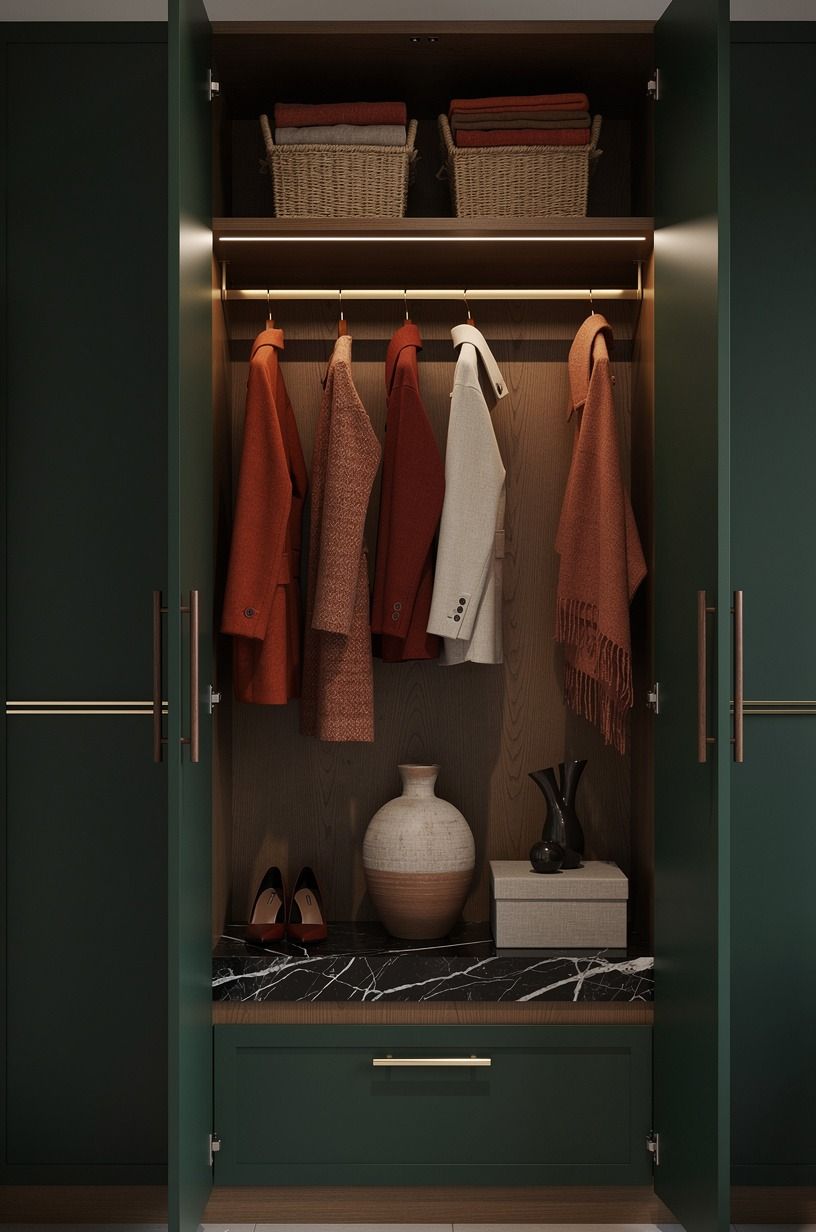
Use three levels of light: overhead for general visibility, rod lighting for clothes, and a low glow near the mirror or drawers. LED rod lighting typically costs $30-$150, and it makes dark navy, black, and brown clothing much easier to sort. Your closet will feel luxurious without requiring a huge renovation.
Choose warm bulbs, not blue-white ones. A soft pool of light on the floor makes the room welcoming at 6 a.m., while harsh bulbs make everyone look a little haunted. I’m serious.
Add a small brass sconce near your mirror if hardwiring is possible.
But keep every light source dimmable. You’ll want brightness for packing and a quieter mood when you’re winding down.
8Choose open shelves over deep cubbies for bags
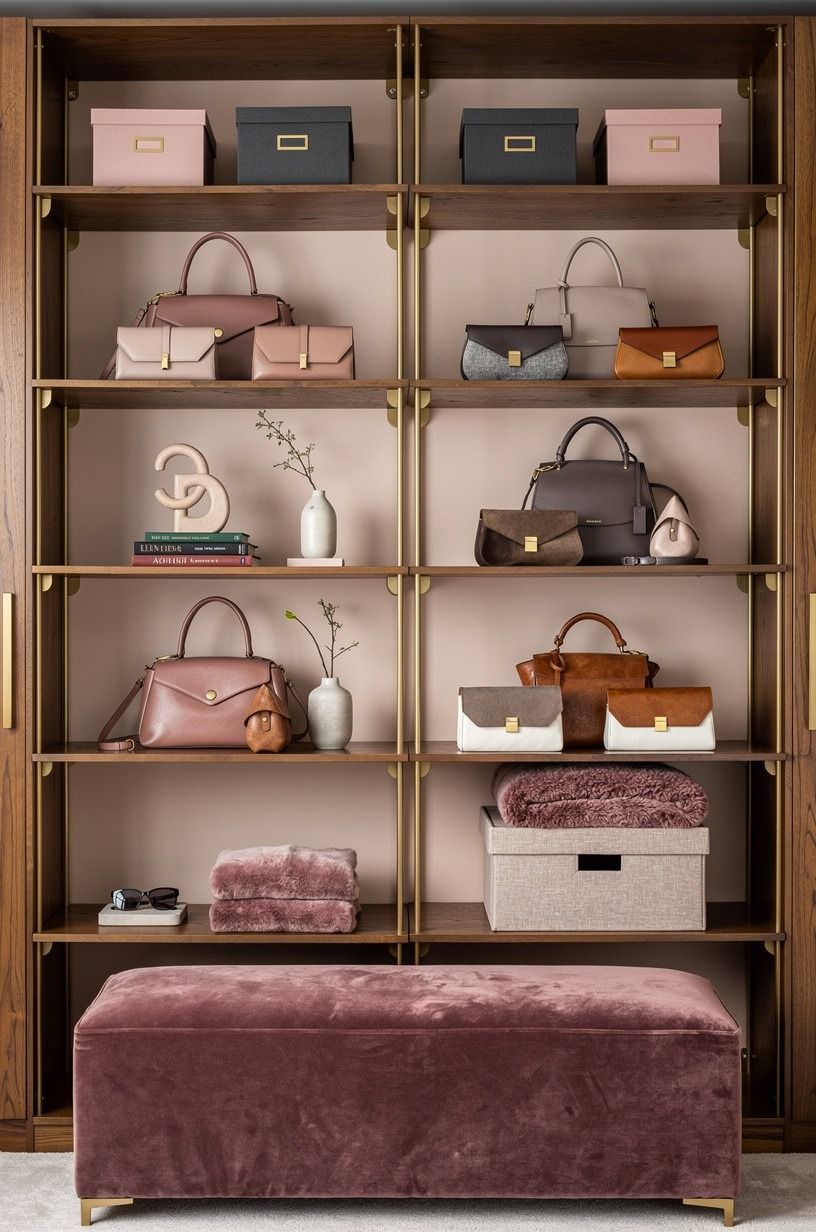
Use open, shallow shelves for handbags, hats, and folded denim.
9Float a slim island only if your aisle can handle it
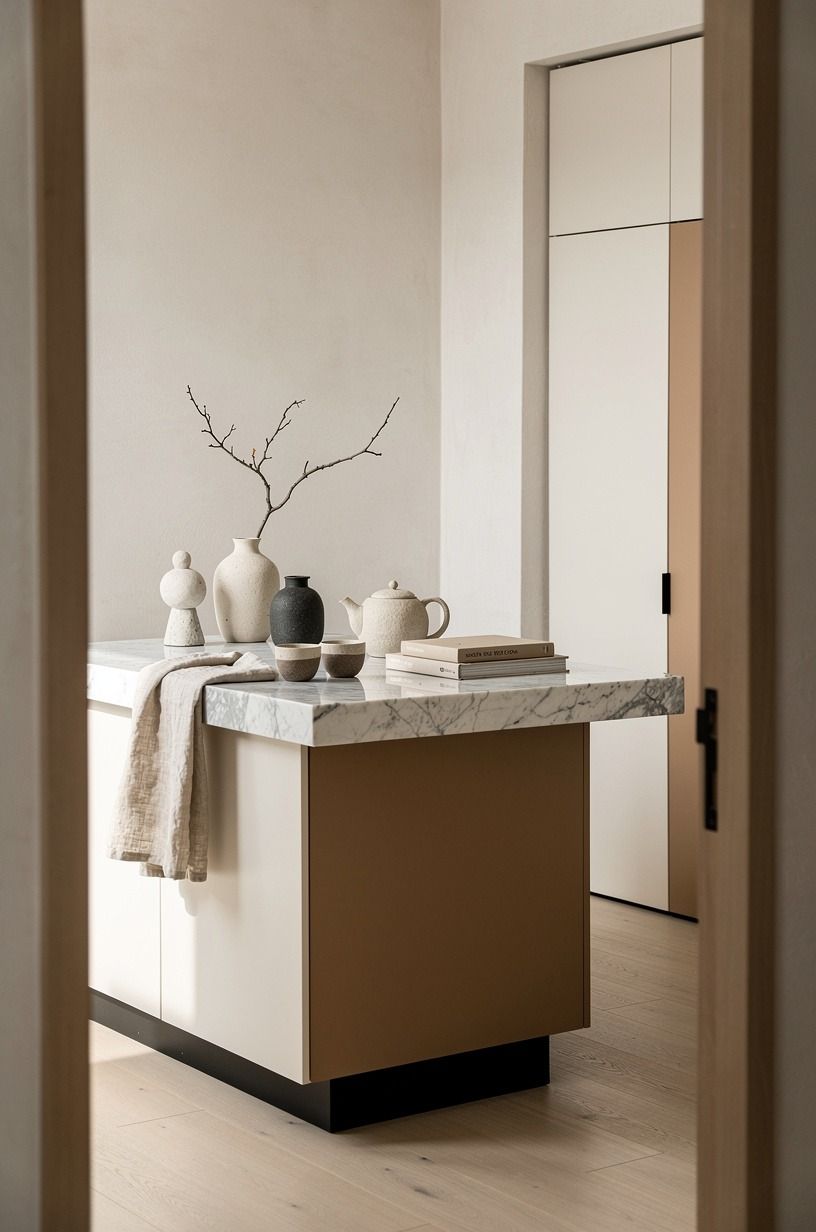
A center island works when you still have room to walk around it comfortably. Typical closet islands run 24-36 inches wide, and a narrow one can hold jewelry, folded tees, and a tray for tomorrow’s clothes. Your layout needs circulation more than it needs a dramatic focal point.
Choose Carrara marble for a top that can take perfume bottles, belt buckles, and the occasional dropped shoe. Its subtle grey veining brings a tailored finish to warm white cabinetry and camel upholstery. If you don’t have the aisle width, use a rolling cabinet against one wall instead.
And don’t force an island into a small room. It’s the popular choice I’d tell you to skip, because a cramped walkway makes every other upgrade feel annoying.
10Mix velvet hangers with a few sturdy wood ones
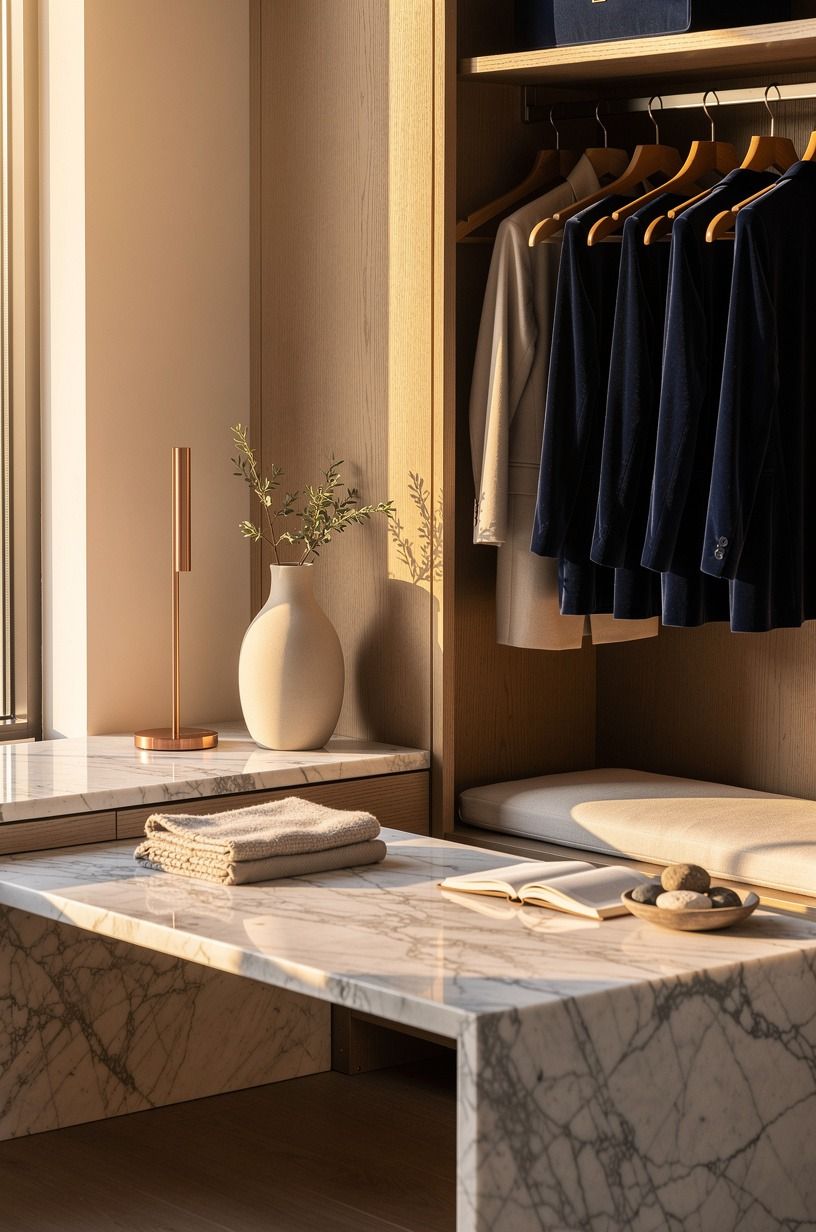
Use black velvet hangers for slippery blouses and slim shirts, then reserve natural beechwood hangers for coats, blazers, and heavy trousers. Velvet hanger sets typically run $20-$60, which is a modest change with an immediate visual payoff. Your rod will look less noisy, and your clothes won’t keep sliding to the floor.
Keep the hanger palette tight. Two materials are enough. I don’t love rainbow plastic hangers, even in a playful room, because they break the quiet, harmonious line you worked hard to create.
Your best pieces deserve support that doesn’t pinch their shoulders. And yes, matching hangers make getting dressed feel more peaceful!
11Add a seated spot with the Soft Landing Rule
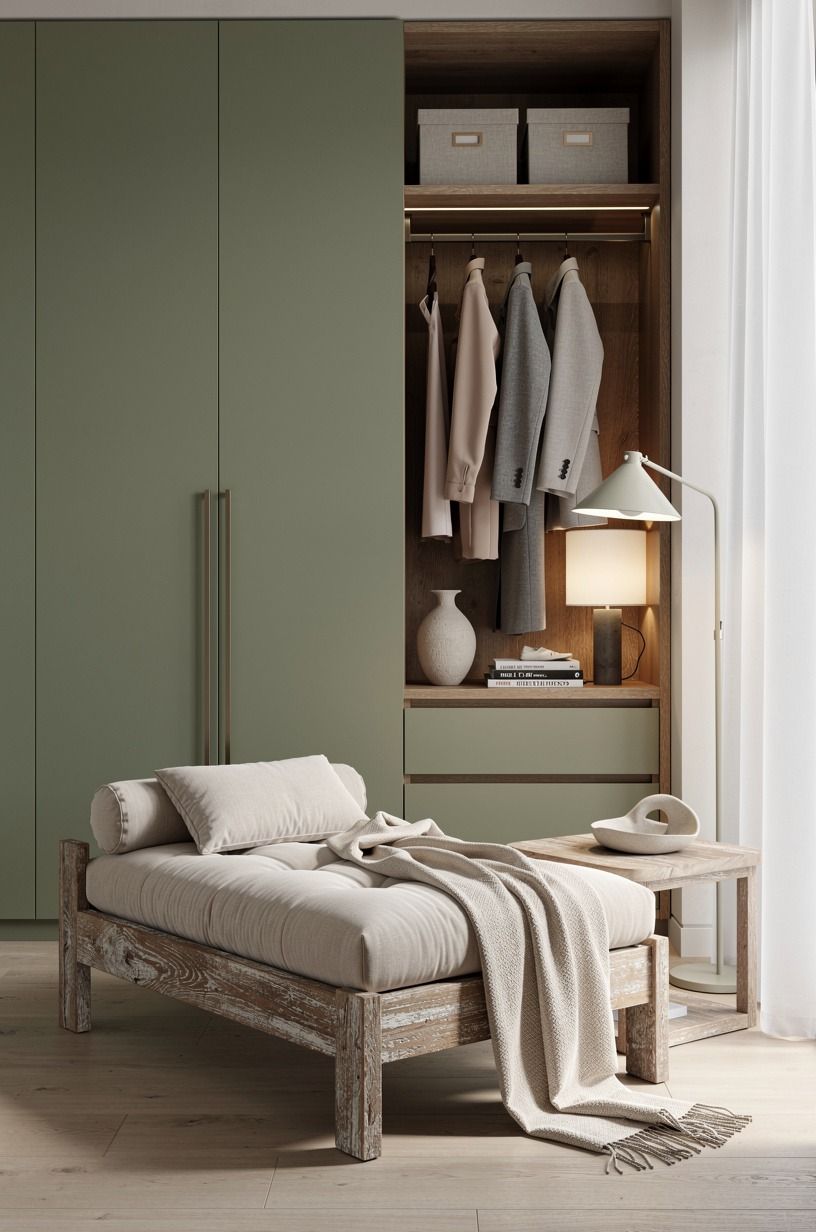
Give yourself somewhere to sit while pulling on boots, setting down a handbag, or deciding whether the outfit works. A compact Target Threshold upholstered ottoman adds a comforting spot without demanding much floor space. Your bench should tuck beneath a window, beside a mirror, or at the end of a shelf run.
Choose fabric with some texture: reclaimed weathered teak paired with a loose linen cushion works especially well in a sage-green room. You’ll want softness, but not a giant tufted bench that becomes a laundry shelf by Thursday. Been there.
If your room is narrow, use a lidded storage ottoman. Your extra blankets, travel bags, or seasonal shoes stay out of sight, and the room still feels serene.
12Frame shoes like a collection, not a pile
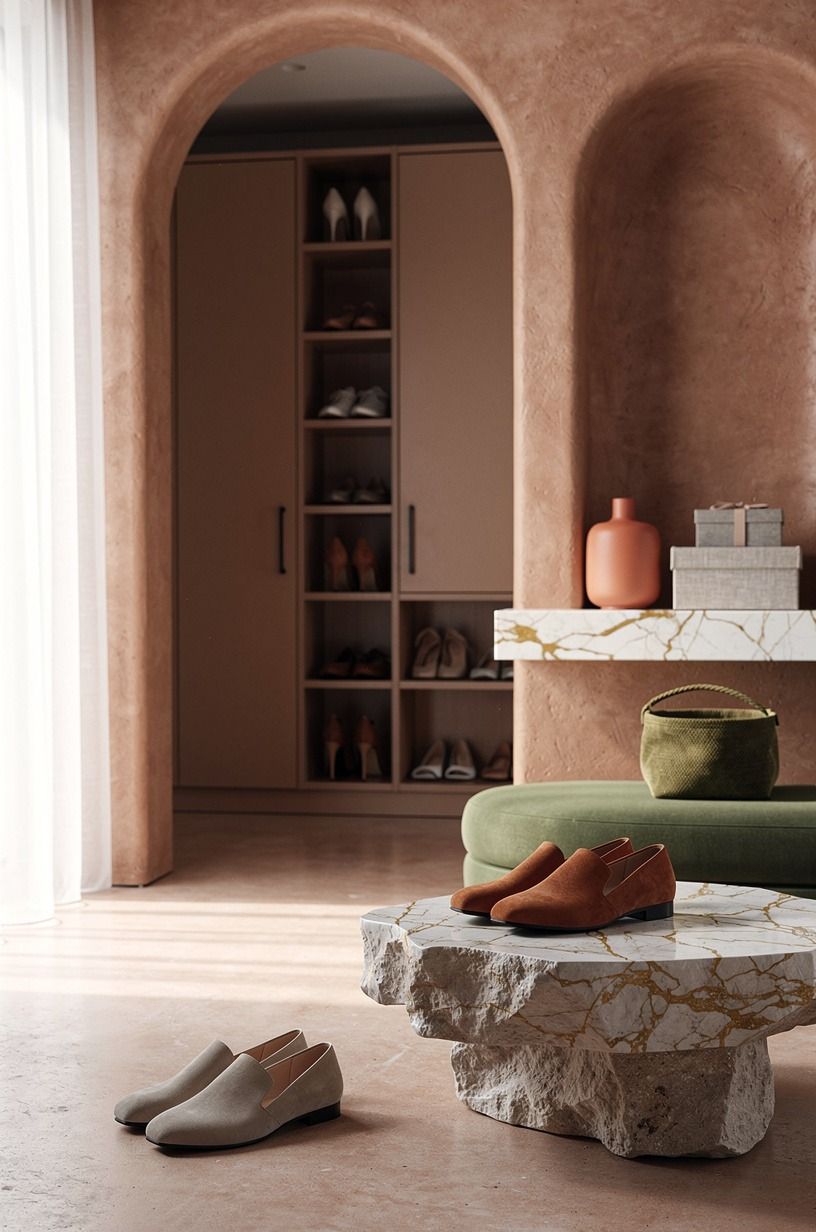
Line shoes on angled shelves or low open ledges where you can see the toes. Your everyday pairs should sit at eye level or just below it, while occasion shoes can live higher up. A modest IKEA BOAXEL shoe shelf makes more sense than a fancy closed cabinet if you’re the kind of person who forgets what’s behind a door.
Keep boots upright with simple inserts, and give sneakers one consistent row. I’d rather see six pairs arranged cleanly than twenty pairs stacked heel-to-heel in a bin. The latter saves space only until you need the pair at the bottom.
But leave some empty shelf space. It makes the room feel intentional, and it gives new shoes somewhere to land.
13Use baskets for overflow, then label what you can’t see
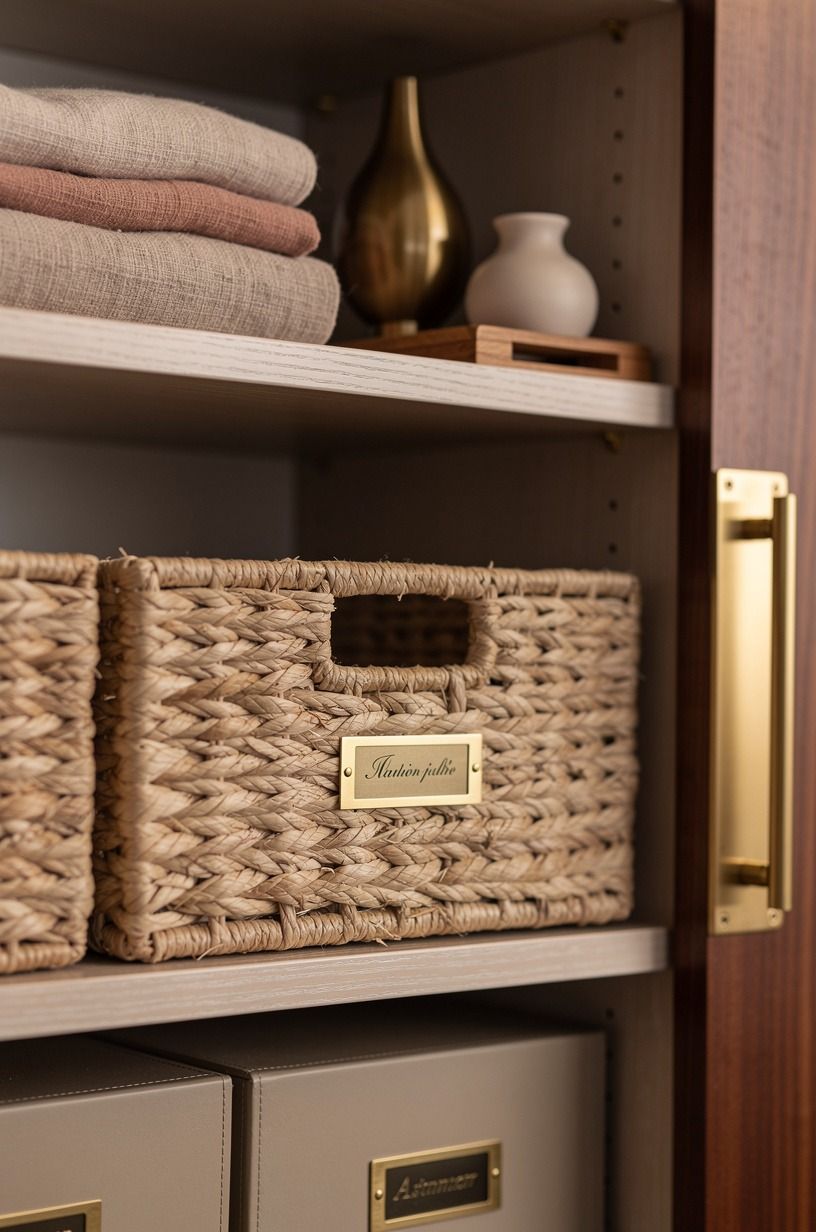
Baskets are for categories that shift: swimwear, spare sheets, dry-cleaning bags, and seasonal accessories. Use water hyacinth storage baskets for a rustic note, or clean canvas bins if your room is more modern. Your labels should be plain and readable, not decorative script you can’t scan before work.
This is the One-Basket Limit: one container per overflow category, full stop. If it fills up, edit the category rather than buying another basket. You’ll keep your closet from becoming a beautiful-looking storage unit.
A small label maker earns its keep here. Your future self won’t remember which bin holds gloves after six months.
14Finish your walkin closets with one personal display
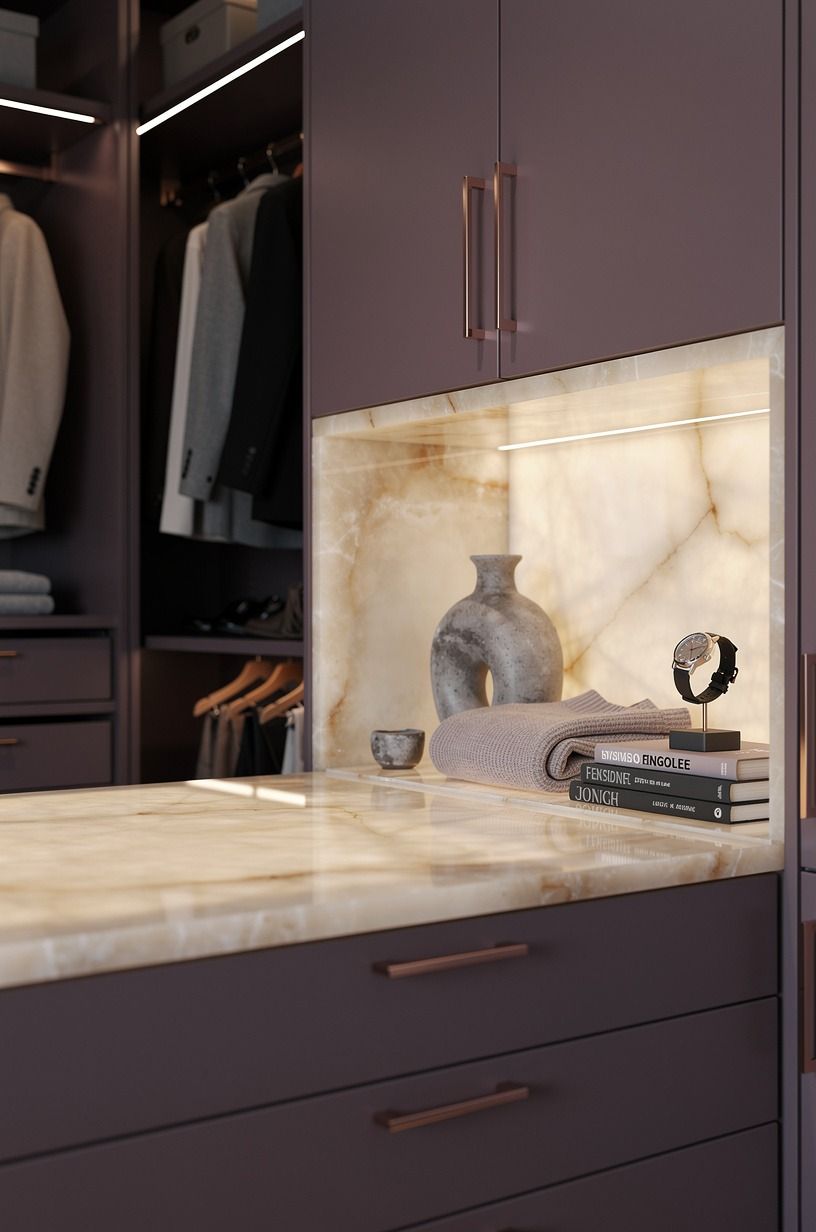
Choose one shelf or tray for perfume, a framed photograph, a favorite book, or a small ceramic bowl.
What a walk-in dressing room typically costs
Your budget depends on whether you’re organizing an existing footprint or building custom millwork from scratch. Start with the parts you touch every day: rods, drawers, lighting, and a mirror. Those choices affect your routine far more than decorative hardware.
A budget setup can look elegant if your measurements are right. I’d put money into drawers and lighting before an island, because you’ll use them every single day. A custom island is lovely, but a badly lit closet with an island is still a badly lit closet.
The honest decision I make before adding more storage
I’ve learned that most closet projects begin with the wrong question. People ask how much storage they can fit, when they should ask what they want to reach without thinking.
Those are different goals. A wall packed from floor to ceiling can look efficient, but if you need a stool to grab every sweater, your new room will feel less useful than the old one.
I made the “more is better” choice in a previous closet and added shelves above every rod. It looked polished for a day.
Then the upper shelves filled with random bags, old boxes, and the sort of items you keep because dealing with them feels annoying. The room got darker. My shoulders tensed every time I opened the door.
Not ideal.
Now I choose a little blank space on purpose. Your empty shelf is not wasted square footage if it lets your eye rest and gives your real life somewhere to expand.
Your wardrobe changes, your hobbies change, and your laundry situation definitely changes. A fixed room should have some flexibility built in.
The other thing I won’t compromise on is lighting. You can make inexpensive shelves look refined with warm, layered light; you cannot make a $10,000 built-in feel good under one cold ceiling bulb.
That’s my line. Spend where your hands and eyes notice it, then let the rest stay simple.
The Questions Worth Answering First
What is the best walk-in dressing room idea for a small closet?
The best choice is a double-hang wall plus one full-length mirror. You’ll gain usable storage while keeping your center clear. IKEA BOAXEL shelving and a narrow mirror create a bright, practical setup without swallowing your walking space.
Where can I buy walk-in dressing room pieces on a budget?
Start with IKEA, Target, Wayfair, and local second-hand listings. You can combine IKEA KOMPLEMENT drawers with thrifted wood stools or Facebook Marketplace mirrors. Your best savings usually come from buying the large furniture piece used, then adding new lighting.
How much does a walk-in dressing room makeover cost?
A basic makeover usually costs about $150-$800 when you reuse the existing room. Rods, bins, shelves, and lighting do most of the work. Painting, decluttering, and rearranging your current clothes cost nothing but time.
Can I create a walk-in dressing room on a budget?
Yes, and you don’t need custom cabinetry. Use matching hangers, paint the walls, and sort clothes by category before you buy anything. Velvet hangers and LED rod lighting deliver a polished look for far less than a built-in system.
Is a walk-in dressing room worth it in a small space?
Yes, because a small room makes every organized inch more valuable. Keep your aisle open and use vertical storage on one or two walls. Shallow shelves help you see what you own without making the closet feel closed in.
Is a walk-in dressing room a good idea for a rental?
Yes, if you use removable upgrades. Tension rods, peel-and-stick lighting, freestanding drawers, and leaning mirrors give you flexibility. Removable organization systems let your room feel personal without risking your security deposit.
Where I’d Start First
If I had to pick one step, I’d start with measuring the rods and aisle. You can’t organize around a layout that makes your shoulders turn sideways. Pin your measurements for later, then build the rest around the clear path you protected.