How to Style a Mantel Without a Fireplace, Even in a Blank Room
30 june 2026A mantel without a fireplace can work in a blank room if you style it like architecture, not random decor. I learned that after trying to fake the look with tiny accessories, and the whole wall felt lost. Once you give the mantel weight, height, and a reason to exist, your living room starts to settle. That's the part people miss.
What You'll Need for the Three-Layer Shelf Plan
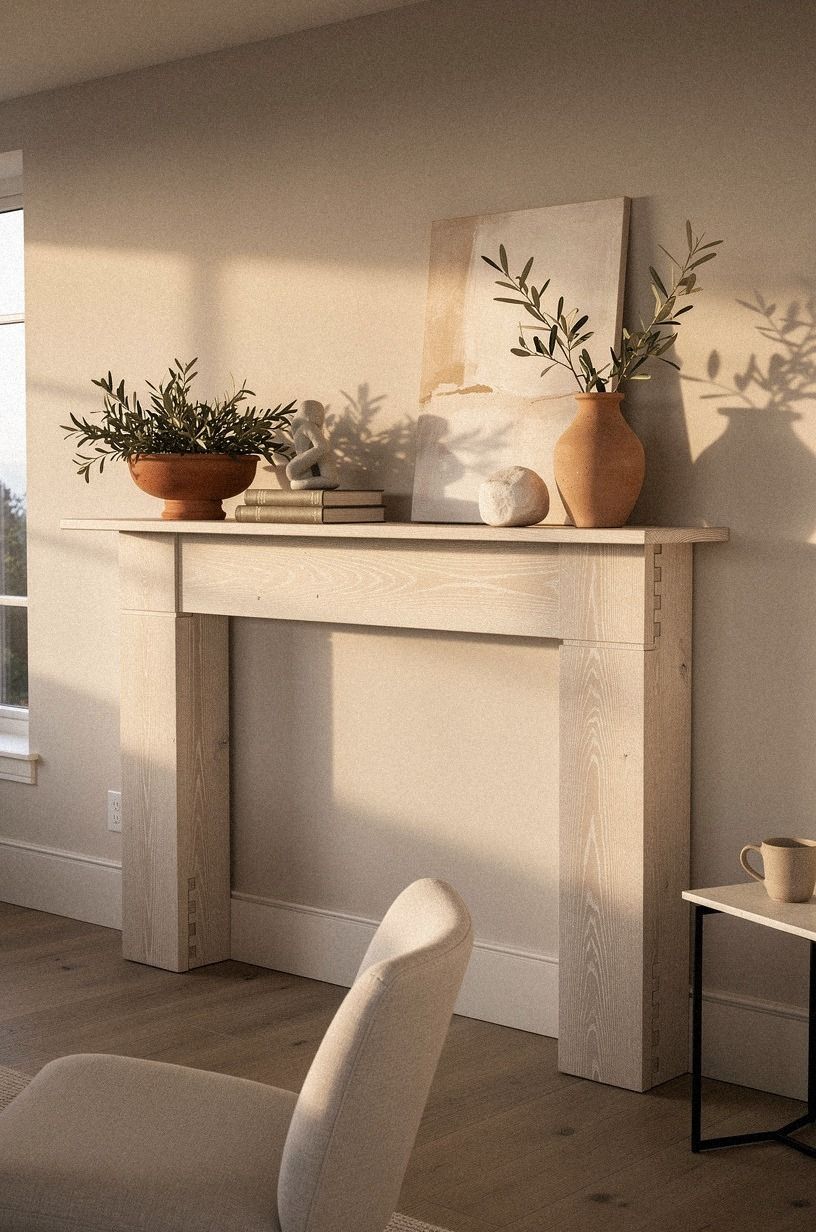
You don't need custom millwork to make this look believable. You need a mantel with enough visual weight, a wall that can carry the room, and a few pieces that read bigger than their price. I like a cerused white oak surround around 48 to 60 inches wide for most apartments and small living rooms, because it feels intentional without eating the whole wall.
If you're budgeting the whole room, use the mantel as one layer inside the larger plan rather than the only thing you buy. A faux mantel moment can start in the budget tier, especially if you already own art, candles, or a rug that helps the wall feel grounded.
- Start with a freestanding mantel against the main wall
- Anchor it with one oversized framed mirror
- Layer low artwork across the mantel shelf
- Hang sconces beside the faux mantel frame
- Build height with tall branch-filled vases
- Style the opening with stacked birch logs
- Place floor lanterns inside the empty surround
- Add a slim bench below the mantel
- Lean a statement canvas above the shelf
- Cluster candles across one mantel corner
- Finish with greenery trailing under the lip
- Float a narrow picture ledge just above the mantel
- Pick a Benjamin Moore wall color and let the mantel settle into it
- Why does a faux mantel calm down a blank room so fast?
- Add a textured runner across the mantel opening
- Mix Vintage Brass Against New Oak for Warmth That Reads as Old Money
- Ground the wall with a low, sculptural object on the hearth
- What if your mantel is too short for the wall?
- Hide the cords, the outlets, and the Wi-Fi box
1Start with a freestanding mantel against the main wall
Start by putting the mantel on the wall your eye lands on first, not the leftover wall beside the TV. A freestanding white oak mantel with exposed dovetail corners wants the center position, because that's what makes it feel like a real room feature instead of apartment mantle decor you pushed in at the last minute. If your sofa is 35 to 40 inches deep, keep enough floor in front of the mantel so the room still breathes.
I wouldn't float this piece on a side wall unless the room is truly awkward. You want your seating to acknowledge it.
In a blank room, that usually means the mantel sits opposite the sofa or between two windows so your layout has a calm stopping point. If you need help with scale in a compact room, our studio apartment layouts that make small spaces work can help you see how one strong wall keeps everything simpler.
Before you secure anything, step back from the doorway and check the centering with your own body, not just a tape measure. But don't chase perfect symmetry if the room isn't built for it. A slightly off-center wall lamp or window trim can change where the mantel should land, and your eye will catch that faster than your level will.
2Anchor it with one oversized framed mirror
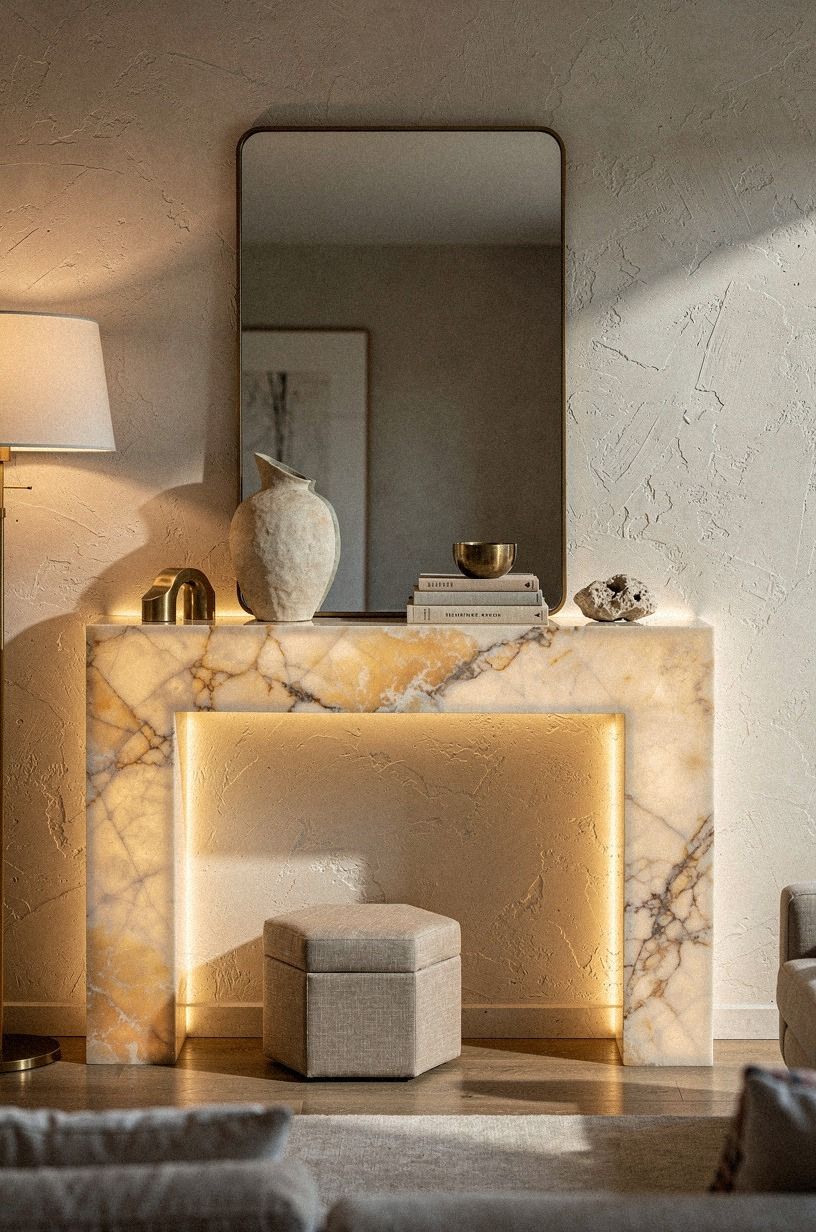
Anchor the shelf with one oversized antique brass mirror instead of a cluster of small frames. That's what gives the faux surround authority. In a blank room, the mirror acts like borrowed depth, and you feel it the second you walk in.
I like a piece that spans roughly two thirds of the mantel width, because anything smaller starts to look decorative rather than structural.
This is where a mantle statement piece earns its keep. You don't need three cute things competing up there. You need one strong rectangle or soft arch with a frame that has some age to it, even if it's new.
A warm metal frame works beautifully against Benjamin Moore Revere Pewter HC-172, while a darker wood frame looks richer if your wall is painted Farrow & Ball Hague Blue No.30.
And yes, you can lean the mirror instead of hanging it if you're renting or if the wall is fussy plaster. I do that often.
If you love a room that gets more depth from reflection than clutter, our bookshelf living room ideas designers keep screenshotting show the same restraint in a bigger setup. A vintage find from Facebook Marketplace under $80 will outclass anything brand-new under $300, every single time!
3Layer low artwork across the mantel shelf
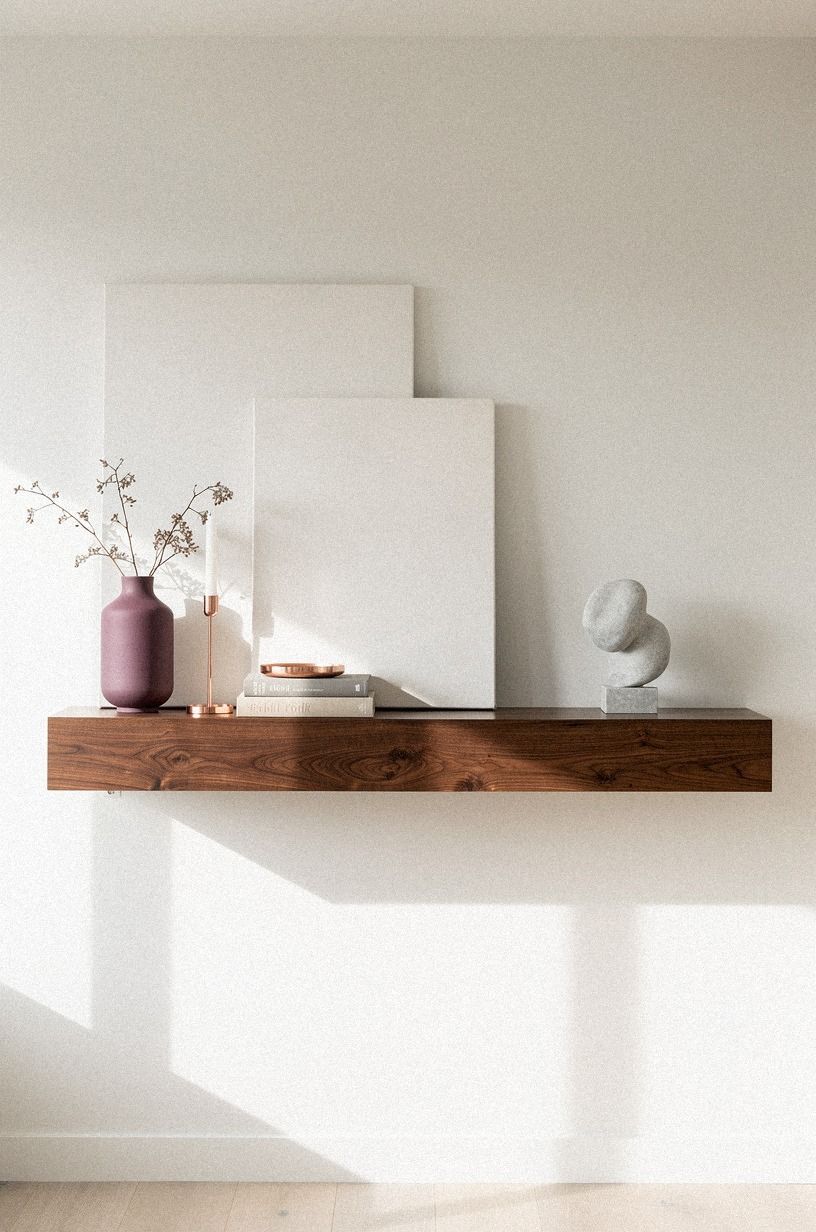
Layer low art across one end of the shelf instead of spreading little objects from edge to edge. A pair of walnut frames with one slightly overlapping the other gives you softness without losing the line of the mantel. The photo logic matters here.
You should still see a long, clean shelf, not a crowded mini gallery.
What to put above mantle is the question everyone asks, but the better question is what not to put there. I wouldn't stack five unrelated pieces at the same height. It makes the shelf feel nervous.
Keep the art low, keep the overlap loose, and let one piece carry more visual weight than the other. A book-matched walnut frame, ivory mat, and one dark print usually do more than a whole row of tiny signs ever could.
If your room already has shelving, repeat one tone from it so the mantel doesn't feel imported from another house. Our shelf decor living rooms that feel effortless are useful here, especially if you're trying to make two storage zones feel related instead of matchy. For soft tonal layering that doesn't fight the wall, our earthy vintage bedrooms that feel collected not decorated share the same quiet rhythm.
4Hang sconces beside the faux mantel frame
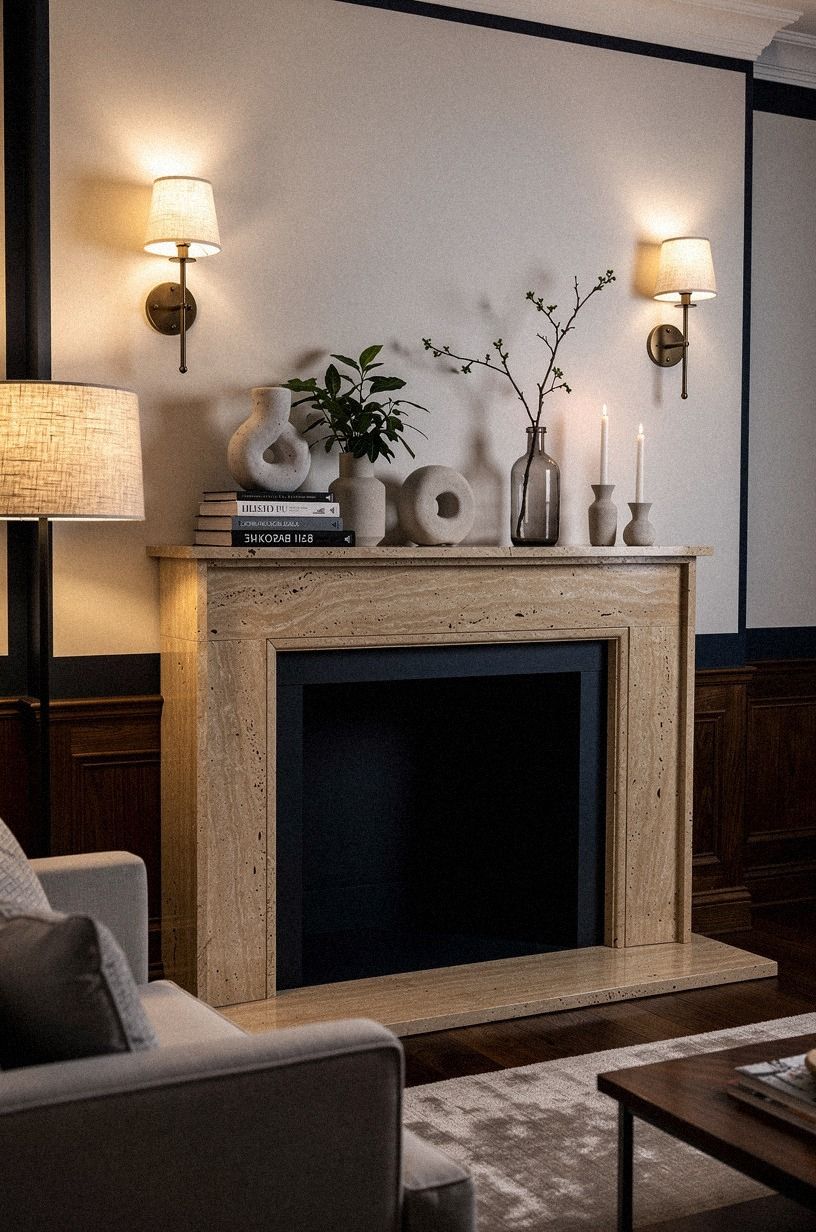
Hang sconces beside the frame if you want the wall to feel finished after dark.
5Build height with tall branch-filled vases
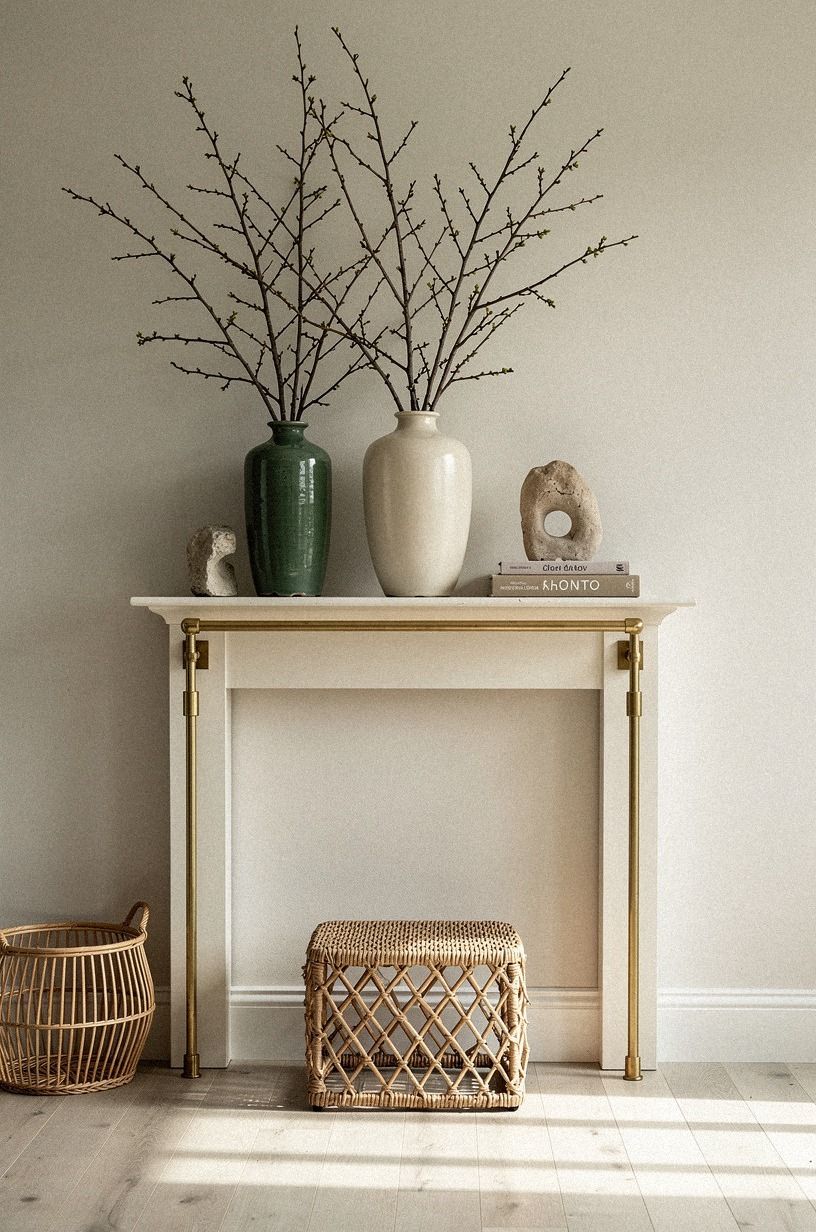
Build height with tall vases once the mirror and sconces are in place. You need one upward move so the mantel doesn't stop at shelf level.
A pair of stoneware floor vases filled with olive branches or airy faux quince branches works especially well if your room leans muted emerald, camel, or soft black. One goes beside the mantel, not on top of it.
This is where I think people go too small. They buy tabletop stems, then wonder why the wall still feels flat.
Go taller than feels safe at first. A branch arrangement that reaches well above the mirror line gives the room a vertical exhale. If your wall color is Sherwin-Williams Evergreen Fog SW 9130, the green note looks calm instead of seasonal, and the whole area feels settled rather than styled for one weekend.
If you're using this in a small living room or even mantle decor bedroom, keep the vase opening narrow so the stems stay architectural. And don't overfill it. Three to five strong branches are plenty.
Our green couch living rooms that feel lived in and loved show how one green note can carry a whole seating area when the rest stays quiet. The whole wall feels alive by sunset!
6Style the opening with stacked birch logs
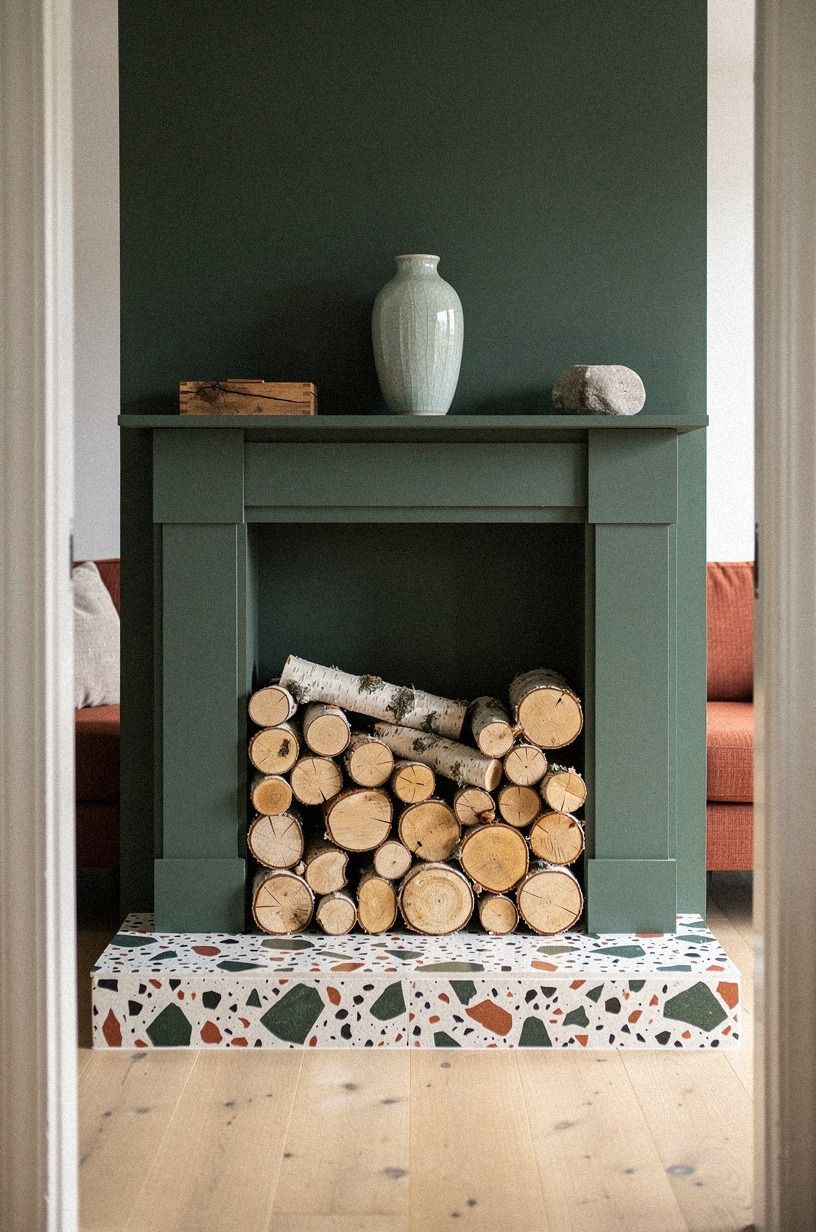
Style the empty opening with stacked logs if you want warmth without kitsch. Split birch logs are my favorite because the pale bark bounces light and keeps the hole from reading like a mistake in the wall. You don't need a deep pile either.
A neat stack that fills about two thirds of the opening usually looks richer than cramming every inch.
Here's where I made the wrong choice once: I used dark firewood in a dim room, and the entire surround looked like a black missing tooth. Birch fixed it.
The contrast is cleaner, and the room feels softer from the doorway. If your mantel is cerused or pale oak, the light bark also keeps the wood-on-wood relationship intentional.
You can mix in one woven basket nearby, but I wouldn't shove blankets inside the opening. That's trying too hard. If you like a room that balances warmth with order, our warm minimalist bedrooms that feel lived in not staged show the same idea of using texture without stuffing every gap.
7Place floor lanterns inside the empty surround
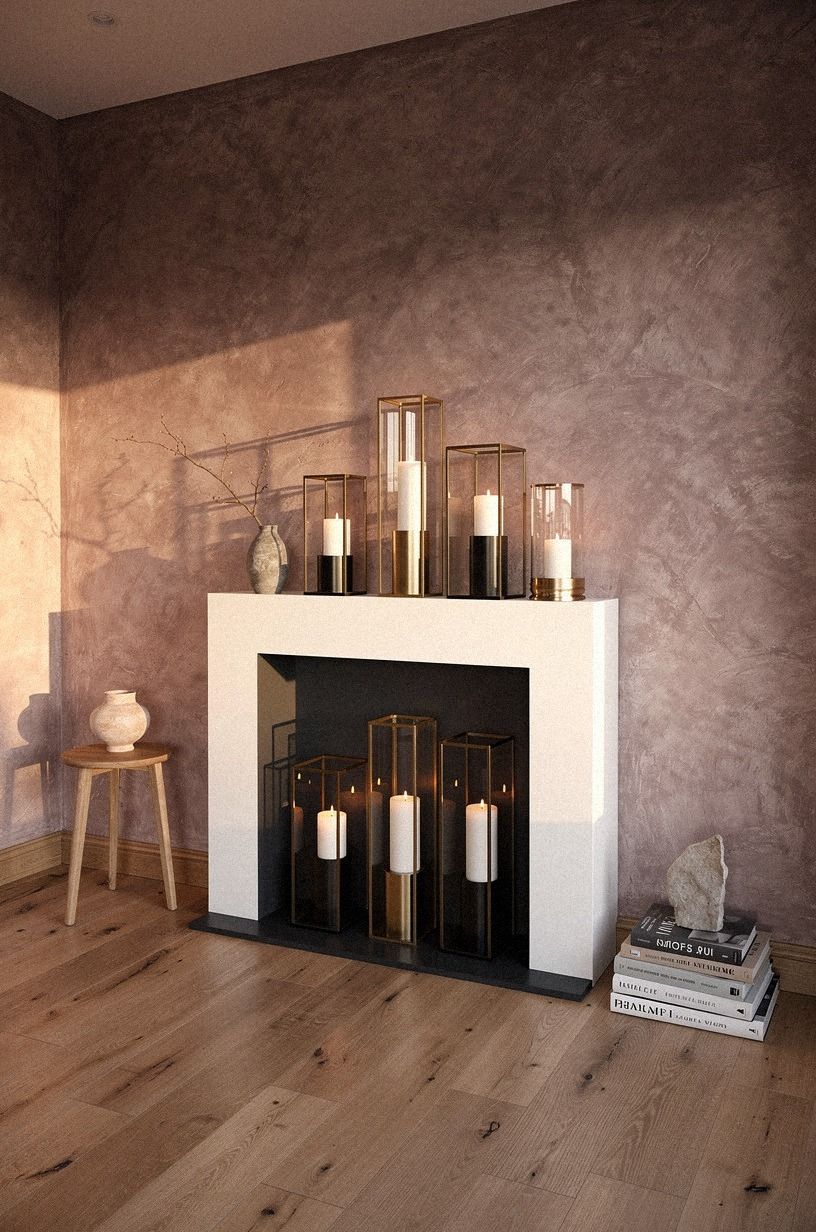
Place floor lanterns inside the surround if the room needs evening atmosphere more than daytime texture. Two black iron lanterns with cream pillar candles create depth inside the opening, and they make the faux mantel feel useful after sunset.
Why does that matter? Because a fake fireplace needs a job, and nighttime glow is a very good one.
Use two sizes, not twins. I prefer one around 16 inches tall and one around 18 inches tall so the arrangement looks collected, not boxed.
Battery candles are fine here if you want the look every night without thinking about it. If your sofa length calls for a coffee table around two thirds its width, keep the lanterns scaled to the mantel opening the same way.
Proportion is what sells this.
And keep the rest of the floor nearby clean. No extra baskets, no random stack of books, no filler stool.
The lanterns should own the negative space. If you're planning around a nearby fireplace wall or awkward seating zone, our corner fireplace layouts that make the room work are worth a look.
The mood shift after sunset is unreal.
8Add a slim bench below the mantel
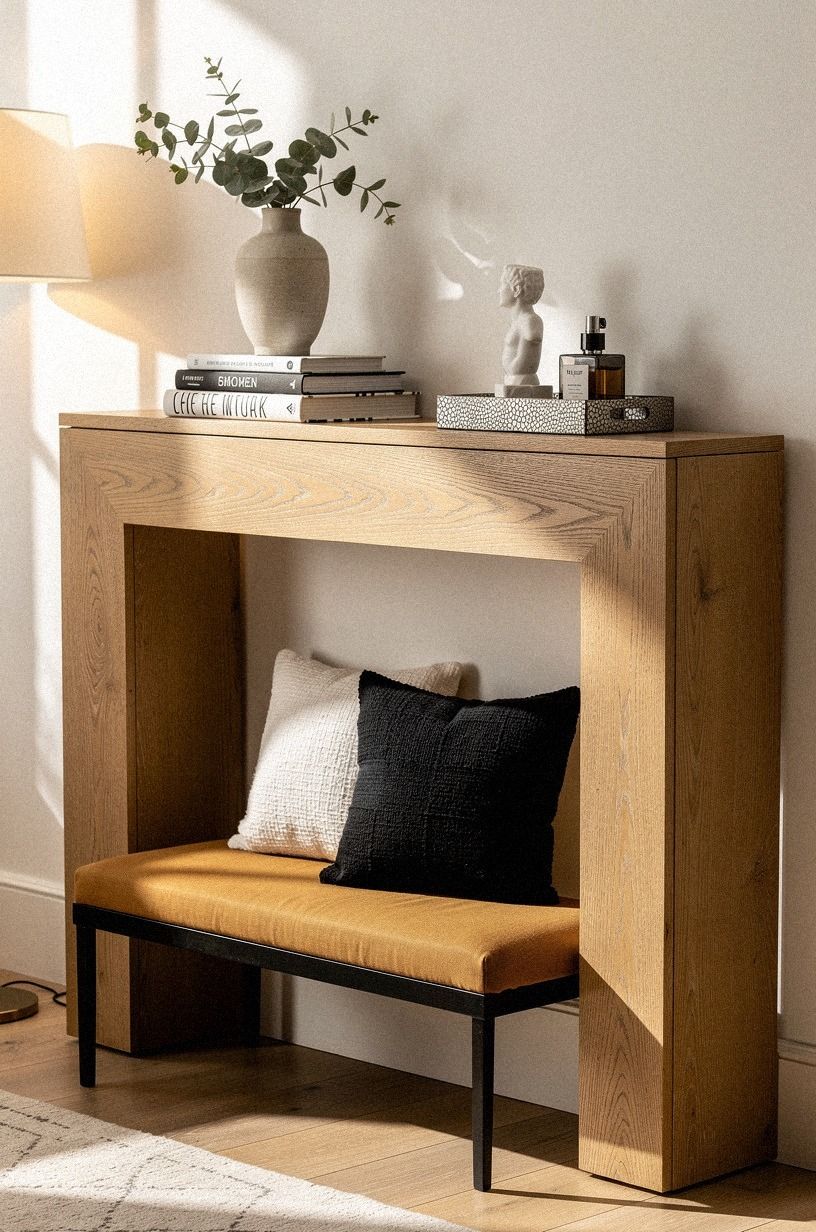
Add a bench below the shelf if your wall still feels a little top-heavy. A slim camel leather bench or a tight upholstered seat in warm white gives the eye a lower resting point, and it makes the mantel feel connected to the floor.
In a blank room, that link matters more than people think. Otherwise the surround can look like it is hovering for no reason.
Keep it narrow enough that you don't block circulation. In most living rooms, 12 to 16 inches deep is enough.
I'd skip anything chunky here unless the mantel itself is very large. A shagreen tray, one black-bound book, or a folded throw is plenty styling. The bench isn't the star.
It's the quiet bridge.
This move is especially good for apartment mantle decor because the bench can double as extra seating when people come over. That's real function, not just prettiness. If you're working with a tight floor plan, our small bedroom layouts that actually make the room feel bigger help you think in clearance, not just furniture wish lists.
9Lean a statement canvas above the shelf
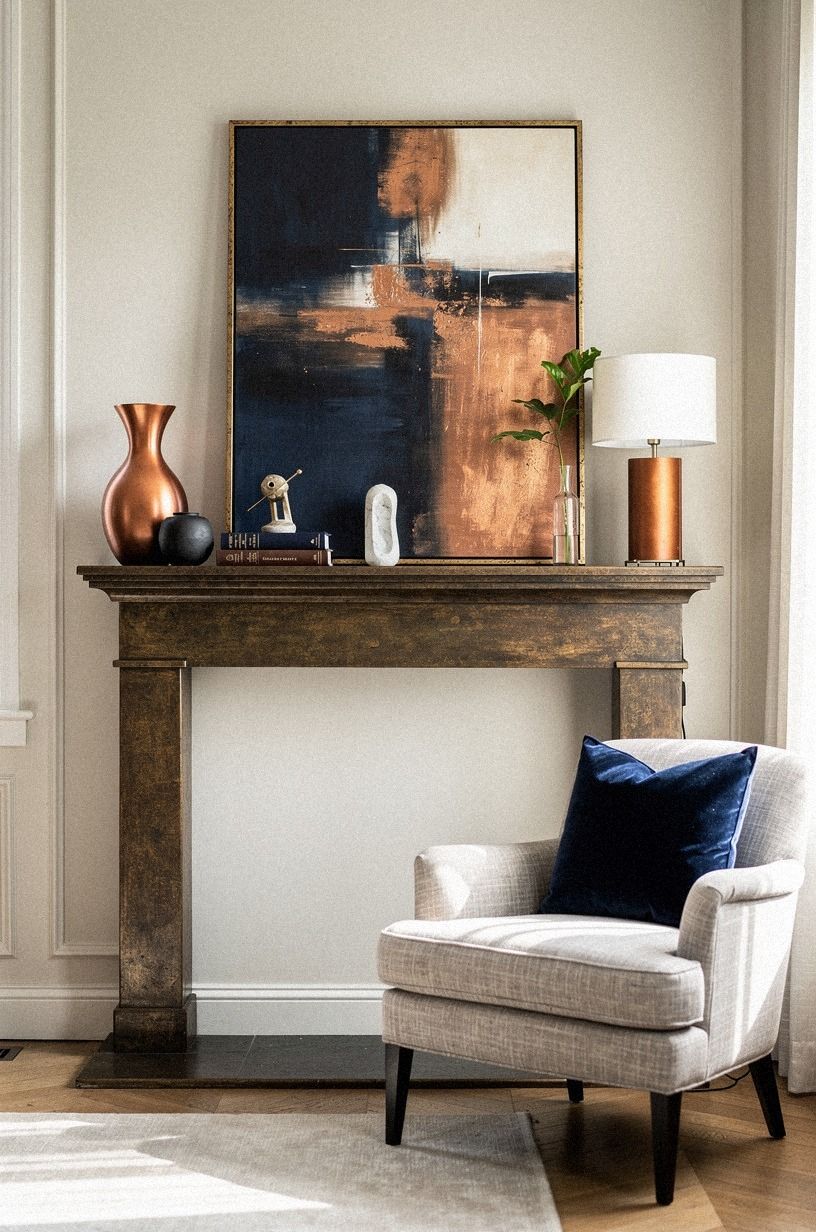
Lean a big canvas above the shelf if you want the wall to feel less traditional and more relaxed.
10Cluster candles across one mantel corner
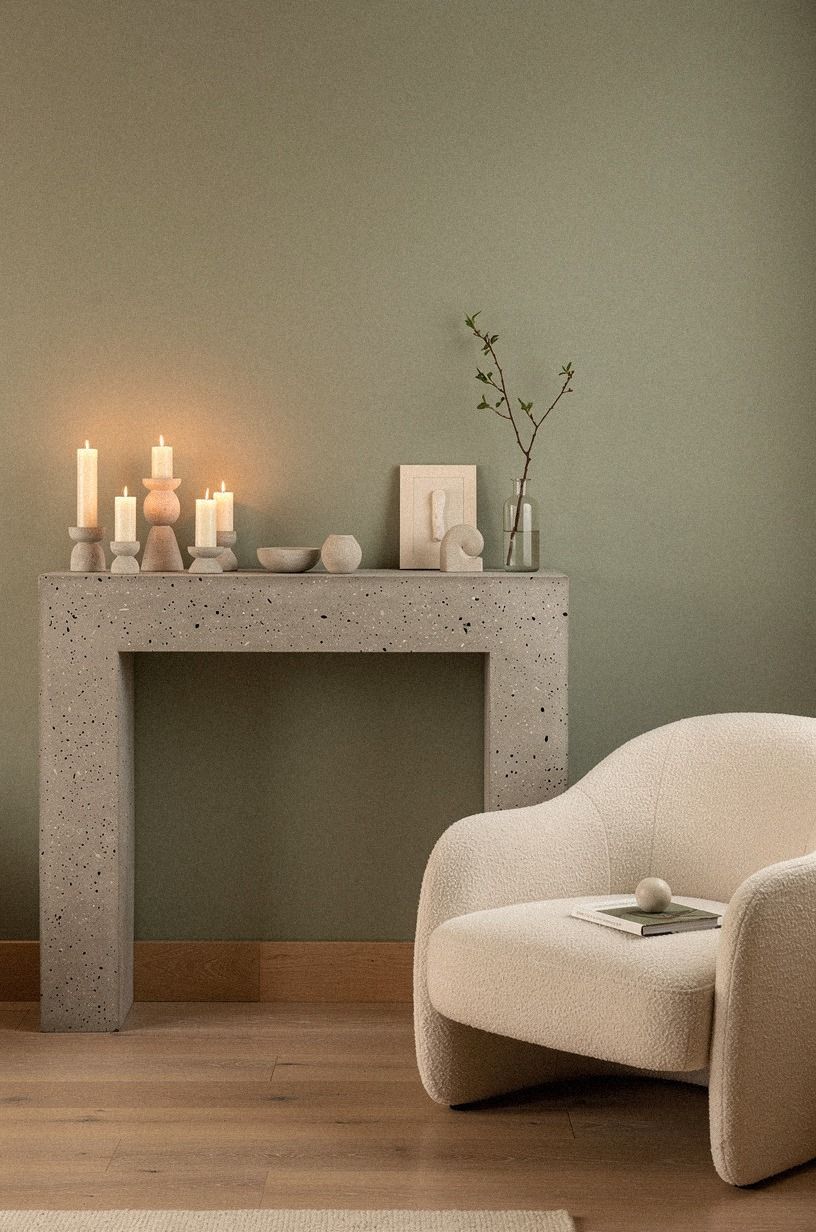
Cluster candles on one corner instead of marching them across the whole shelf. A small group of ivory taper candles or warm glass votives gives you glow, asymmetry, and just enough movement.
The corner placement matters. It leaves breathing room for the mirror, art, or greenery, and that open space is what keeps the mantel from looking busy.
I usually do three pieces. One taller, one medium, one squat.
Done. If the room already has a sage or olive thread, use holders that nod to it without turning literal, like smoked glass or a muted ceramic.
A little black metal is fine too, especially if your sconces already brought that note into the room.
But don't line up seven candles like a restaurant ledge. The whole point is one gathered glow pocket. If you want more examples of warm corners that don't feel overworked, our Nancy Meyers living room ideas in cozy cream and black couch living rooms that feel intentional are useful mood references.
11Finish with greenery trailing under the lip
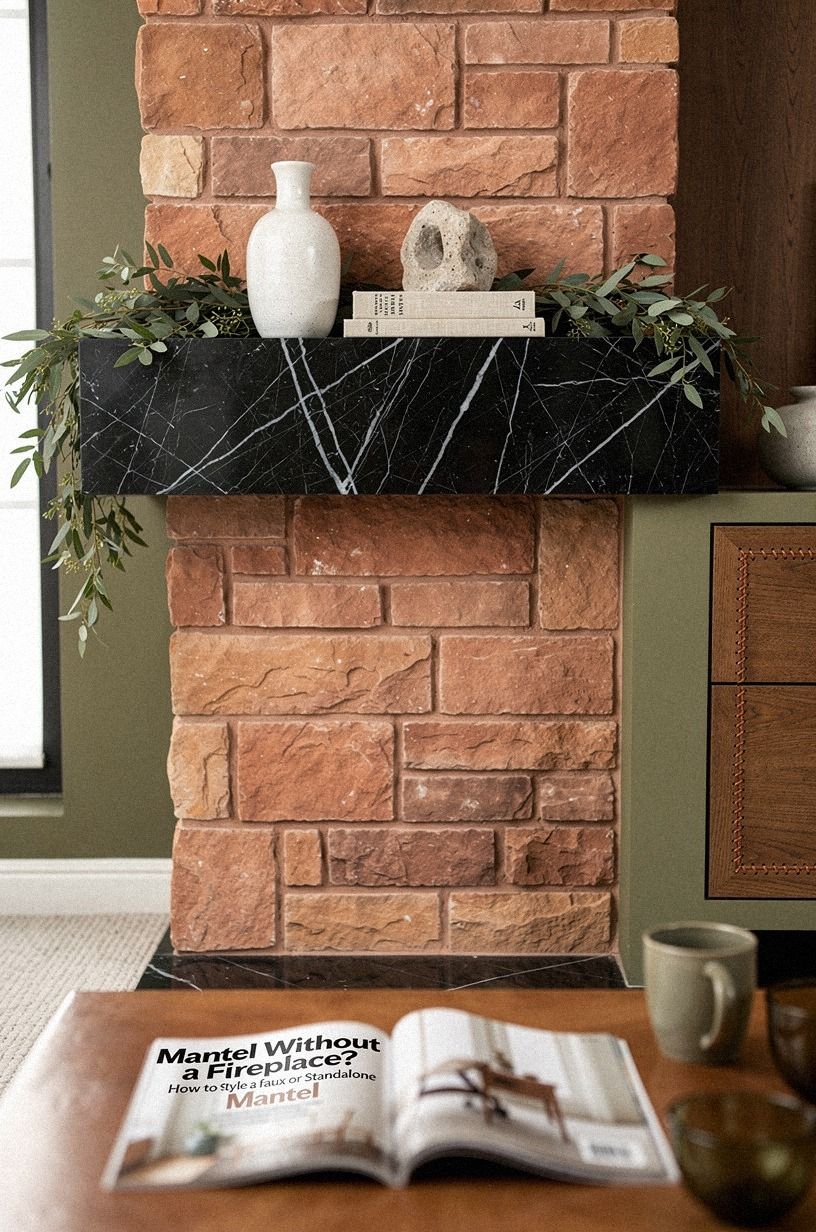
Finish with one trailing stem tucked under the mantel lip, not a wild vine draped over everything. A soft strand of olive greenery or seeded eucalyptus breaking the straight edge gives the wood a little life.
That's often the last thing a faux mantel needs. Without it, the shelf can feel crisp but static.
I like this best when the room already has earthy notes, like terracotta pottery, stone, or warm linen. Tuck the greenery so it drops just a few inches, then stop.
If it reaches halfway down the surround, the effect gets stagey. You want one loosened edge, not a jungle. In a room with rust, cream, and olive, this tiny move does a lot.
And if you have to choose between more objects and one organic note, choose the greenery. Every time. It softens the architecture without making the wall feel fussy.
For a broader look at mixing warmth, texture, and restraint, our country bedrooms that feel warm and lived in and warm minimalist bedrooms that feel lived in not staged land in the same emotional place.
12Float a narrow picture ledge just above the mantel
Float a slim walnut picture ledge six inches above the mantel top if you want more display without crowding the shelf. The ledge buys you a second visual layer, and it lets you swap art seasonally without putting new holes in plaster. I lean toward ledges about 2 inches deep, because anything chunkier starts to fight the mantel for attention.
This is the move most people skip because they assume the mantel shelf is the only place to put things. It's not.
A small upper ledge gives you a place for a single sketch, a postcard, or one seasonal print without committing to a full gallery wall. If you're already adding sconces, the ledge tucks nicely between them.
The whole wall starts to feel layered instead of staged.
For renters, a 3M Command strip version holds up to about 5 pounds, which is plenty for one framed print. And if the rest of your room leans warm wood and soft paper, our warm minimalist bedrooms that feel lived in not staged show how one quiet ledge can carry a whole corner.
13Pick a Benjamin Moore wall color and let the mantel settle into it
Pick one wall color and commit, because the mantel will read very differently against sage, pewter, or deep navy. My favorite trick on a faux mantel wall is Benjamin Moore White Dove OC-17 on the surrounding walls with Benjamin Moore Hale Navy HC-154 on the mantel wall alone.
The contrast is crisp but not loud, and the oak mantel looks warmer against the navy than it does against flat white. It's a 30-minute paint job and the whole room shifts.
If you prefer something softer, Farrow & Ball Joa's White No.226 on the whole room lets the oak do all the talking. If you want drama, Farrow & Ball Studio Green No.21 makes a pale mantel feel grounded and expensive, though it goes nearly black by late afternoon in a north-facing room, so test a swatch first.
I'd skip anything with a purple or pink undertone, because the oak turns muddy against it. For paint picking on a budget, our warm minimalist bedrooms that feel lived in not staged share the same restrained palette logic.
14Why does a faux mantel calm down a blank room so fast?
A blank wall usually feels restless because nothing tells your eye where to stop. A faux mantel fixes that by creating a horizon line at human height, a shelf for ritual objects, and a frame that makes the room feel more built than borrowed. In a rental, that matters a lot (especially in a rental) because you rarely get the luxury of changing the architecture itself.
The other reason is emotional, not technical. A mantel suggests gathering, pause, evening light, and one place to set the tone.
You may not have a firebox, but you still get the visual promise of one. Once the wall has that promise, your sofa, rug, and lighting suddenly have something to organize themselves around.
It's such a small architectural gesture with an outsized mood payoff!
15Add a textured runner across the mantel opening
Add a Belgian flax linen runner draped across the lower mantel opening if your logs feel too utilitarian.
16Mix Vintage Brass Against New Oak for Warmth That Reads as Old Money
A faux mantel wall goes expensive the moment you mix one unlacquered brass piece with the new oak. The trick isn't matching metals.
It's letting one piece look slightly older than the rest. A vintage brass candlestick, an old mirror frame, or a thrifted picture light brings the kind of patina that brand-new hardware can't fake.
The room reads as collected instead of ordered, and that's where the high-end mood comes from.
I've tested this against pure new-brass setups in friends' homes, and the mixed-metal version always wins. Your eye registers it as a lived-in space rather than a catalog photo. The cost difference is real too.
One $40 vintage brass piece does more than four matching $25 new ones. For more on the same idea in a different room, our modern vintage bedrooms that feel collected not decorated use exactly this tension between old and new.
17Ground the wall with a low, sculptural object on the hearth
Ground the wall by setting one sculptural ceramic object or a low stack of oversized coffee-table books on the hearth in front of the mantel.
18What if your mantel is too short for the wall?
If your mantel is too short for the wall, extend the visual upward with a tall floor vase or a stretched art piece, not a bigger mantel. A short mantel under a tall wall looks lost, and a wider mantel rarely solves the proportion problem. A 36-inch-tall vase of olive branches next to it, or a single 40-by-60 canvas hung just above, fills the negative space without changing the architecture.
This is also where you can cheat with paint. A vertical stripe of Farrow & Ball Hague Blue No.30 behind the mantel, even just 12 inches wider than the surround, gives the eye a reason to climb.
The whole wall starts to feel intentional, even with the same short mantel you already own. For more wall-stretching ideas in tight rooms, our studio apartment layouts that make small spaces work cover the same proportional thinking.
19Hide the cords, the outlets, and the Wi-Fi box
Hide the cords, the outlets, and the Wi-Fi box behind the mantel because nothing ruins the mood faster than a glowing black plastic rectangle staring at you from the hearth.
Mirror Over Mini Decor: The Two-Wood Rule That Keeps a Faux Mantel From Looking Fake
Here's my honest take: faux mantels go wrong when people treat them like a holiday shelf that happened to get legs. A real fireplace wall has gravity. It has one material carrying the structure, another material softening it, and enough empty space for your eye to rest.
That's why I come back to what I think of as the Two-Wood Rule. If your freestanding mantel is pale oak, let only one other wood tone show up strongly nearby, maybe a walnut frame or a dark bench leg.
Once you add a third loud wood, the wall starts to feel assembled instead of anchored.
I learned that the hard way in my own living room. I had a cerused surround, a medium oak coffee table, a red-leaning side table, and a mirror frame that tried to split the difference.
Nothing looked terrible on its own. Together, it all felt twitchy.
The minute I pulled one wood tone out, the mantel looked more expensive, even though I hadn't bought anything new. That's the sort of change people notice without knowing why.
This is also why I don't think a faux mantel needs piles of objects to prove itself. You need weight, one focal point, one glow source, and one softening move.
Mirror plus sconces. Art plus candles. Branches plus logs.
Pick your combination, then stop when the wall starts breathing back at you. If you're in a rental, the rule matters even more, because you can't rely on built-ins or major construction to save the room.
Your styling has to do the structural work for you.
And that's the upside nobody says out loud. A mantel without a fireplace is more forgiving than a real one. You don't have to work around a firebox, code clearances, soot, or an ugly insert you hate.
You get the architecture, the shelf, the ritual, and the feeling. You just have to edit harder.
That's worth it.
A Few Things Worth Answering
What is the best mantel without a fireplace setup for a small living room?
A narrow freestanding oak mantel with one oversized mirror is the best place to start. It gives you scale without crowding the wall, and it works especially well with compact seating. For a tiny room, skip side clutter and let one strong focal point do the heavy lifting.
Where can I buy mantel without a fireplace pieces on a budget?
IKEA, Target Threshold, and Wayfair are solid starting points for mirrors, benches, candles, and simple art. Facebook Marketplace is even better for a vintage frame or old mantel shell. For the biggest visual payoff, buy one large piece used and keep the accessories cheap.
How much does a mantel without a fireplace makeover cost?
Most people can pull off a believable setup for about $100 to $300 if the wall already has decent paint and you thrift the main pieces. The free move is editing what you own first. Mirror, art, branches, and candles often work better after subtraction than after shopping.
Can I create a mantel without a fireplace on a budget?
Yes, and you really can keep it lean. Start with a secondhand surround, lean art instead of hanging it, and use battery candles or birch logs for warmth. One painted wall in Benjamin Moore Revere Pewter HC-172 can also do a lot of the mood work for you.
Is a mantel without a fireplace worth it in a small space?
Yes, because a small room benefits from one obvious focal wall. Worth it is the right phrase here.
The mantel gives your seating arrangement something to face, and that makes the room feel finished faster. Just keep the bench slim and the decor scaled up, not multiplied.
Is a mantel without a fireplace a good idea for a rental?
Yes, especially if you lean the mirror, use plug-in or battery sconces, and avoid permanent millwork. A renter-friendly faux mantel can still feel polished. Removable picture hooks, leaner art, and thrifted lanterns give you the mood without turning your deposit into a gamble.
Where I'd Start First With the One-Mirror Rule
If I had to pick one step, I'd start with the oversized mirror. Without that anchor, every candle, branch, or log stack feels like shelf styling floating in space. Get the mirror right first.
The rest of the wall stops arguing and starts acting like architecture.