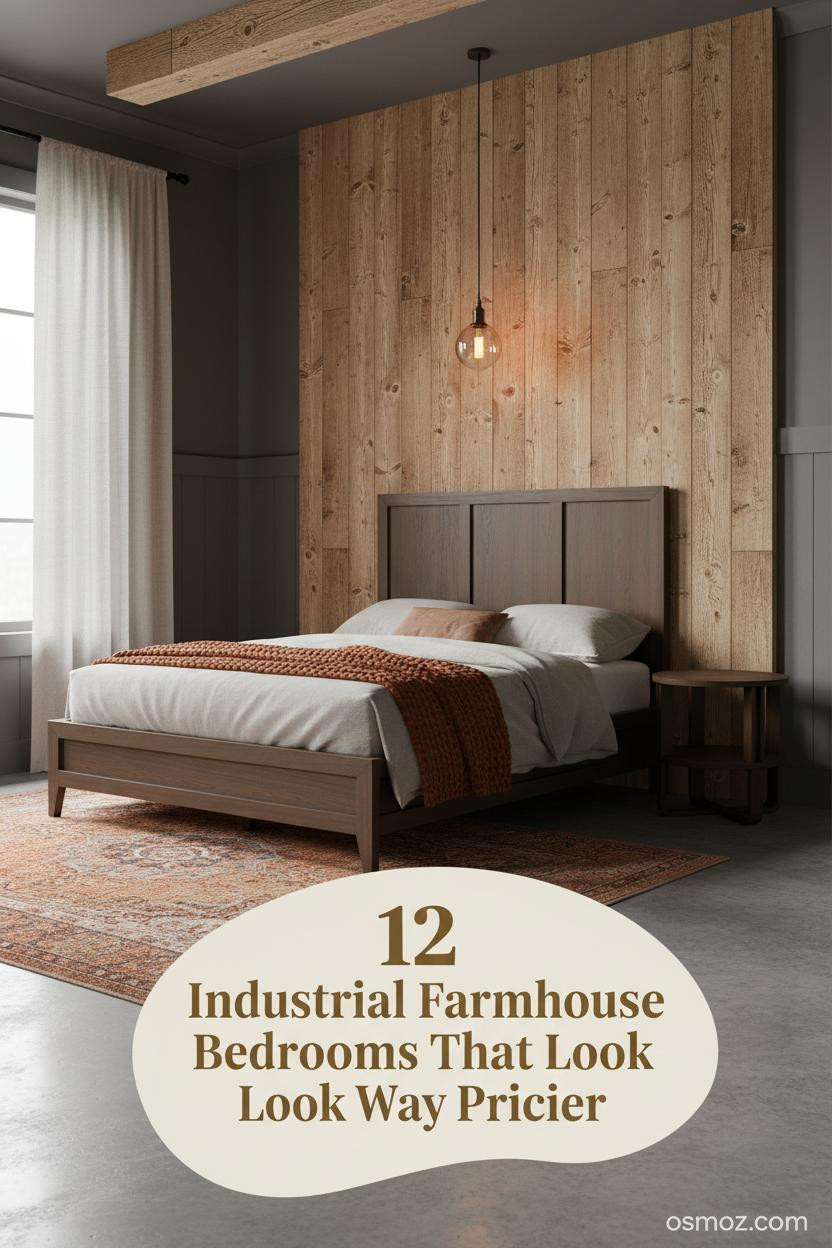
12+ Industrial Farmhouse Bedrooms That Feel Collected Rather Than Decorated
23 may 2026The first thing you notice in the best industrial farmhouse bedroom isn't any single piece. It's the feeling that nothing was bought on the same day.
Raw timber, worn iron, and honest plaster. That combination is harder to fake than it looks. These 12 rooms show how to get it right.
A Timber Feature Wall That Earns Its Place
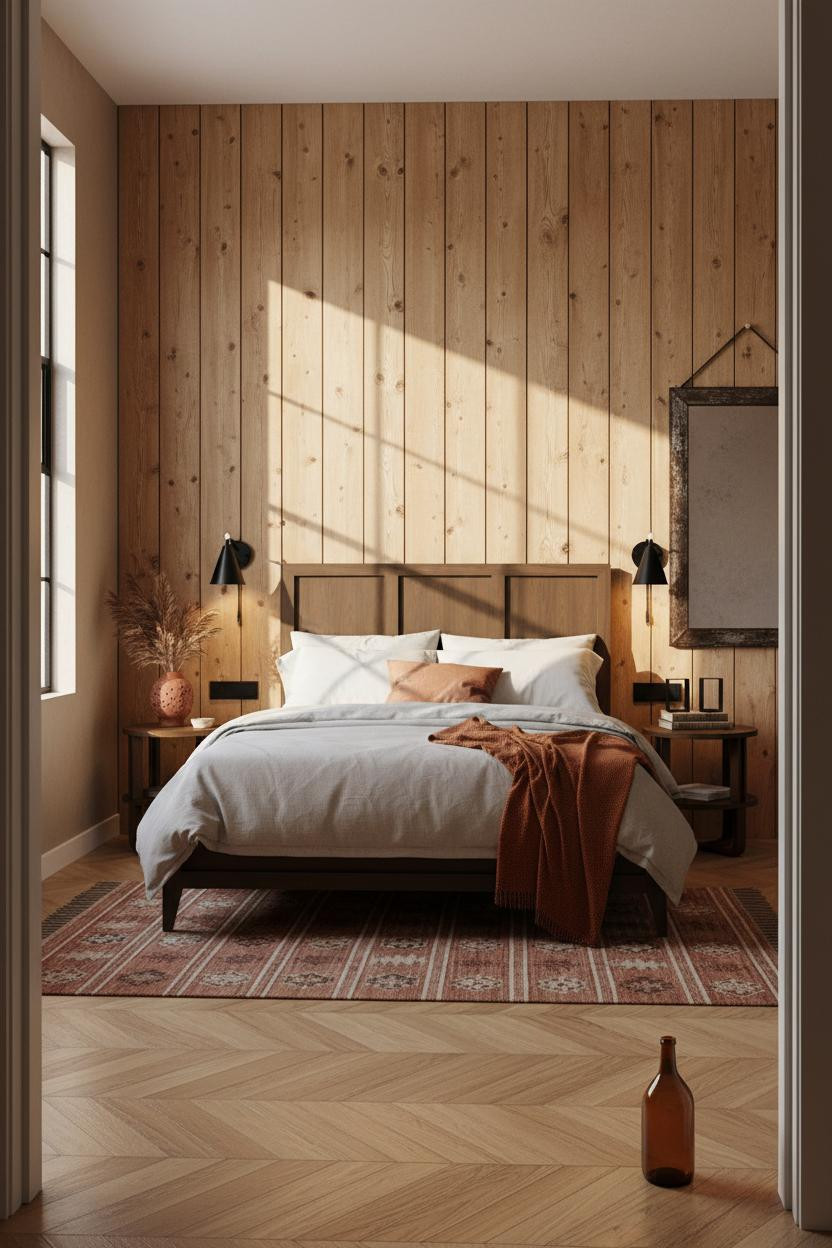


I keep coming back to rooms like this one. The wall does more work than anything else in here.
Why it holds together: Floor-to-ceiling rough-sawn timber planks with deep shadow-line reveals create vertical rhythm that plaster walls simply can't replicate. The grain catches morning light in a way that changes all day.
Steal this move: Pair oatmeal bedding with a burnt orange throw so the warm wood tones don't tip into heavy.
Herringbone Walls Are Better Than You Think
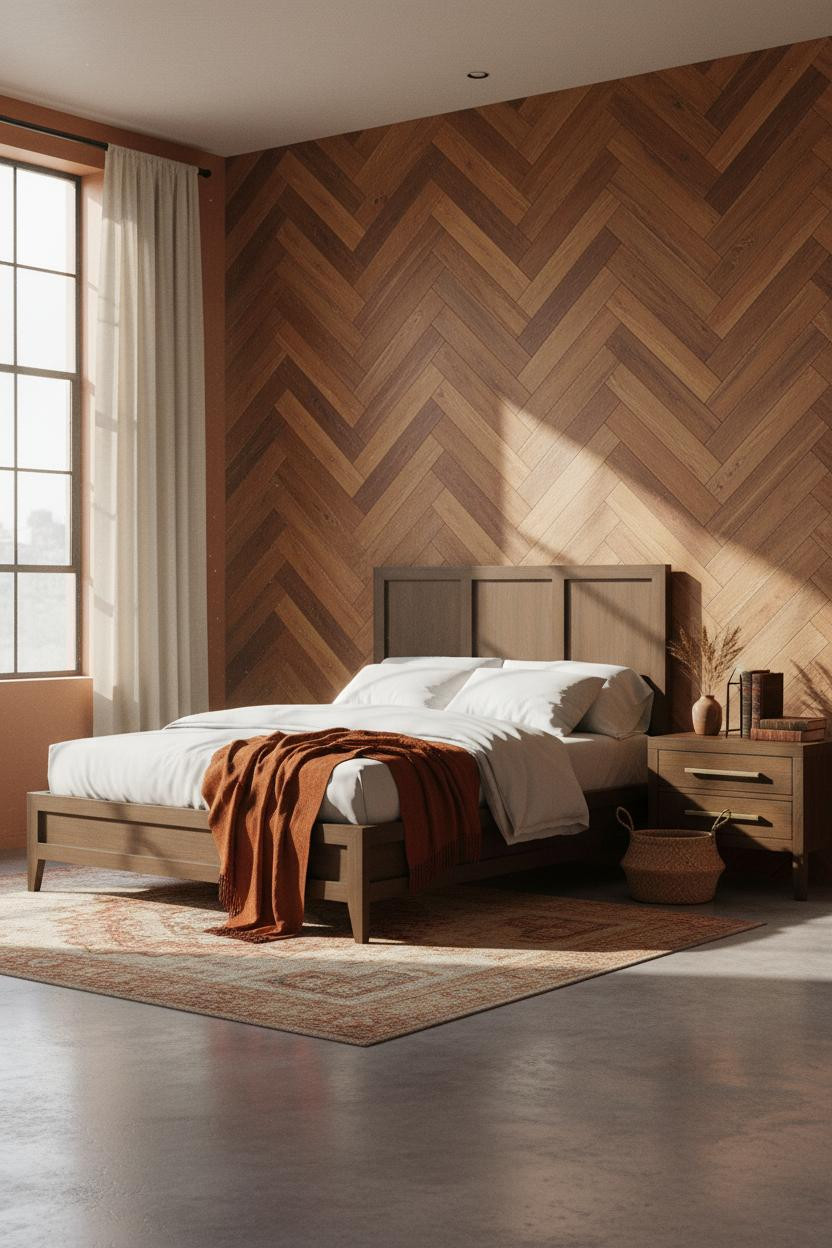

Fair warning. A full herringbone wood wall is a commitment. But the rooms that go for it never look generic.
What makes this work is how alternating honey and amber plank tones catch sidelight differently in each row, making the wall feel dimensional rather than flat. The geometric pattern does the decorating. You need less else.
Keep flanking walls in warm terracotta so the wood reads as grounded, not overwhelming. Nothing too matchy.
Dark Walls That Feel Calm, Not Cold
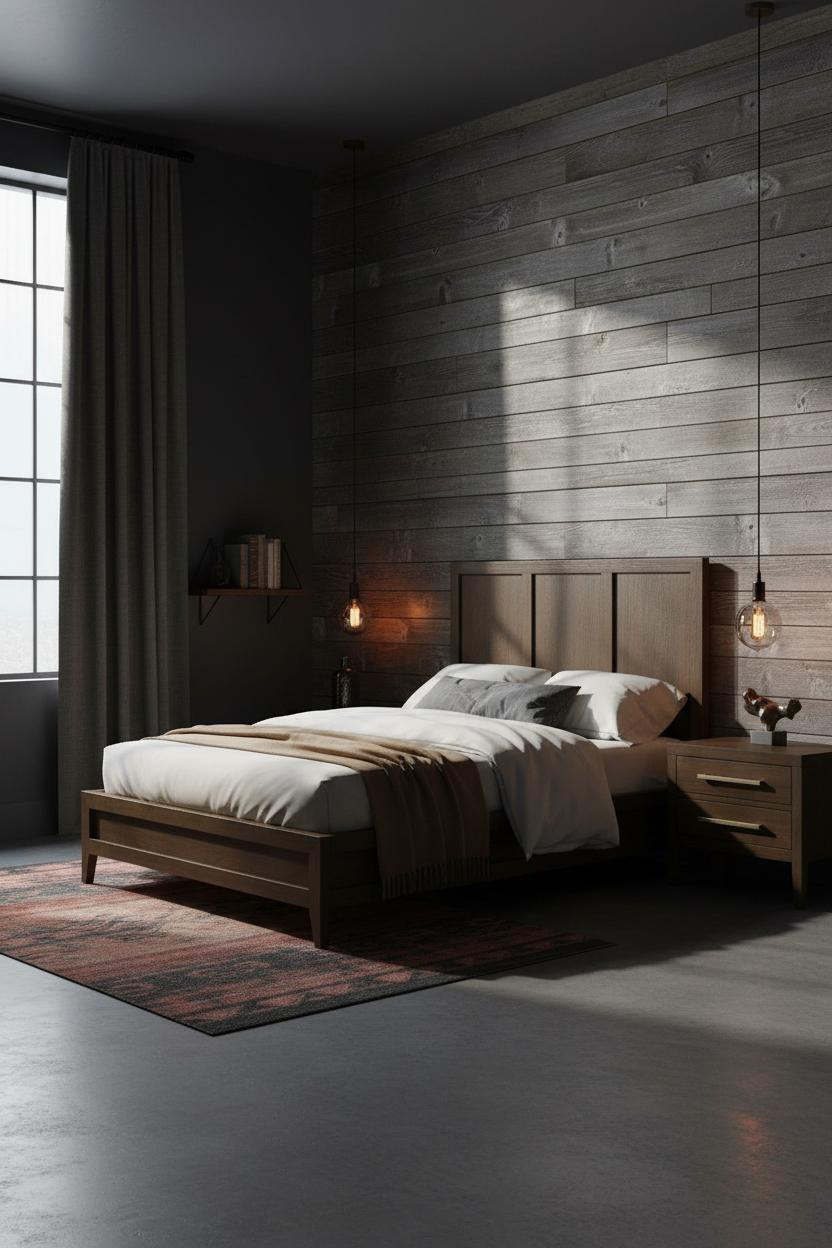
This is the version of dark farmhouse that actually works. Moody without being oppressive.
Why it lands: Deep indigo flanking walls keep the silver-grey reclaimed timber from feeling too warm, which is the whole trick with aged horizontal planks at barn scale. The room feels lived-in and intimate, not staged.
The smarter choice: An Edison pendant over an overhead fixture. The amber pool keeps the matte concrete floor from reading cold.
Deep Green Plaster That Changes With the Light
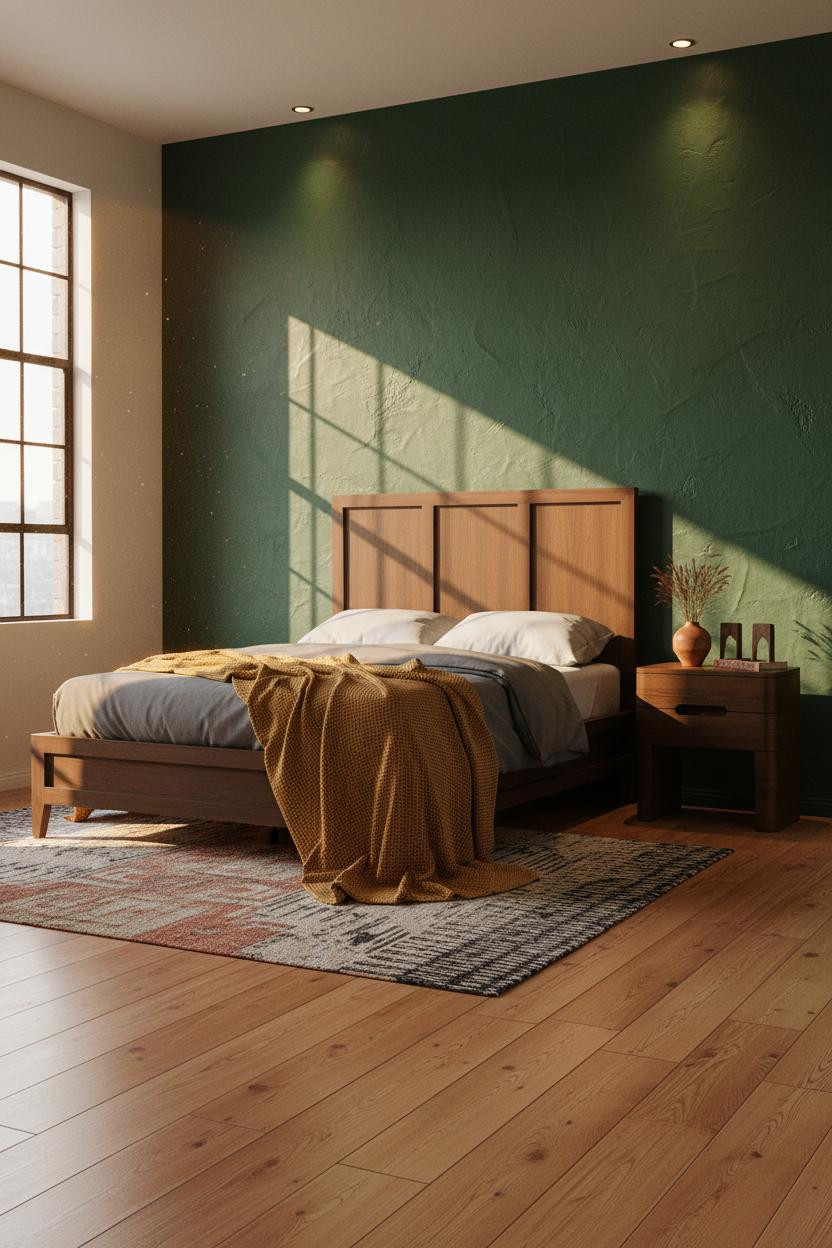

Hand-applied plaster in deep forest green is one of those surfaces that looks different every hour. Afternoon light makes it almost warm. Morning light makes it cool and mossy.
What gives it presence: The uneven hand-applied texture catches directional light in ridges and valleys, giving the wall genuine material weight that smooth paint can't fake. It's a small difference in application with a big difference in feel.
Mustard bedding pulls the green slightly warm. Avoid this mistake: Don't pair it with cool grey linens or the whole room reads flat.
Board-and-Batten Done the Industrial Way
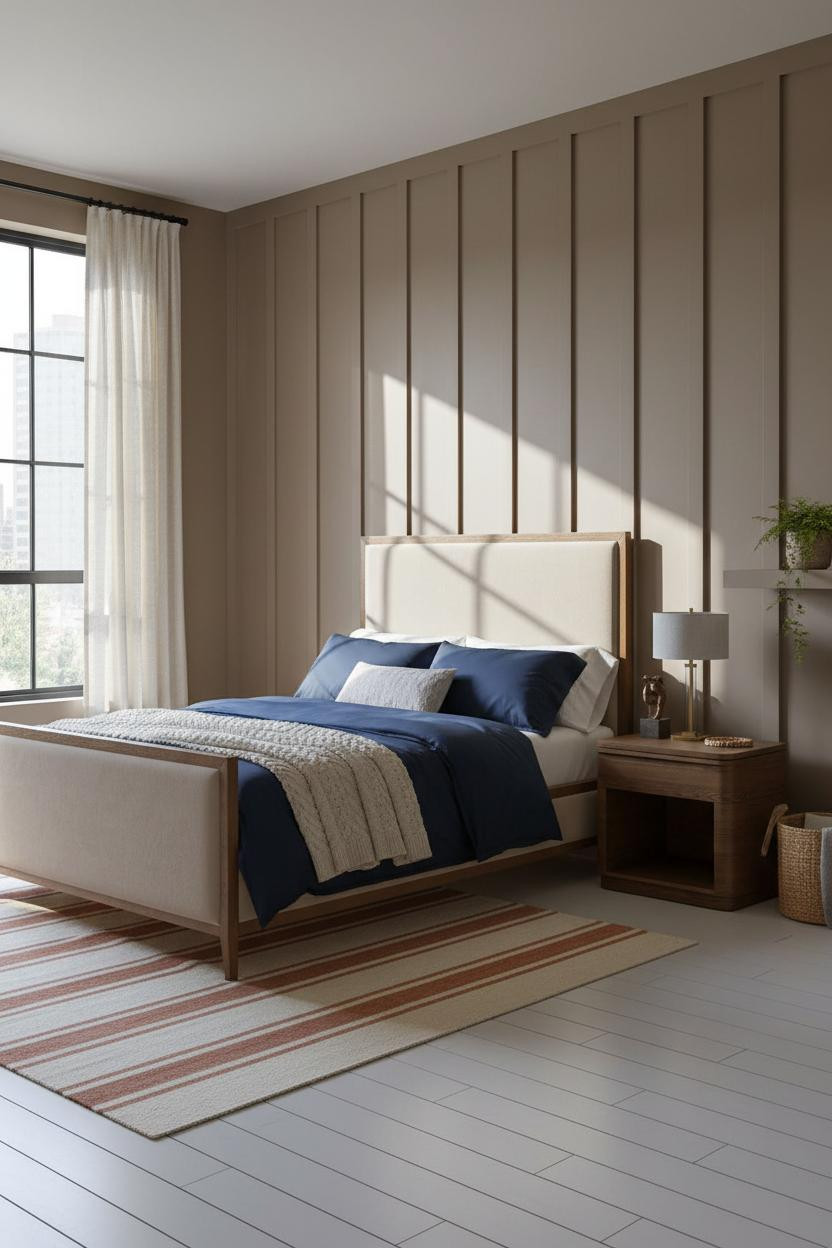


Most board-and-batten bedrooms lean too cottage. This one doesn't.
The difference is the paint choice. Matte clay-charcoal battens on warm clay walls create a tonal effect that feels architectural, not decorative, while the vertical rhythm pulls the eye up toward the ceiling in a way that whitewashed versions just don't. And the navy bedding keeps it from going soft.
Pro move: Floor-to-ceiling linen curtains on a black iron rod complete the industrial edge the wall starts.
The Dark Wood Wall That Earns Every Shadow
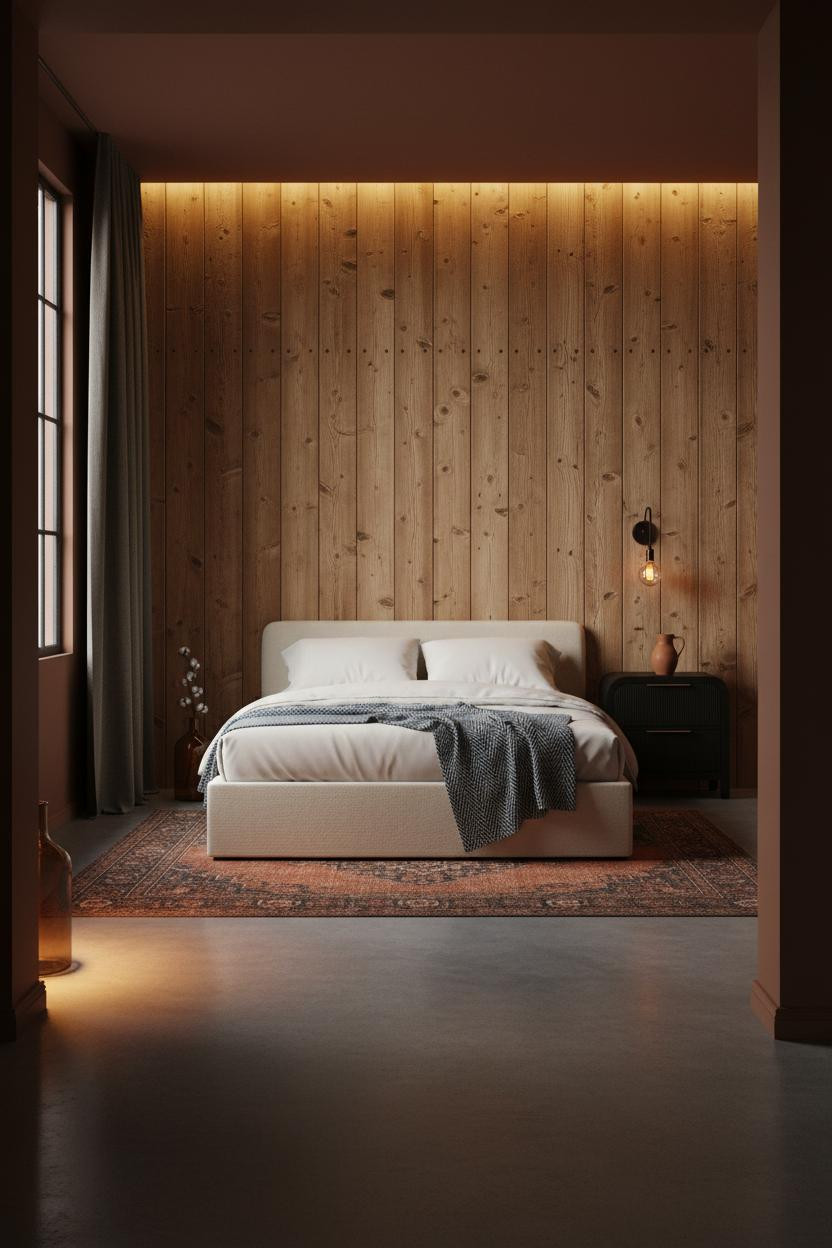


This one is divisive. But honestly, I think it's the most interesting room in this list.
What creates the mood: Iron nail heads catching light across 14-foot weathered honey-brown planks make the wall feel like it has history. It shouldn't feel cozy with rust-brown flanking walls. Somehow it does.
A vintage overdyed Persian rug in burnt sienna grounds the polished concrete underfoot. Where to start: Get the rug right before committing to the wall color. The two have to agree.
Sage Shiplap With Enough Green to Mean It
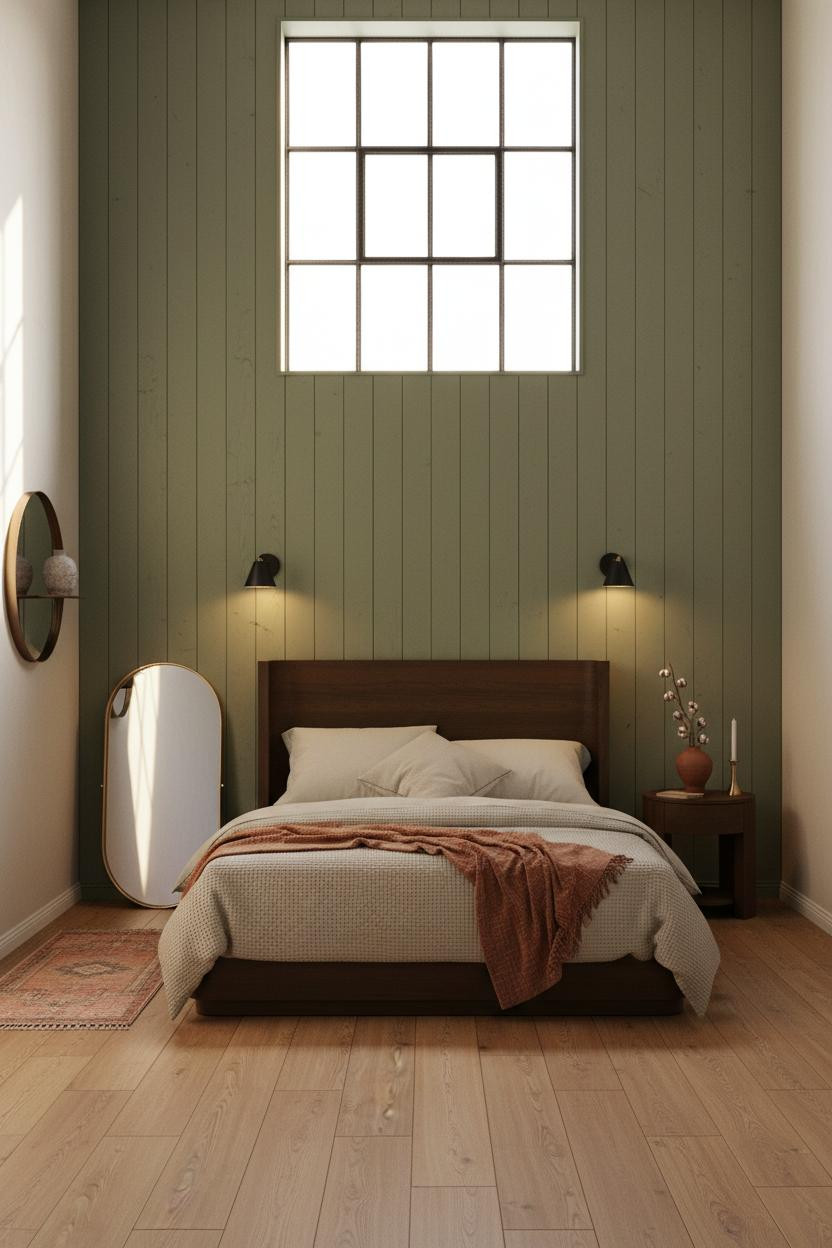


I almost scrolled past this. Glad I didn't.
The sage shiplap is the right color. Not too grey, not too blue. And the deep shadow-line reveals between each vertical plank are what keep it from looking like a painted wall with a texture stamp. The room feels calm and cohesive in a way that takes real restraint to pull off.
The finishing layer: A faded Turkish kilim in terracotta ties the honey oak floor to the green wall without forcing the connection. Just enough warmth to keep things interesting.
Dark Timber Beams Are a Ceiling Move Worth Making
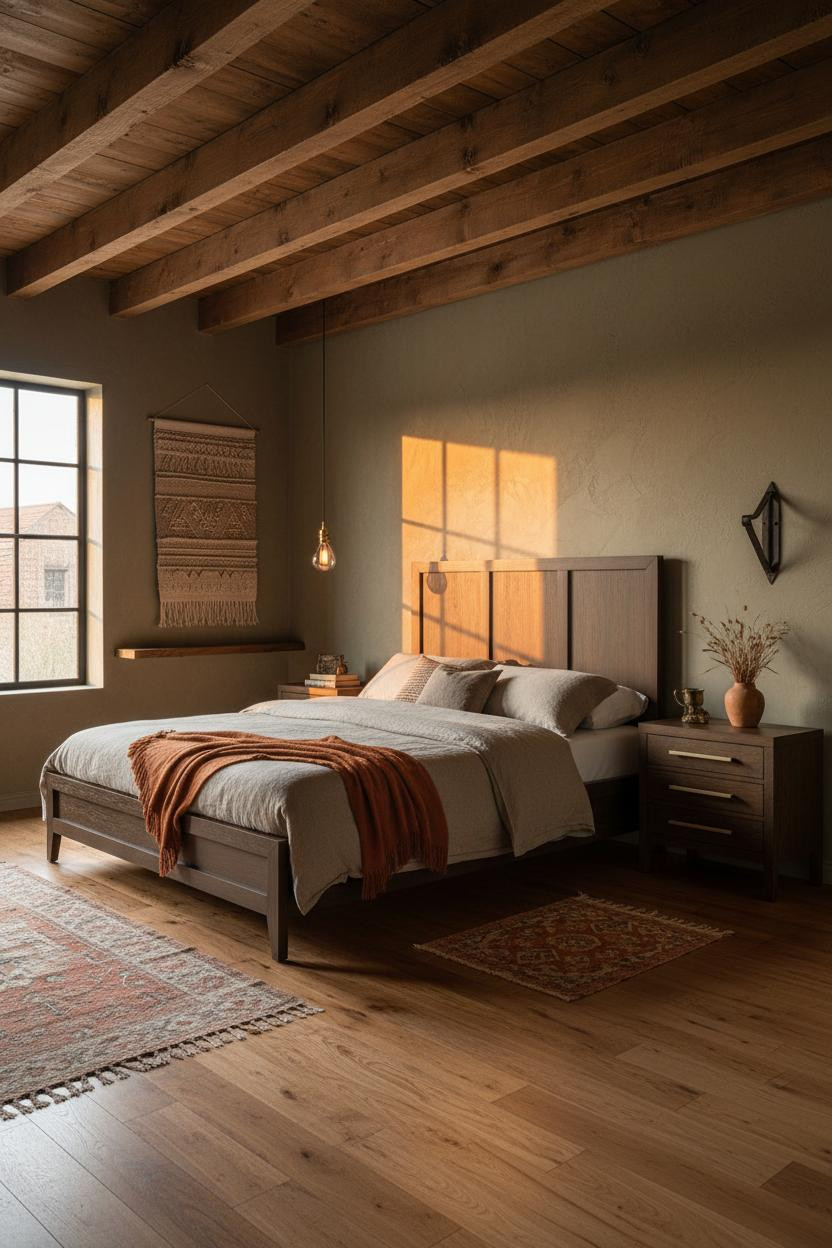
Most people decorate the walls and forget the ceiling. This room proves that's the wrong order.
Why it looks custom: Dark-stained rough-hewn beams at 14-foot height cast horizontal shadows that change all afternoon. They're the reason the dusty olive plaster walls don't need to do more than they do. The ceiling carries the room.
Worth copying: Suspend an Edison pendant from a beam rather than centering it in the room. The off-center pool of light feels genuinely inhabitated, not installed.
Shiplap Wainscoting Is the Underrated Option
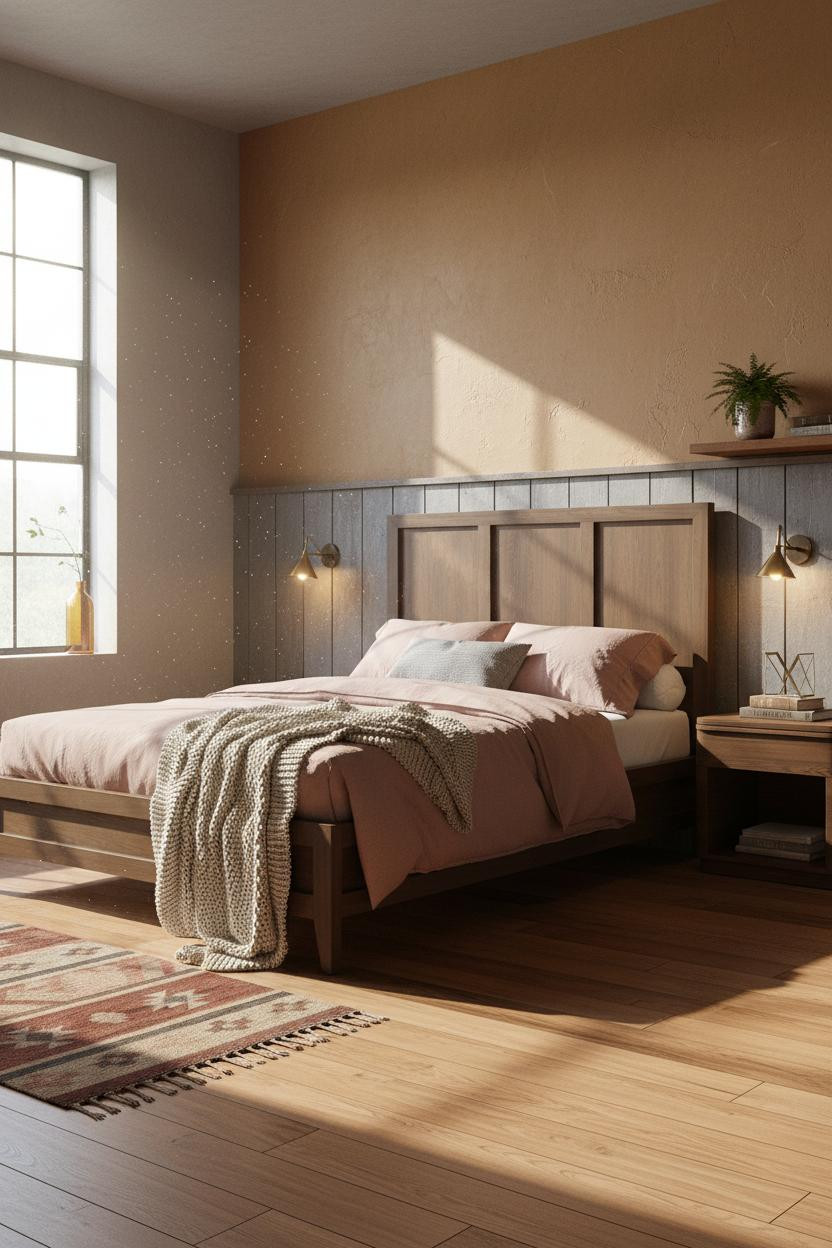
Not everyone has the walls for a full floor-to-ceiling treatment. Half-height wainscoting is the honest alternative, and it's actually harder to get wrong.
The real strength: Aged iron-grey shiplap boards running horizontal at half-height, topped with rough ochre plaster above, create a visible seam that grounds the room architecturally. It's a proportion trick. The bed feels anchored in a way that flat walls don't manage.
Dusty pink linen bedding keeps the grey from going too industrial. What not to do: Don't paint the wainscot white. You lose the whole effect.
Cream Shiplap Against Rust Walls Is a Strong Palette
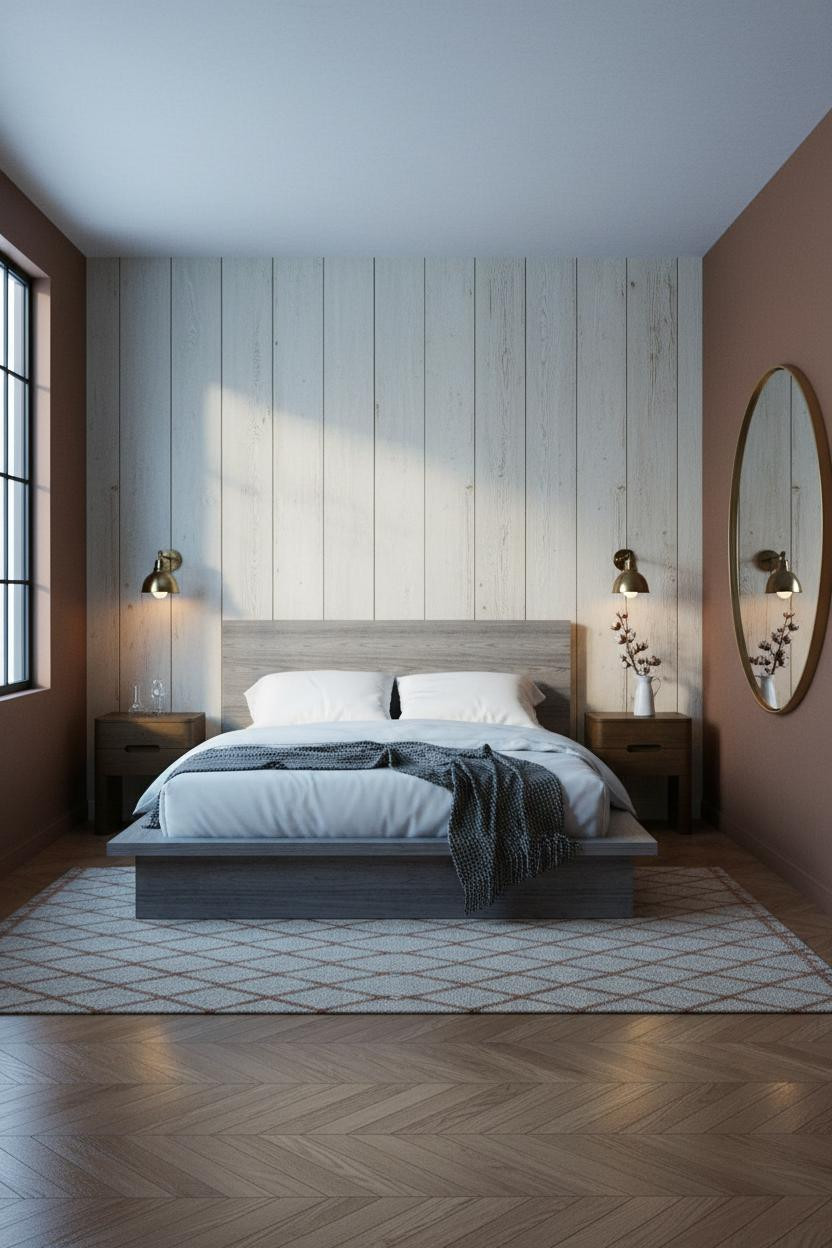

This one surprised me. The combination shouldn't feel refined. But it does.
Why the palette works: Soft cream shiplap against rust brown flanking walls creates contrast that feels warm rather than sharp, especially when morning blue-hour light flattens both into their quietest versions. The Moroccan diamond rug ties the herringbone floor into the whole without forcing it.
The easy win: A round mirror leaning against the shiplap instead of hung on it. Looks collected rather than installed.
Greige Board-and-Batten That Doesn't Try Too Hard
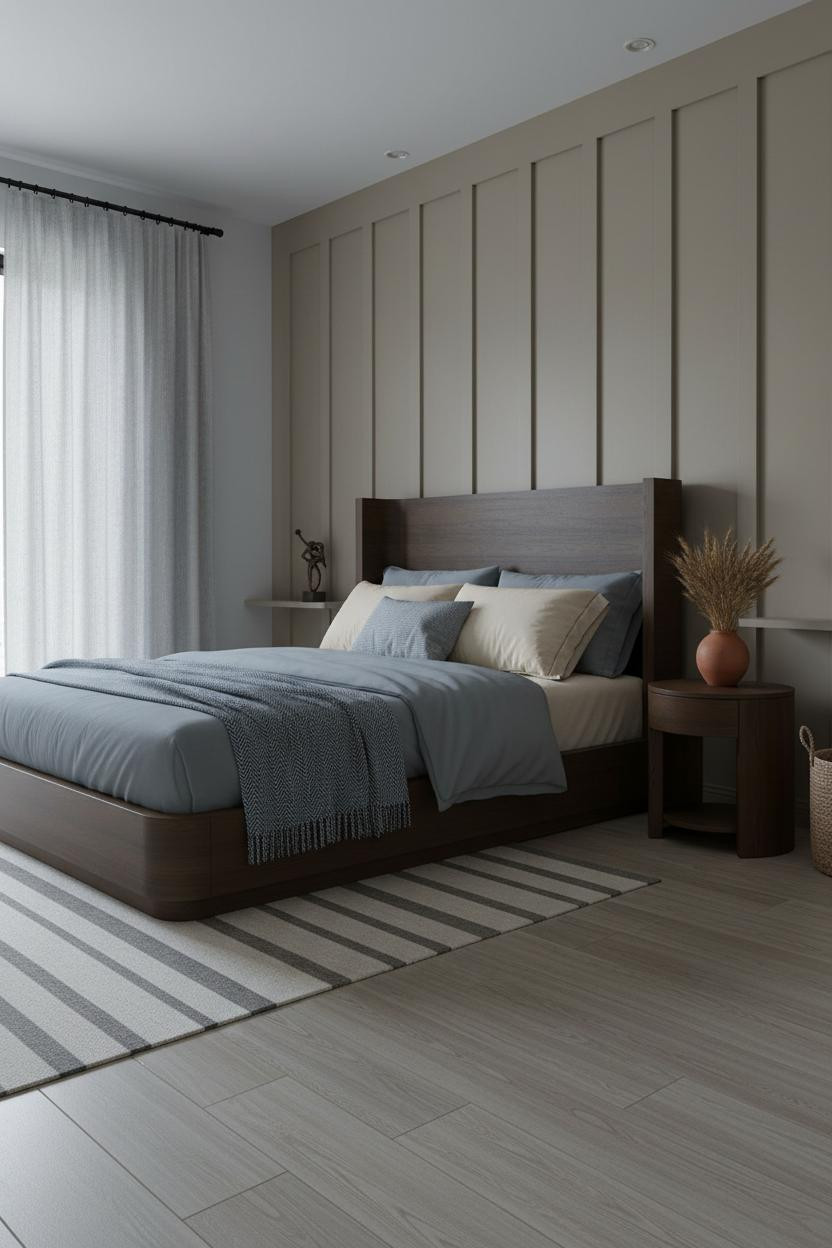
Nothing fancy. That's the point.
What makes this one different: Tonal greige on greige (battens on matching walls) means the pattern registers subtly in overcast light and reads more strongly in direct sun. The wall doesn't demand attention. It just makes everything else look more intentional.
A steel blue herringbone throw is the only thing pulling cool in an otherwise warm room. That tension is what keeps it from feeling like a showroom. The detail to keep: Full-length linen curtains on a black iron rod. They're doing real work here.
Exposed Brick Is Still the Best Farmhouse Industrial Move
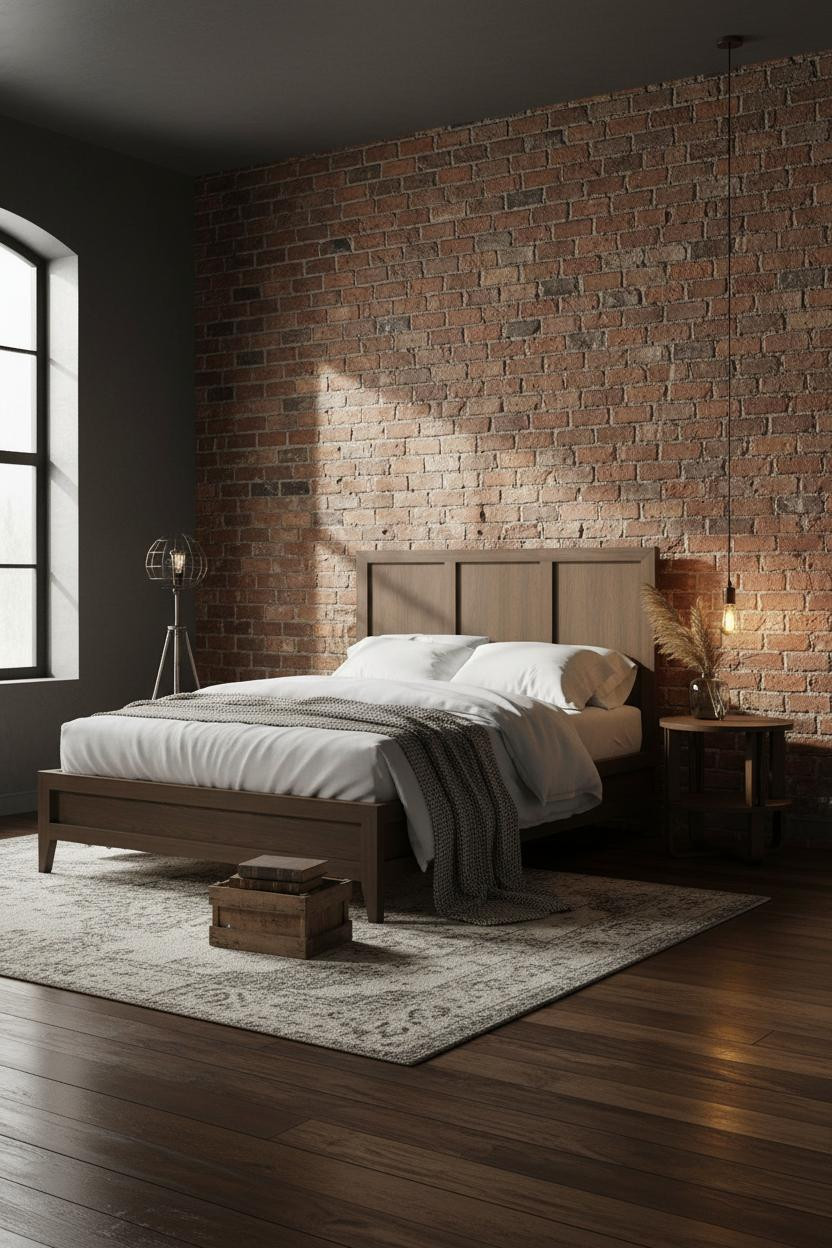
Admittedly, exposed brick has been done to death. But in a bedroom this dark and restrained, it earns its place again.
The reason it works here instead of reading as a loft cliche is the deep charcoal mortar between aged terracotta brick. That detail ages the wall in the right direction, toward farmhouse rather than converted warehouse. Charcoal plaster on the flanking walls pulls the whole room into the same key. And the dark walnut floor underfoot keeps it grounded rather than cold.
One smart swap: Trade a bedside lamp for an iron pipe floor lamp in the corner. The light source shifts lower and the room suddenly feels much more intimate.
 Our #1 Pick
Saatva Classic Mattress
America's best-selling online luxury innerspring. 365-night trial, lifetime warranty, free white glove delivery.
Shop Saatva Classic
Our #1 Pick
Saatva Classic Mattress
America's best-selling online luxury innerspring. 365-night trial, lifetime warranty, free white glove delivery.
Shop Saatva Classic
The Foundation Of Every Beautiful Bedroom
Every room in this list got the walls right. The floors right. The lighting right. But the one thing that actually determines how good a bedroom feels at the end of the day is the mattress you sink into.
The Saatva Classic is what I'd put in any of these rooms. Dual-coil support means it holds up properly over time without going soft in the middle. The organic cotton cover breathes, which matters more in a room this layered with heavy textiles. And the Euro pillow top has enough give to feel genuinely restorative without losing structure after a year.
Walls get repainted. Linen gets swapped out. Start with the bed. The rest figures itself out.

The rooms people save are the ones where nothing looks accidental. Good design ages well because it's made well. And it always starts with what you can't see from the doorway.