13+ Retro Bedrooms That Feel Collected, Not Costumed
21 may 2026The best 60s bedroom doesn't look like a time capsule. It looks like someone with good taste who happens to own a sunburst mirror and a walnut credenza.
These thirteen rooms get that balance right. Collected, not costumed.
The Sunburst Wall That Earns Its Drama
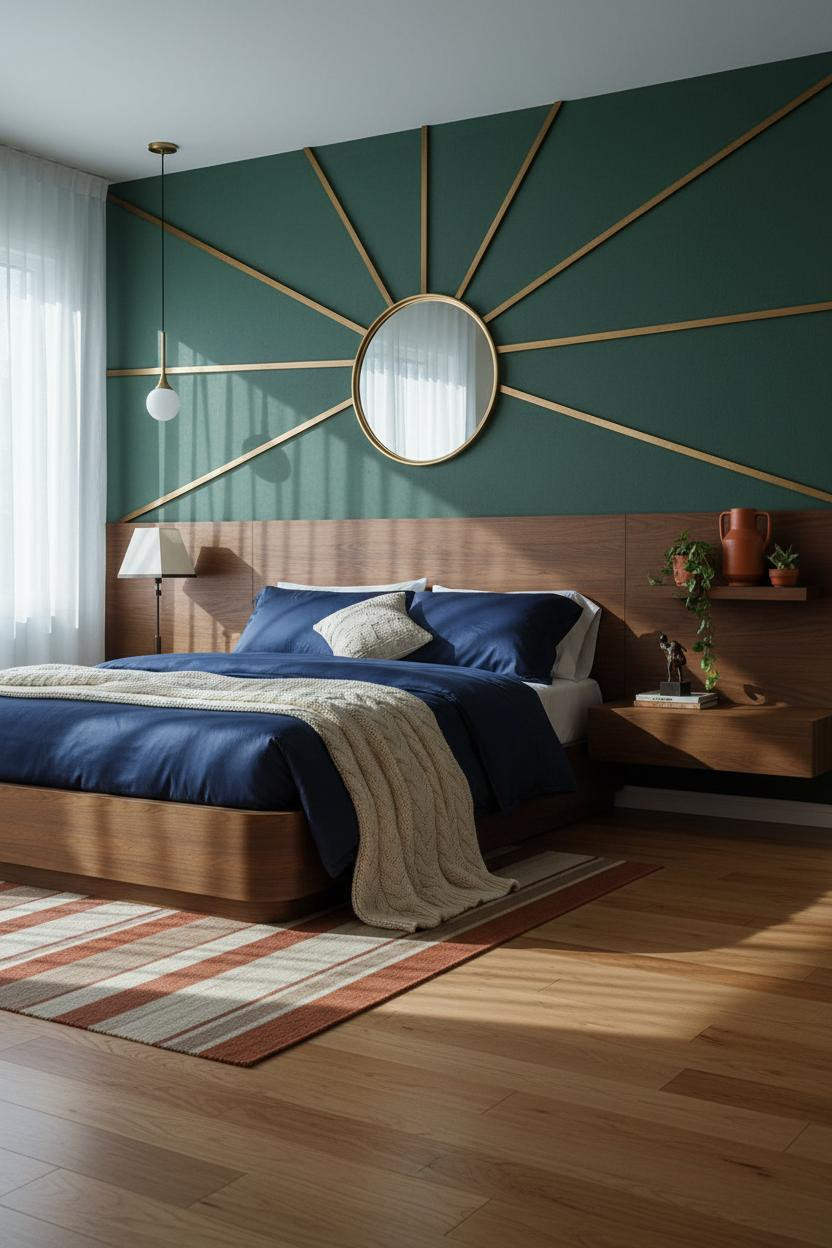
I keep coming back to this one. The geometry is bold but the room never tips into theatrical.
Why it holds together: The brass sunburst inlay on the walnut headboard wall has actual shadow relief, so it reads as architecture rather than decoration. Forest green matte plaster absorbs what the brass throws off.
Steal this move: Anchor a geometric feature wall with a dark, flat wall finish. The matte surface keeps the brass from feeling costume-y.
One Arch Does More Than a Gallery Wall
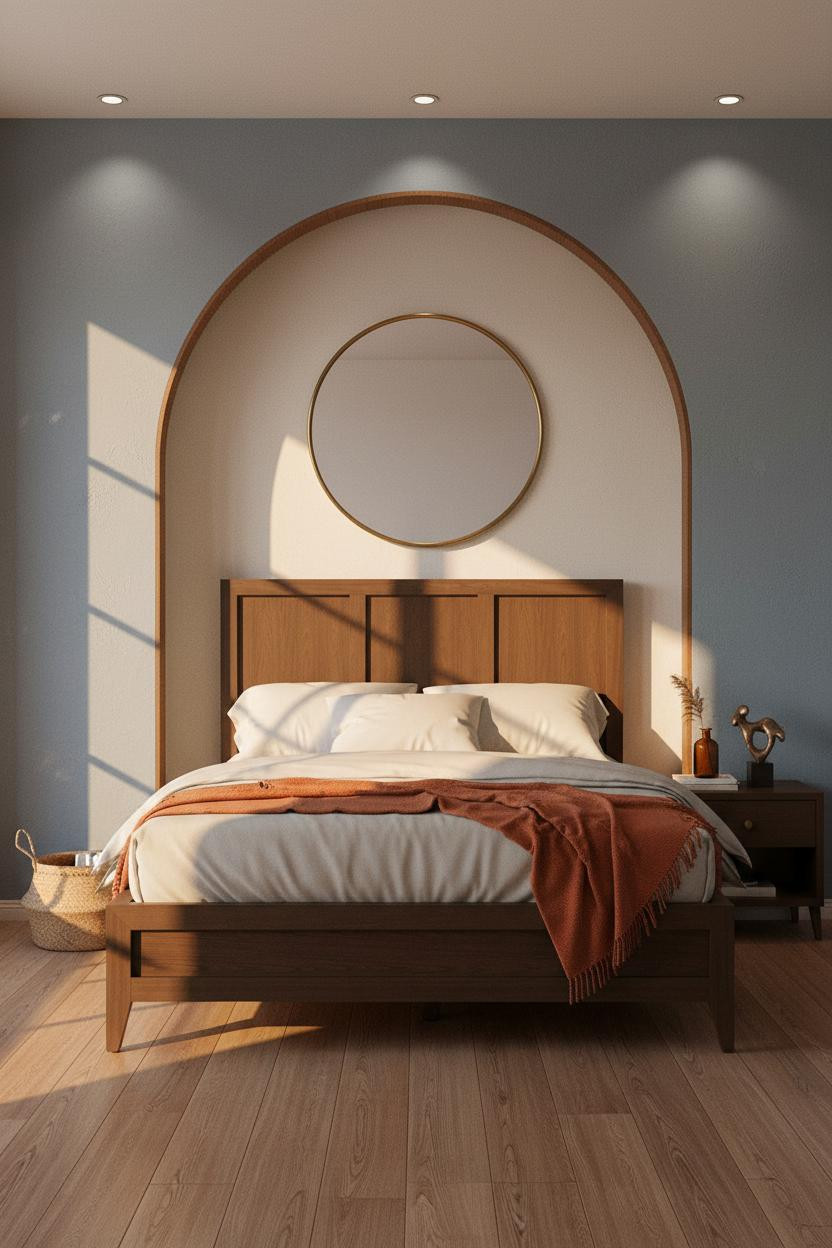
Straightforward in theory. But it's the kind of move that makes every other wall feel like an afterthought.
What changes the room: Carving a shallow plaster arch framed by a slim honey walnut border gives the bed wall architectural weight that furniture alone can't. The shadow line at the arch's curve does the heavy lifting.
The easy win: Keep everything inside the arch clean. One round brass mirror, nothing else. Let the curve be the statement.
Why Wainscoting Feels More 1960s Than You'd Expect
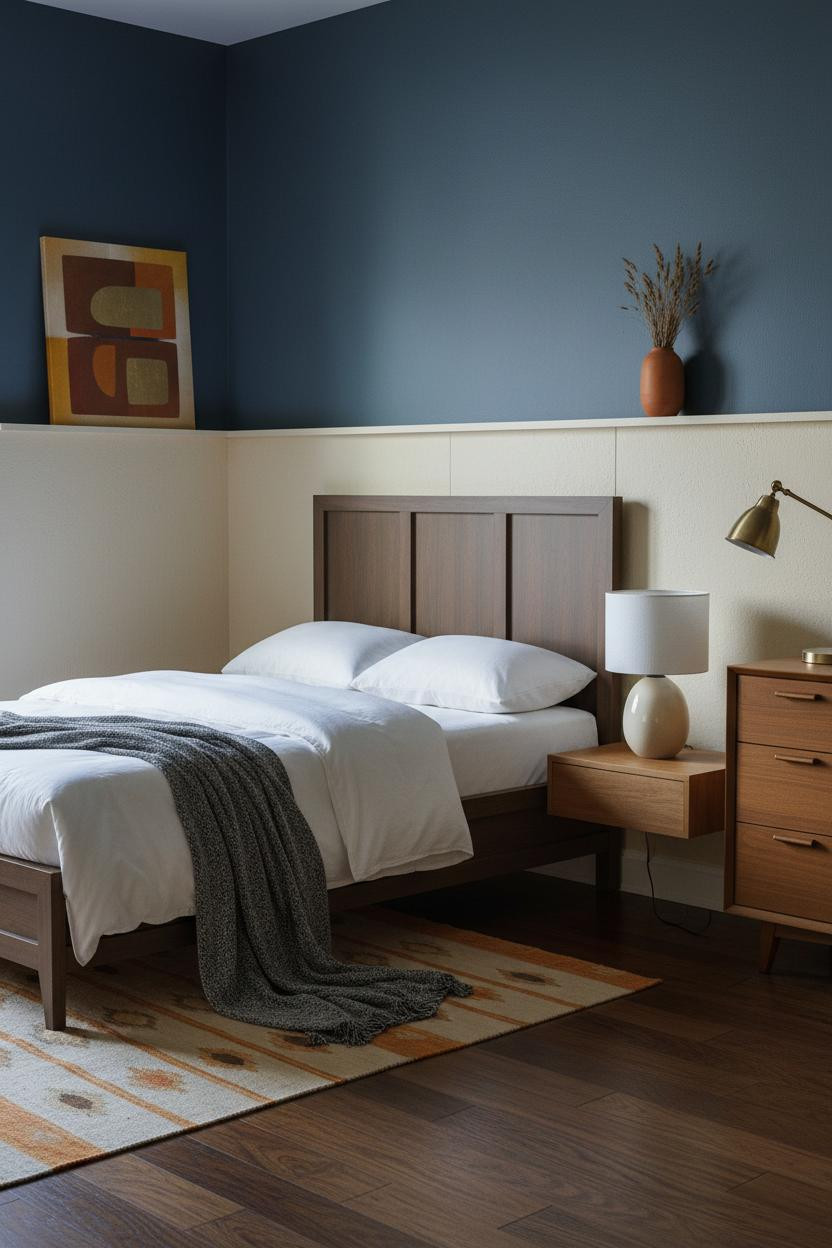
Not what you'd guess. Wainscoting usually reads traditional. But here it reads retro.
The reason it feels 1960s instead of Victorian is proportion. Textured cream plaster wainscoting at the lower third creates a clean horizontal line, and the deep slate blue above it pushes the ceiling up visually. The room feels calm and cohesive, not old-fashioned.
What to borrow: Stack a warm-toned abstract canvas against that ledge instead of hanging it. One move, immediate personality.
This Dark Room Shouldn't Be Restful. It Is.
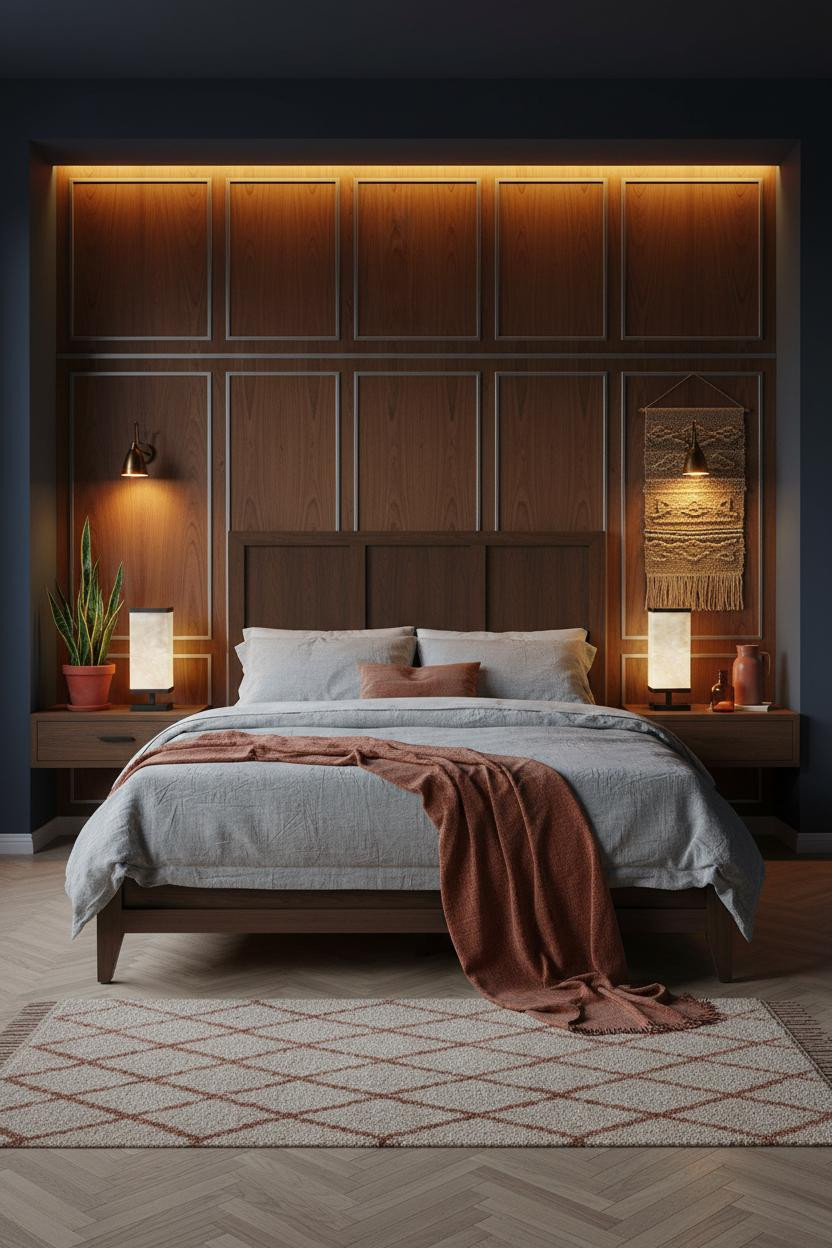
Deep indigo with warm wood paneling sounds like a design risk. It isn't, if you get the light right.
Why it feels warm: Modular walnut veneer panels with recessed chrome trim absorb amber light from the sconces, which keeps the indigo walls from feeling cold or cave-like. The room feels lived-in and intimate.
Avoid this mistake: Don't rely on overhead lighting in a room this dark. Paired bedside sconces are what make the geometry glow instead of just disappear.
Floor-to-Ceiling Wood Slats Are a Commitment Worth Making
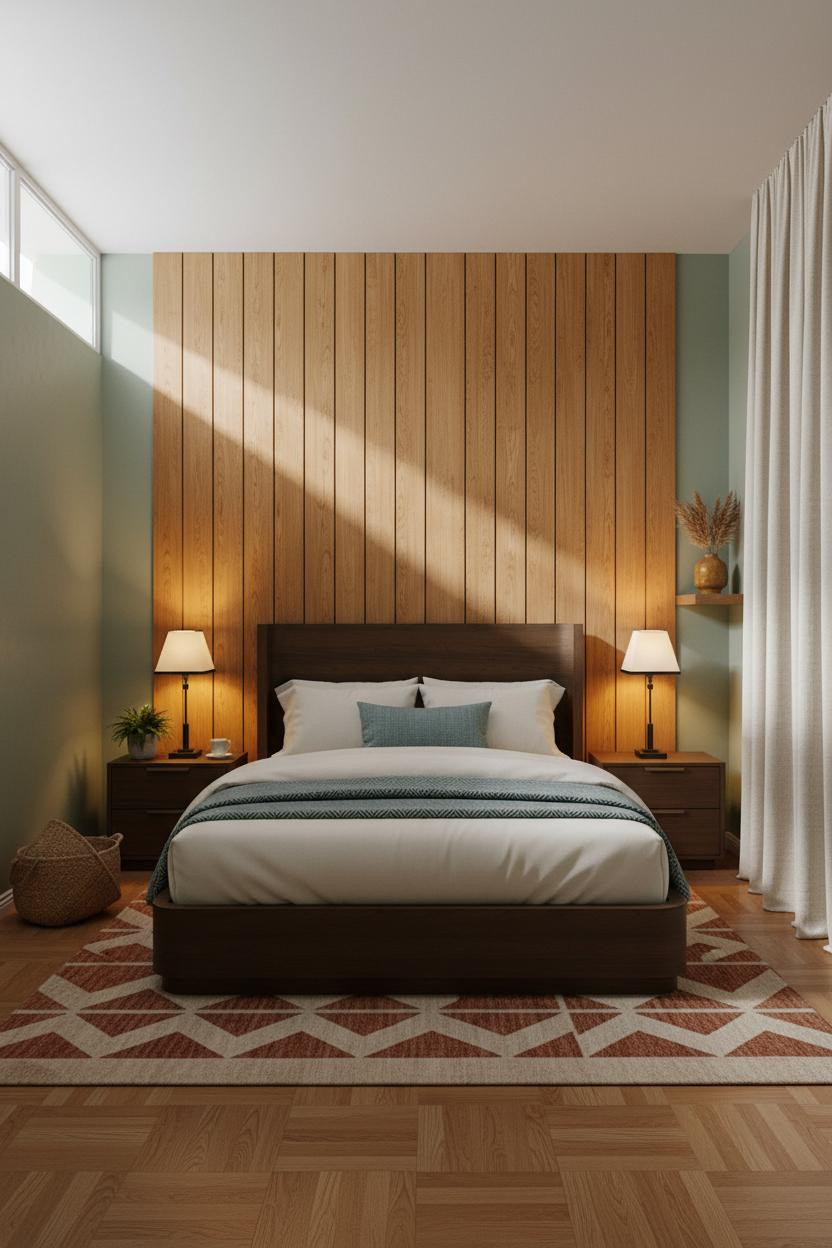
Honestly, vertical honey oak slats running floor-to-ceiling behind the bed is the single most recognizable move in the entire 1970s room aesthetic canon. And it still works.
The design logic: Each plank casts a thin shadow line, so the wall reads as textured grain at any distance, while sage green plaster keeps it from feeling too woody or heavy.
Pair the slat wall with floor-length cream linen curtains. The contrast between the vertical grain and soft fabric is the whole room.
The Tile Wall That Stopped Me Mid-Scroll
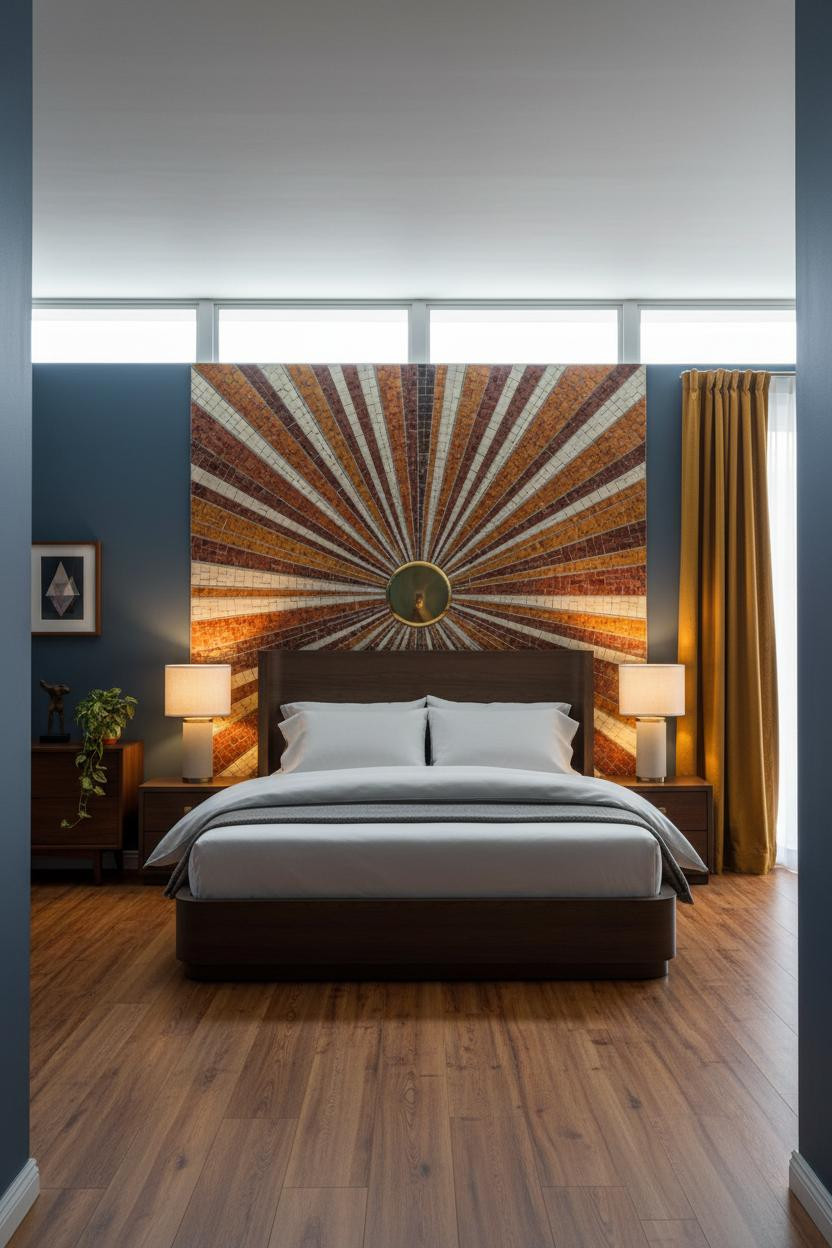
Fair warning: this one is divisive. But the people who commit to a full sunburst mosaic tile wall never look back.
Why it looks custom: Hand-set ceramic tiles in amber, rust, and cream radiating from a brass central disc create actual relief, so the wall casts its own shadow pattern across the room. Cobalt blue flanking walls ground it.
What not to do: Don't compete with the tile. White bedding, one grey wool throw. The wall is already saying everything.
Terracotta Walls and Honey Slats Are a Better Combination Than They Should Be
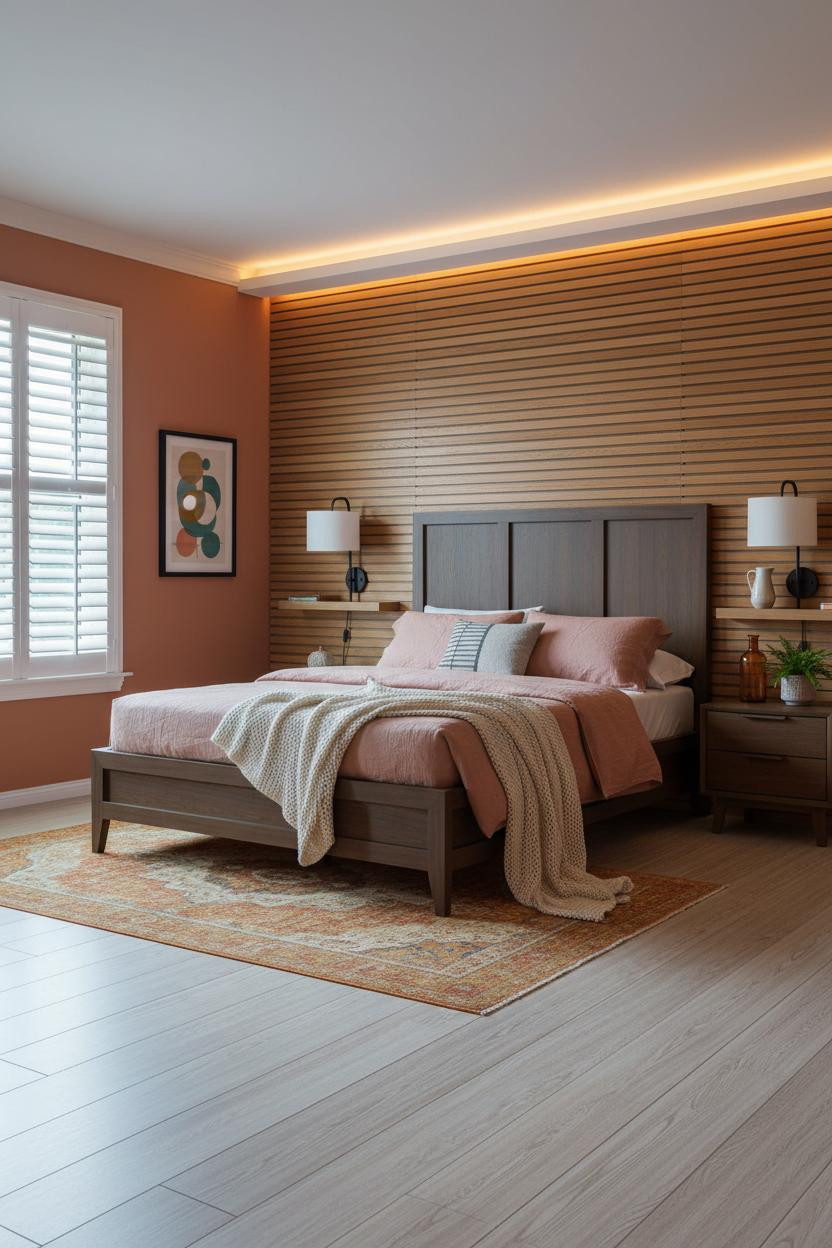
I wasn't sure about terracotta plaster next to warm wood. Turns out they pull from the same family, so they sit together without competing.
What softens the room: The horizontal honey oak slat wall behind the bed introduces rhythm, while the terracotta walls keep it warm and settled. Add a faded overdyed Persian runner and the look tips from retro into something that feels genuinely collected.
The finishing layer: Dusty pink linen bedding (not blush, not white) is the exact middle note this palette needs.
A Chevron Headboard That Actually Has Something to Say
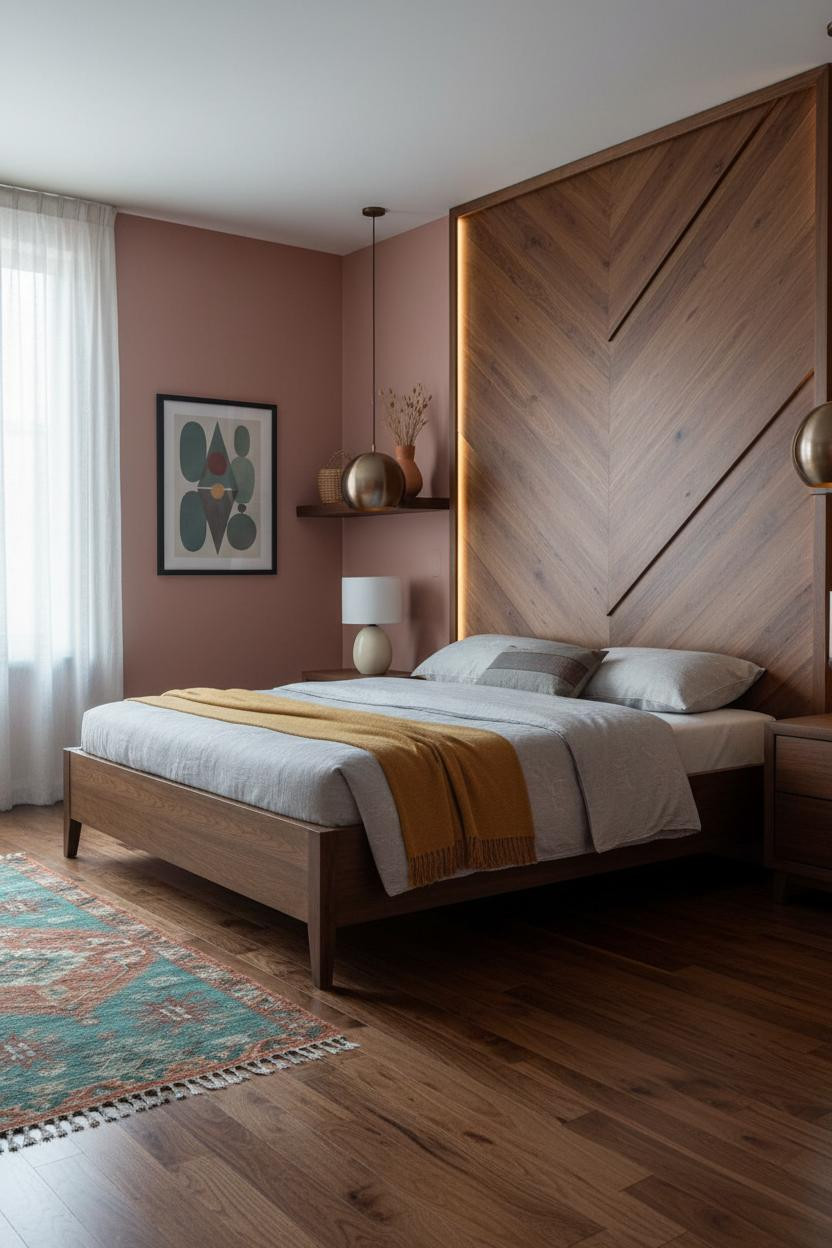
This is the kind of room where the wall is doing the decorating. Everything else just has to stay out of the way.
The walnut veneer chevron inlay at shallow relief casts crisp diagonal shadows across the grain, which means the wall looks three-dimensional even in flat light. Dusty rose plaster is the right call here. It holds warmth without fighting the geometry.
Pro move: Hang the pendant off-center above one nightstand. Symmetry would kill this room.
The Board-and-Batten Room I Keep Returning To
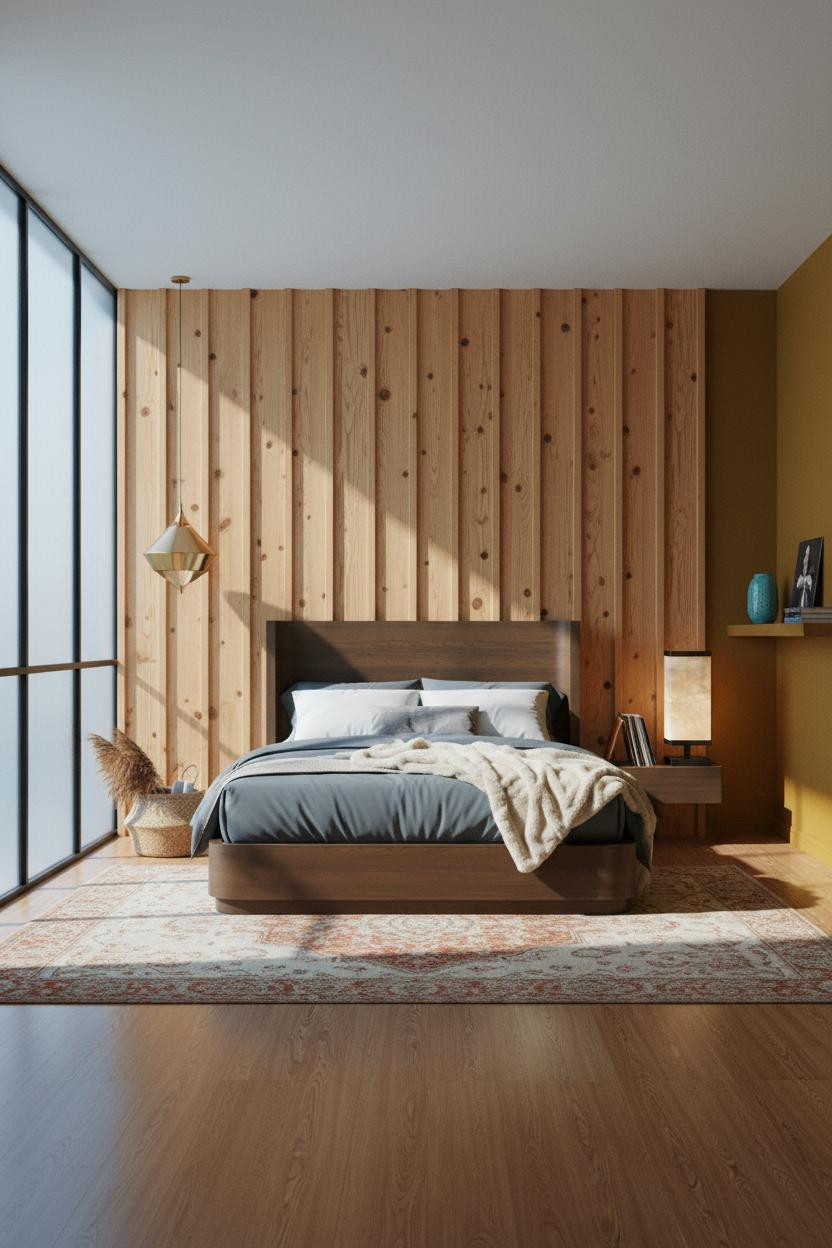
Board-and-batten usually gets used on kids' room accent walls. In warm honey pine with deep mustard plaster, it becomes something entirely different.
Why it feels intentional: Each batten casts a shallow shadow line, giving the wall a pulse of atomic-age rhythm that flat paint simply can't replicate. The mustard plaster on the flanking walls pushes the warmth even further without making the room feel small.
One smart swap: Trade the standard overhead fixture for a sculptural brass pendant. The warm grain deserves warmer light overhead, not a flat ceiling fixture.
Teal and Teak Is a Riskier Bet That Pays Off
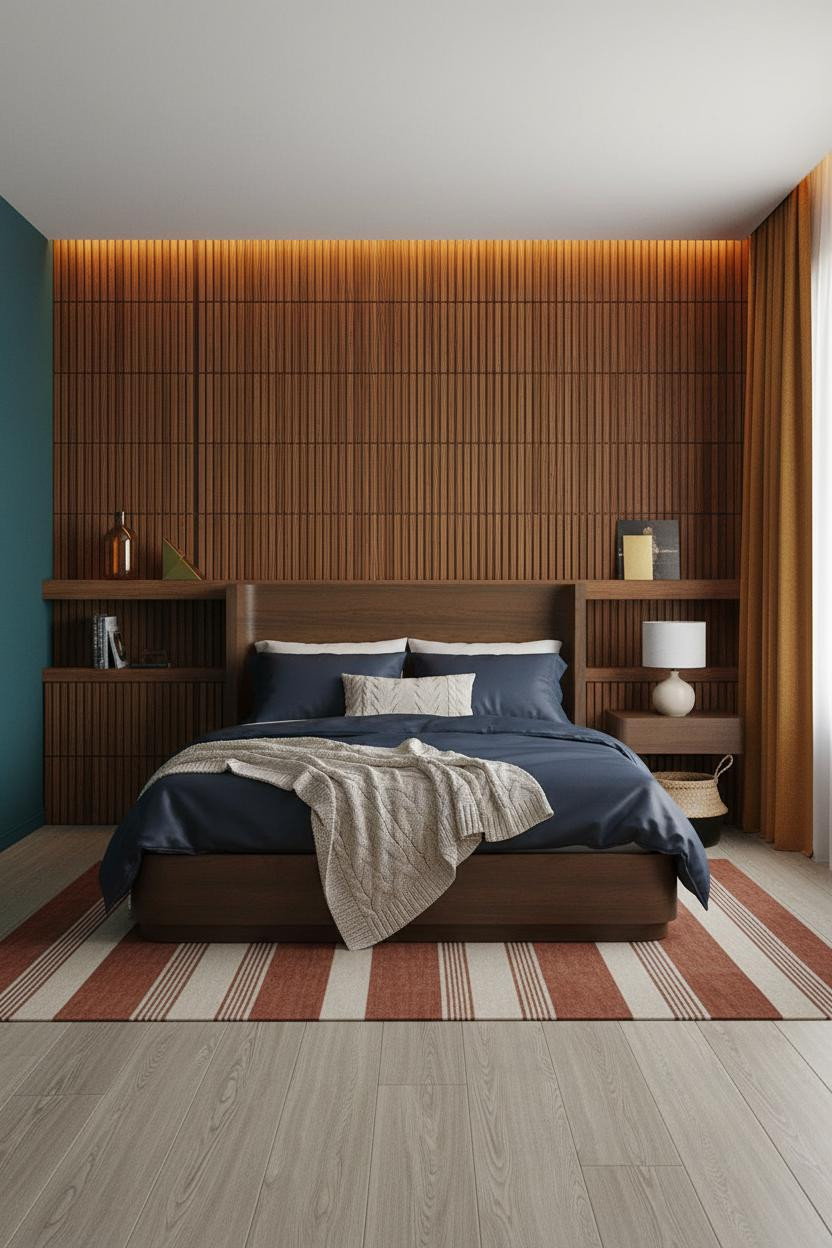
Admittedly, deep teal walls next to floor-to-ceiling slatted teak panels sounds like it should cancel itself out. It doesn't.
What gives it presence: The teak grain runs warm honey against dark walnut, so the teal reads as a cool complement rather than a clash. Cove lighting washing amber across the slats is what makes the whole thing glow.
Amber-ochre linen curtains as the window treatment are the detail to keep. They bridge the warm teak and the cool teal in a way that feels natural. Just enough warmth to hold it all together.
The Coffered Ceiling Room That Thinks in Three Dimensions
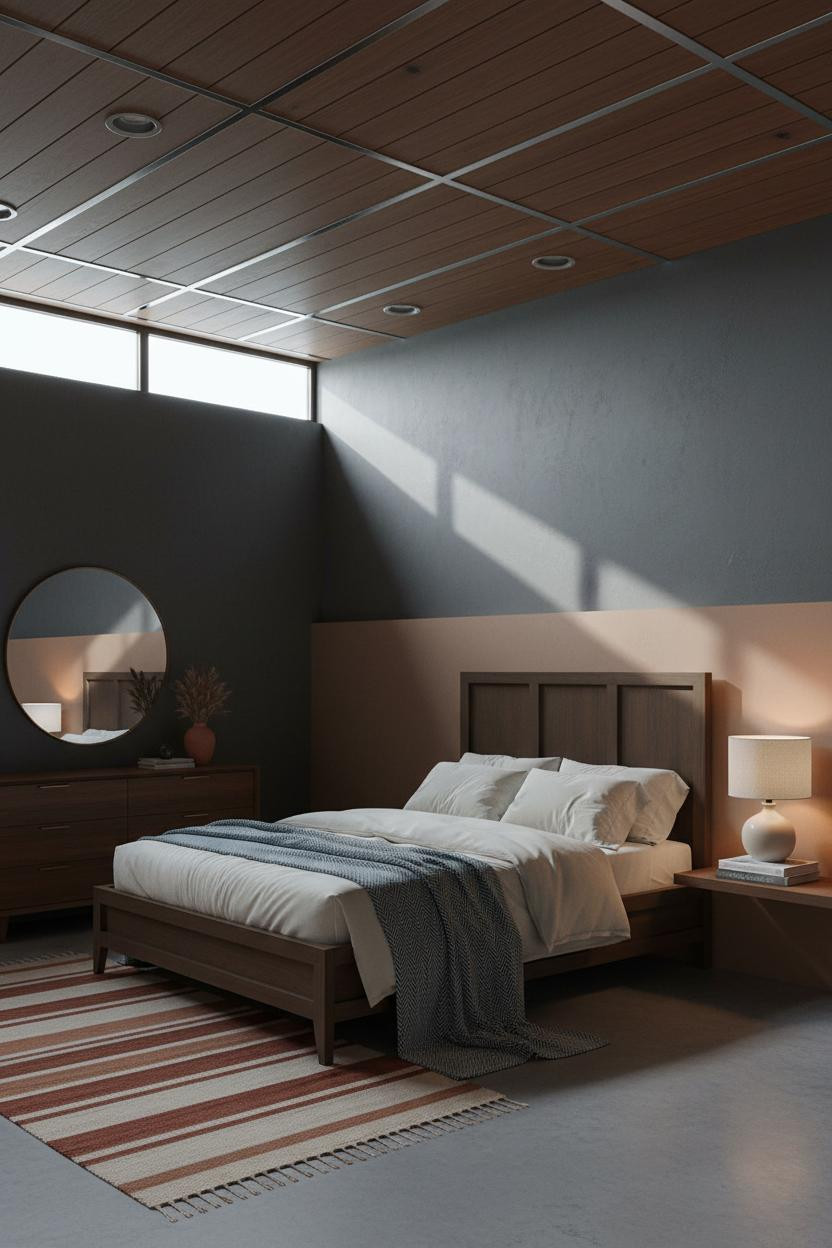
Most people spend all their effort on the walls and forget that the ceiling is the one surface you actually stare at in bed.
What creates the mood: A geometric coffered ceiling in brushed teak panels with thin chrome trim catches cool daylight and casts a grid of ladder shadows down the far wall. Charcoal plaster below keeps the geometry from feeling sterile.
The smarter choice: In a room with a strong ceiling feature, keep the bed simple and low. Let the architecture do the work.
When the Trim Detail Is Secretly the Whole Room
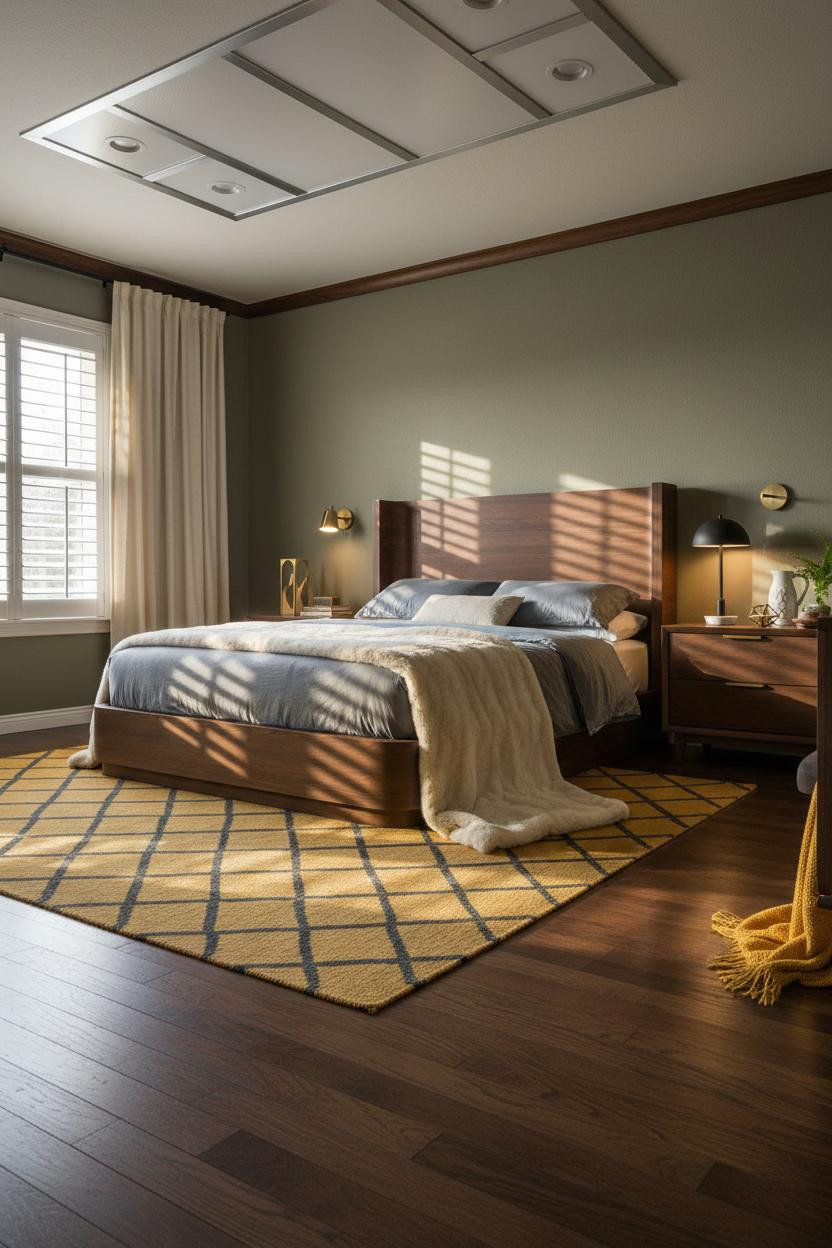
Nothing flashy. But I've been thinking about this one more than the dramatic rooms in this list.
The real strength: Walnut perimeter trim running the full eight-foot line defines the room's proportions without adding bulk. On olive plaster, that thin dark border makes the walls feel deliberate, like the room was designed rather than decorated.
The recessed aluminum ceiling grid does the same thing overhead. Where to start: Run walnut trim at the eight-foot line before you touch a single piece of furniture. It changes the scale of everything you put in the room afterward.
The Exposed Beam Room That Earns Every Square Inch
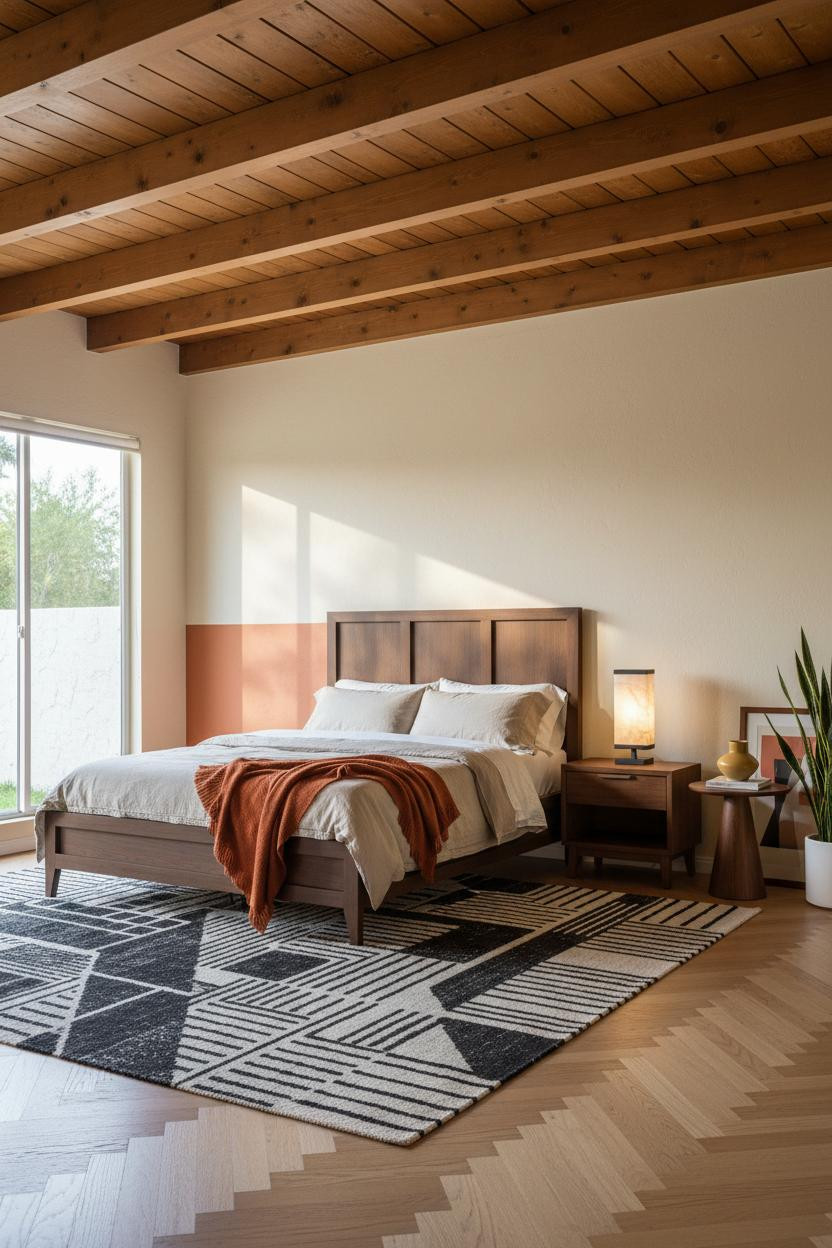
This is the Palm Springs version of a 60s bedroom. Warm, a little sun-drunk, and somehow still sharp.
Why the palette works: Exposed honey walnut beams spanning the full ceiling width throw amber shadows down onto a burnt orange accent wall. Cream plaster on three sides keeps it from feeling closed in, while a graphic wool rug grounds the warmth so the room doesn't float away.
What to copy first: The tapered walnut nightstand with a mustard ceramic vessel. A quiet nod to the era that doesn't need explaining.
 Our #1 Pick
Saatva Classic Mattress
America's best-selling online luxury innerspring. 365-night trial, lifetime warranty, free white glove delivery.
Shop Saatva Classic
Our #1 Pick
Saatva Classic Mattress
America's best-selling online luxury innerspring. 365-night trial, lifetime warranty, free white glove delivery.
Shop Saatva Classic
The Foundation Of Every Beautiful Bedroom
Walls get repainted. Credenzas get replaced. But the mattress is the one thing you feel every single night, which makes it the decision that actually matters most.
The Saatva Classic is what I'd put in every room on this list. Dual-coil support that holds its structure over years, breathable organic cotton that doesn't trap heat, and a Euro pillow top that still feels right the morning after a long week. Not soft in a way that sags. Soft in a way that lasts.
The rooms worth saving are the ones where nothing feels like a shortcut.

Good design ages well because it's made well. Start with the bed and the rest figures itself out.