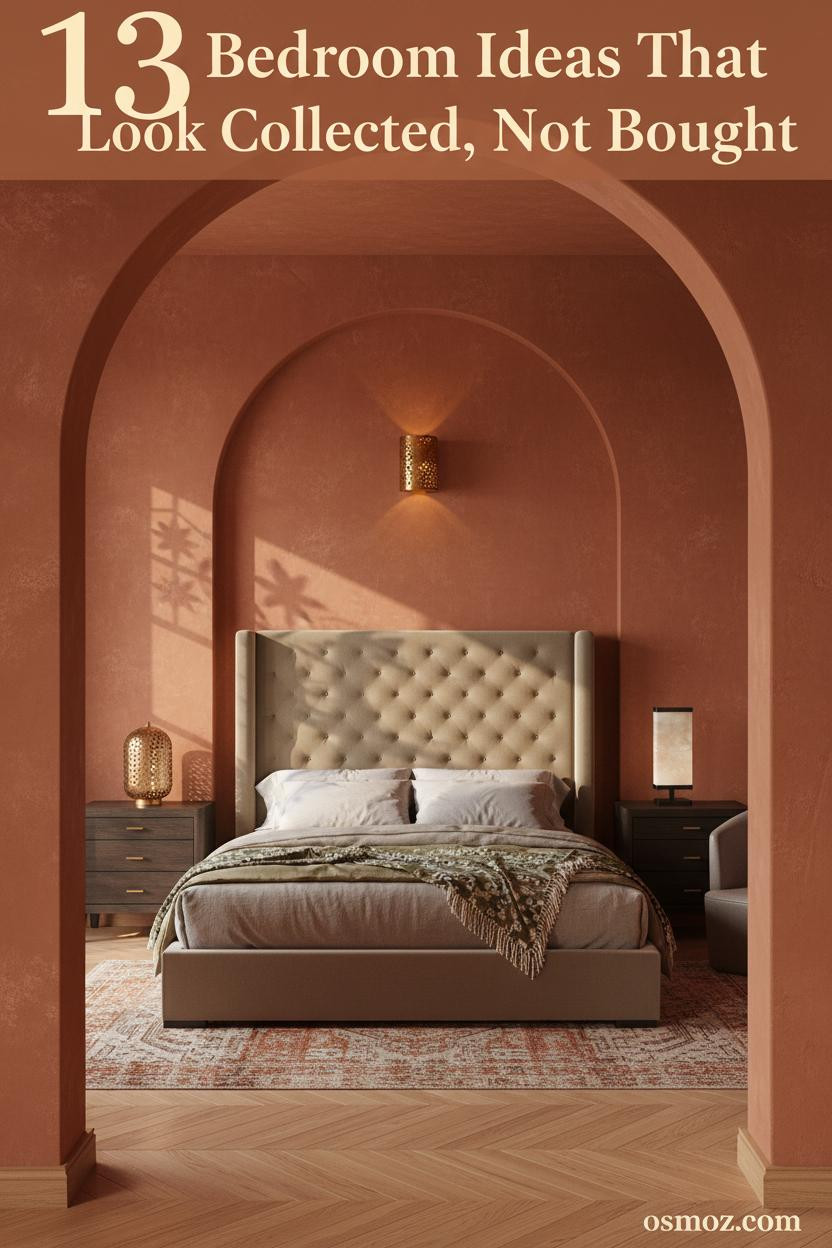
13+ Moroccan Bedroom Ideas That Feel Collected, Not Costume-y
03 april 2026The first thing you notice in the best Moroccan bedroom ideas is that nothing looks like it was ordered from one place. That's the whole point. Collected, warm, a little layered. Not a theme park.
Getting there is easier than it looks. You don't need zellige floors or a riad address. You need the right combination of texture, warmth, and restraint.
The Lantern Effect That Changes Everything At Night
Moroccan lighting isn't decorative. It's structural.
Once the sun sets, a pierced brass lantern does something overhead fixtures can't: it breaks light into geometry, scattering star-like patterns across plaster walls in a way that makes the room feel deliberately designed after dark.
The easy win: Swap one ceiling fixture for a hanging brass lantern. The shadows it throws do most of the atmosphere work for you.
Why Warm Plaster Walls Beat Paint Every Time
Paint gives you color. Tadelakt plaster gives you depth, warmth, and a surface that actually absorbs light instead of bouncing it back flat.
Why it feels expensive: The slight variation in a hand-applied plaster finish makes a wall look aged and intentional, not decorated. That's the difference between a Moroccan bedroom and a Moroccan-themed one.
Avoid this mistake: Don't pair plaster walls with glossy furniture. The contrast kills the warmth you're building.
I Keep Coming Back To This Arch Headboard Trick
I've seen this done badly and brilliantly, and honestly the difference is one decision.
A horseshoe arch painted or plastered directly onto the wall behind the bed gives the room a focal point that furniture alone can't create. It frames the bed like architecture, not decoration.
What to copy first: Paint the arch shape in a terracotta or warm clay tone, two shades deeper than your wall color. That's it. No special materials required.
The Kilim Rug Move That Grounds A Bare Floor
Bold choice. But flat-woven geometric rugs are one of the fastest ways to pull a Moroccan bedroom together without repainting a single wall.
A vintage kilim in rust, navy, and ivory does double duty: it adds pattern at floor level and ties warm tones into a room that might otherwise feel too neutral. The woven geometry reads as intentional, not accidental.
Pro move: Layer a smaller kilim over a larger jute base rug. The contrast in texture keeps it from looking like a single flat decision.
What Happens When You Commit To Dark Walls
Fair warning: this one isn't for the light-and-airy crowd.
But deep midnight navy or charcoal walls in a Moroccan bedroom create a cocooning effect that warm neutrals simply can't. The room feels intimate and layered, especially when brass accessories and warm candlelight are doing the work alongside.
Avoid this mistake: Don't add cool-toned bedding. Crisp white sheets will fight the warmth. Go ivory, stone, or oat instead.
The Textile Layer Most People Stop Too Early
This is where most Moroccan-inspired bedrooms fall flat: they stop at one patterned pillow and call it done.
What gives it depth: Layering washed linen bedding under an embroidered wool throw, with a small brocade cushion tucked at the front, creates the kind of collected look that feels gathered over years rather than ordered in one afternoon.
The finishing layer: Add one flat-woven lumbar pillow in a geometric pattern. Just one. Too many and the bed starts to look like a prop.
A Low Seating Nook That Actually Gets Used
Having a low seating area changes how you actually move through a bedroom. It gives the room a second destination.
Why it holds together: A floor-level cushion bench in burnt orange velvet, pushed into a corner with a small brass tray table beside it, gives the room a lounge quality that no armchair can replicate at the same scale.
Best for: Rooms with at least one unused corner. The lower the seat, the more the proportions read as intentional rather than cramped.
Zellige Tile Used As An Accent, Not A Statement
I'll be honest: zellige tile covering an entire floor is a commitment most people aren't ready for. But a narrow inlay band? That's something else entirely.
A single row of cobalt zellige set into a plaster wall or across the top of a niche adds the handmade, slightly imperfect quality that makes a room feel like it has a real provenance. Each tile catches light differently, which creates movement in a way that printed tile simply can't.
Where to start: A small recessed niche in the headwall is the lowest-commitment way to introduce zellige tile without overhauling the room.
How Mashrabiya Screens Earn Their Keep In A Modern Bedroom
A carved mashrabiya screen leaned against a wall or hung in front of a window does something no curtain can: it turns incoming light into pattern.
Why it looks custom: The lace-like geometric shadows it throws across a plaster wall shift through the day, making the room feel different at 8am than it does at 4pm. That kind of built-in variation is what makes a space feel alive.
One smart swap: Use it as a room divider in a larger bedroom instead of a curtain. You keep the openness while still feeling a sense of enclosure.
The Brass Detail You Can Add Without A Full Renovation
Nothing in a Moroccan bedroom ages better than unlacquered brass. It starts warm and gets better as it patinas.
The real strength: A brass tray on the nightstand, a hammered brass pendant above the bedside, and one tall copper urn in the corner create a metallic thread that pulls the whole room into coherence, in a way that feels collected rather than matchy.
What not to do: Don't mix brushed brass with polished gold. Pick one finish and let it repeat quietly through the room.
Pattern Mixing That Feels Intentional, Not Chaotic
This is the part people get wrong most often. And honestly, it's simpler to fix than it looks.
The design logic: Keep your color palette tight (two or three tones, not six) and vary scale instead. A large geometric on the rug, a smaller diamond repeat on the pillow, a fine stripe in the throw. Different scales within the same palette keep the room feeling rich while still feeling cohesive.
The smarter choice: Start with the rug pattern and build everything else around it. The floor sets the palette. The rest follows.
Why A Canopy Still Works In A Modern Moroccan Room
I know canopy beds have a reputation for feeling overdone. But in a Moroccan-inspired bedroom, a simple draped canopy in undyed raw cotton reads completely differently from the four-poster hotel version.
What creates the mood: The draping softens the ceiling and draws the eye upward, making even an eight-foot ceiling feel taller. It encloses the sleeping area just enough to feel intimate without making the room feel smaller.
Worth copying: Keep the fabric plain. Let the pattern come from the textiles below it, not from the canopy itself.
The Modern Riad Bedroom That Earns Every Piece
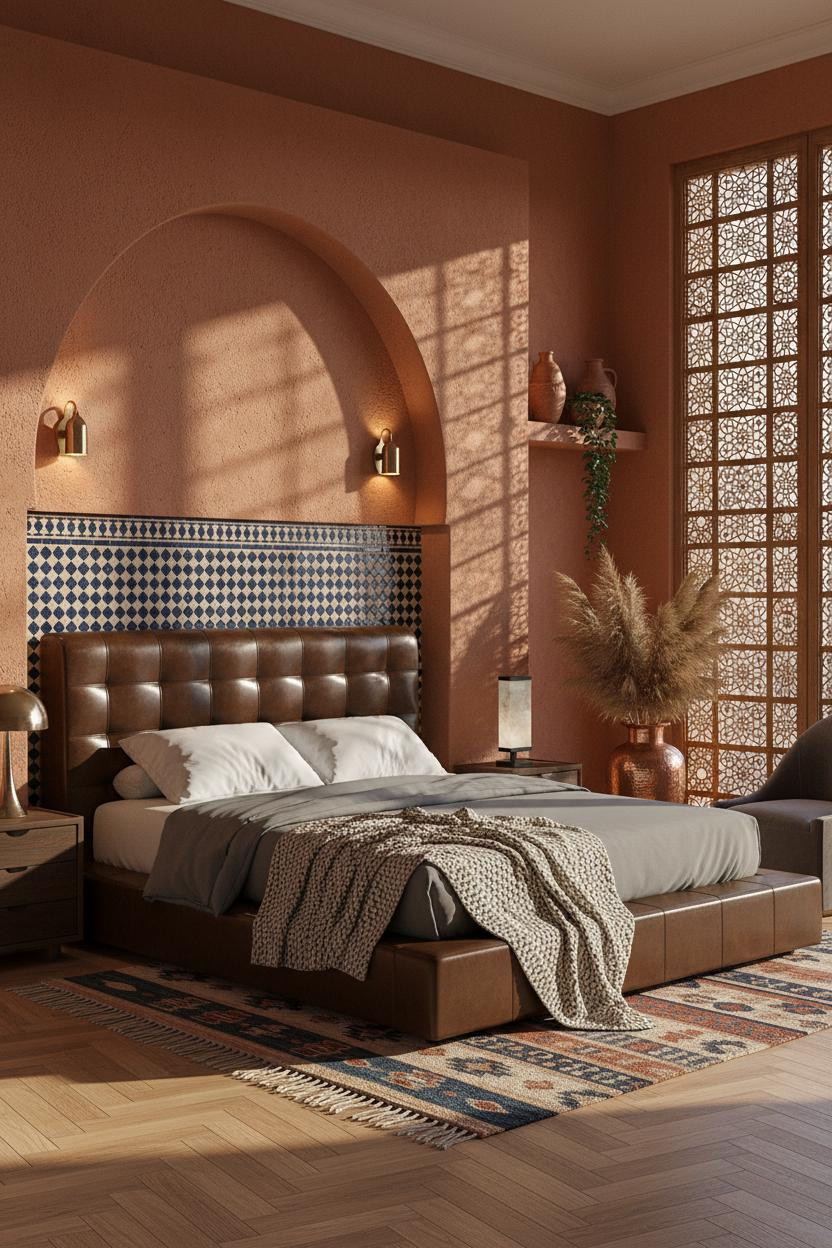

This is the one I come back to most. Not because it's the most dramatic, but because it gets the balance exactly right.
The terracotta plaster headwall with its recessed zellige tile inlay does more than look beautiful: it gives every other material in the room something to respond to. The honey oak herringbone floor echoes the warmth, the vintage kilim grounds the palette, and the brass sconces keep the whole thing from tipping into heavy.
Why it feels intentional: Nothing here is fighting for attention. Each material earns its place because it's doing real work in the palette.
Steal this move: If you can only do one architectural detail, make it the headwall. Everything else layers in afterward.
 Our #1 Pick
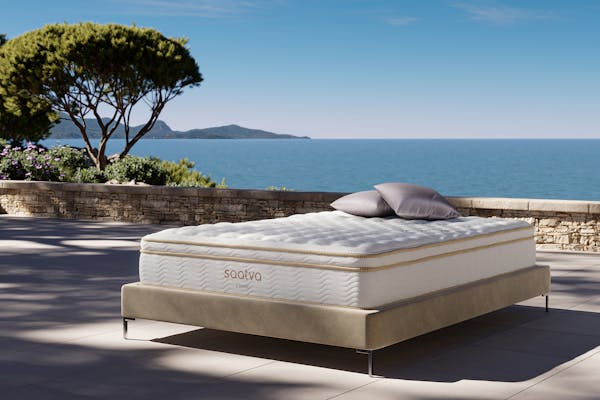
Saatva Classic Mattress
America's best-selling online luxury innerspring. 365-night trial, lifetime warranty, free white glove delivery.
Shop Saatva Classic
Our #1 Pick
Saatva Classic Mattress
America's best-selling online luxury innerspring. 365-night trial, lifetime warranty, free white glove delivery.
Shop Saatva Classic
The Foundation Of Every Beautiful Bedroom
All of this layering, the plaster and brass and woven textiles, only lands the way it should when the bed itself is worth sinking into. That's where the Saatva Classic comes in.
The dual-coil support system holds up through years of use while still feeling genuinely soft. The Euro pillow top has that give you get in a well-made hotel bed, and the breathable organic cotton cover means the warmth of the room doesn't translate into a hot night's sleep.
Build the room you want to wake up in. Start with the mattress.

The rooms that stay saved in your camera roll are the ones where every layer looks chosen, not assembled. Moroccan bedroom design earns that quality more naturally than most styles, because it was built on the idea of accumulation over time. Good design ages well because it's made well.