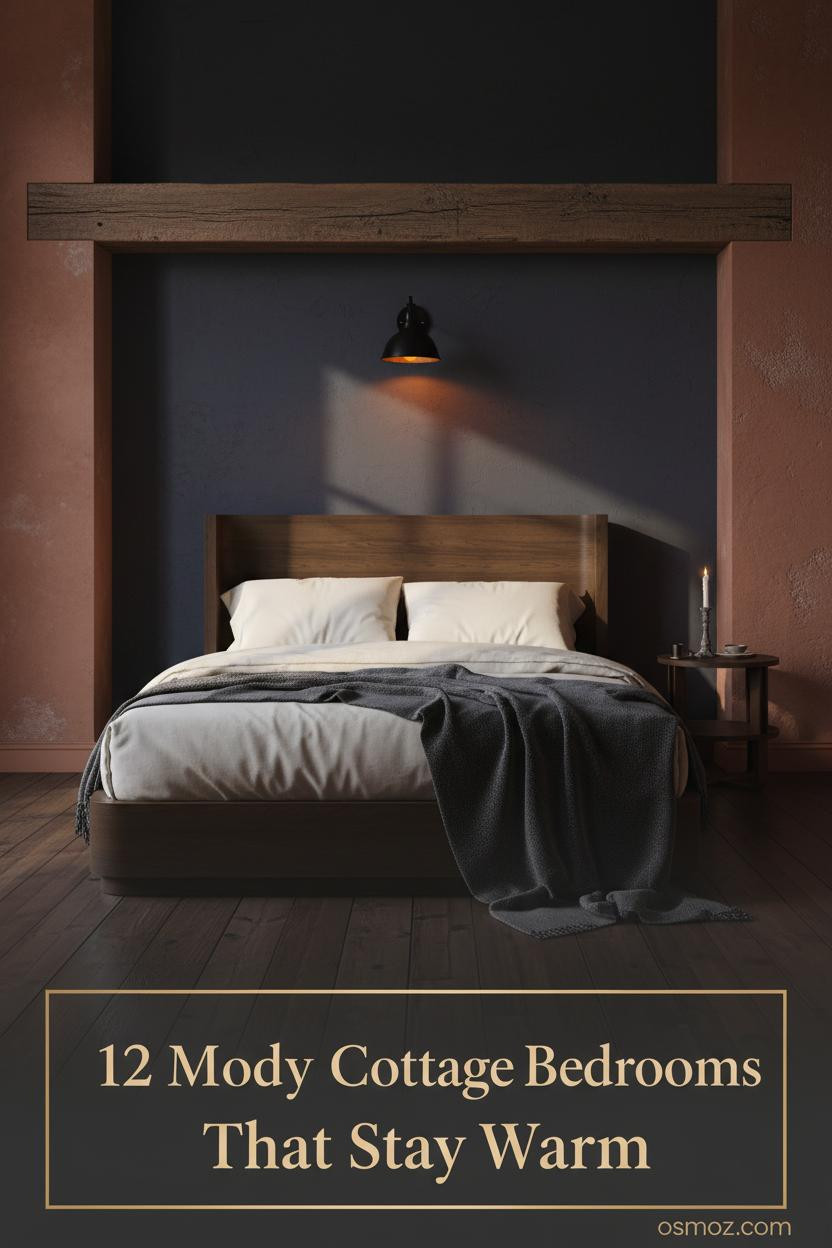
12+ Moody Cottage Bedrooms That Feel Dark but Still Somehow Warm
02 april 2026I'm a shadows-and-candlelight kind of person. So moody cottage bedrooms have always felt less like a design choice and more like a personality test. The ones that get it right? They're dark but never cold. Heavy but somehow still breathable.
These twelve rooms nail that balance. Each one finds warmth inside the darkness, and that's harder than it looks.
The Indigo Wall That Makes Frost Feel Cozy
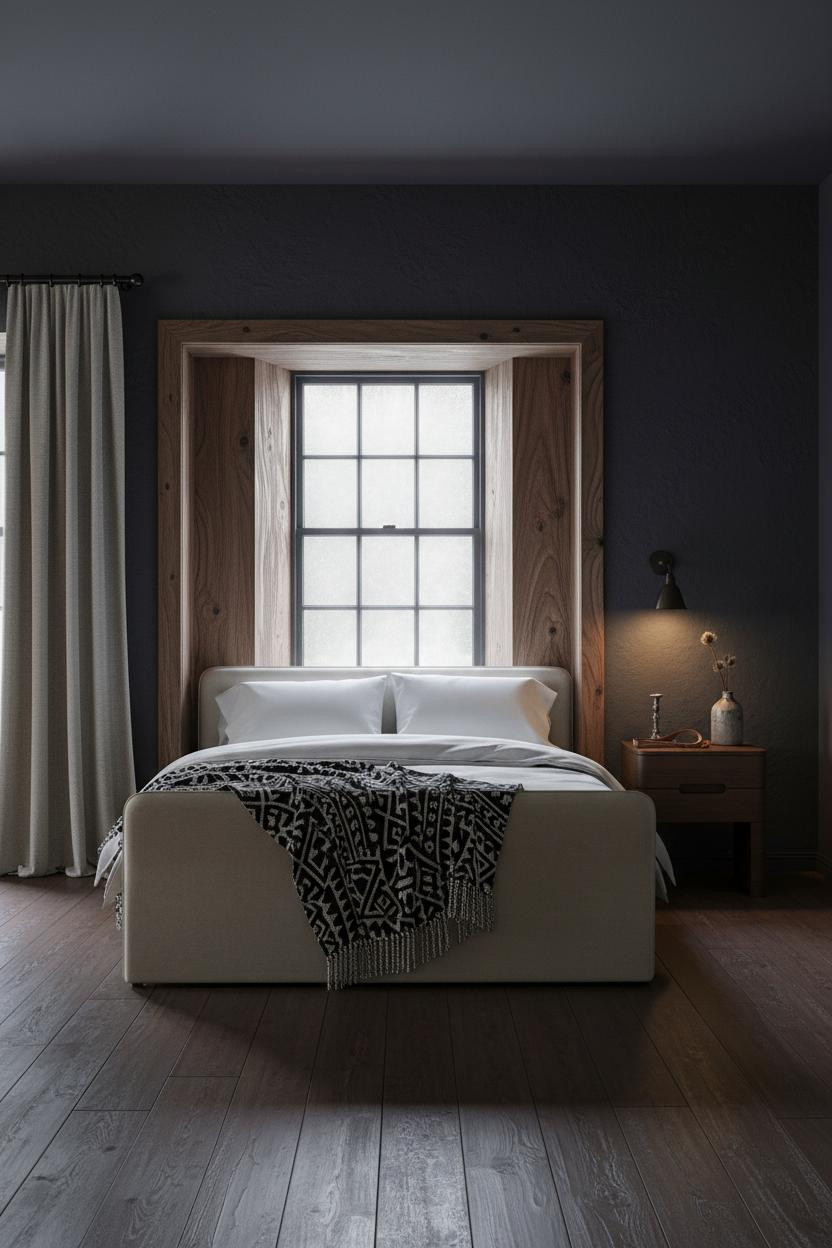

This is the kind of room that makes you want to stay in bed until noon, which I consider a design success.
Why it works: The aged walnut niche on the headwall pulls warmth from the amber sconce while the indigo-black plaster stays cool and heavy around it. Two temperatures, one room, and they don't fight.
Steal this move: Pair a deeply recessed timber wall feature with a single iron sconce and let the grain do the rest.
Dark Shiplap Done With an Irish Country Edge
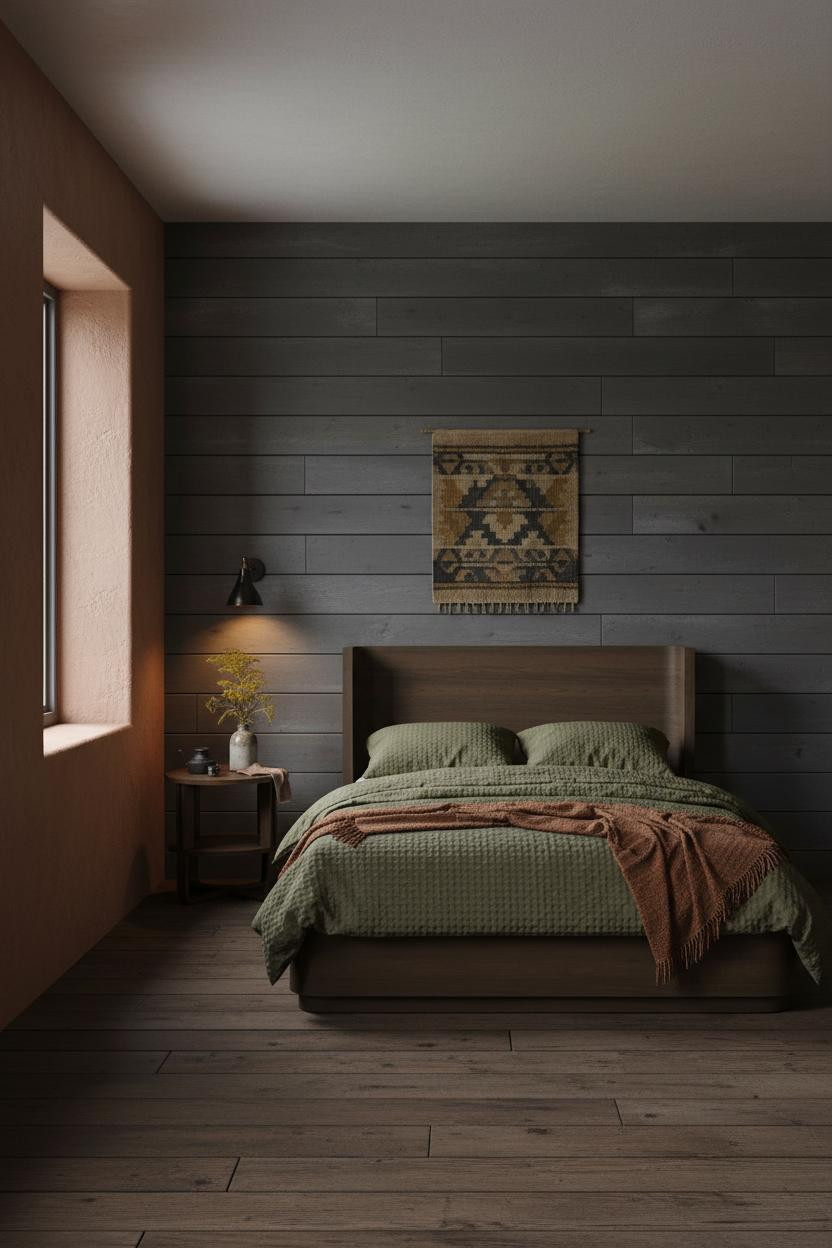


Divisive. People either love this or scroll straight past it.
But once you commit to iron-grey painted shiplap at full wall height, the rhythm of those horizontal planks catching raking light becomes the whole room's personality.
The detail to keep: Warm rust-clay plaster on the flanking walls keeps the grey shiplap from reading cold.
What not to do: Don't add a patterned rug here. The plank lines need bare boards to land.
Portuguese Tilework as a Bedroom Focal Point
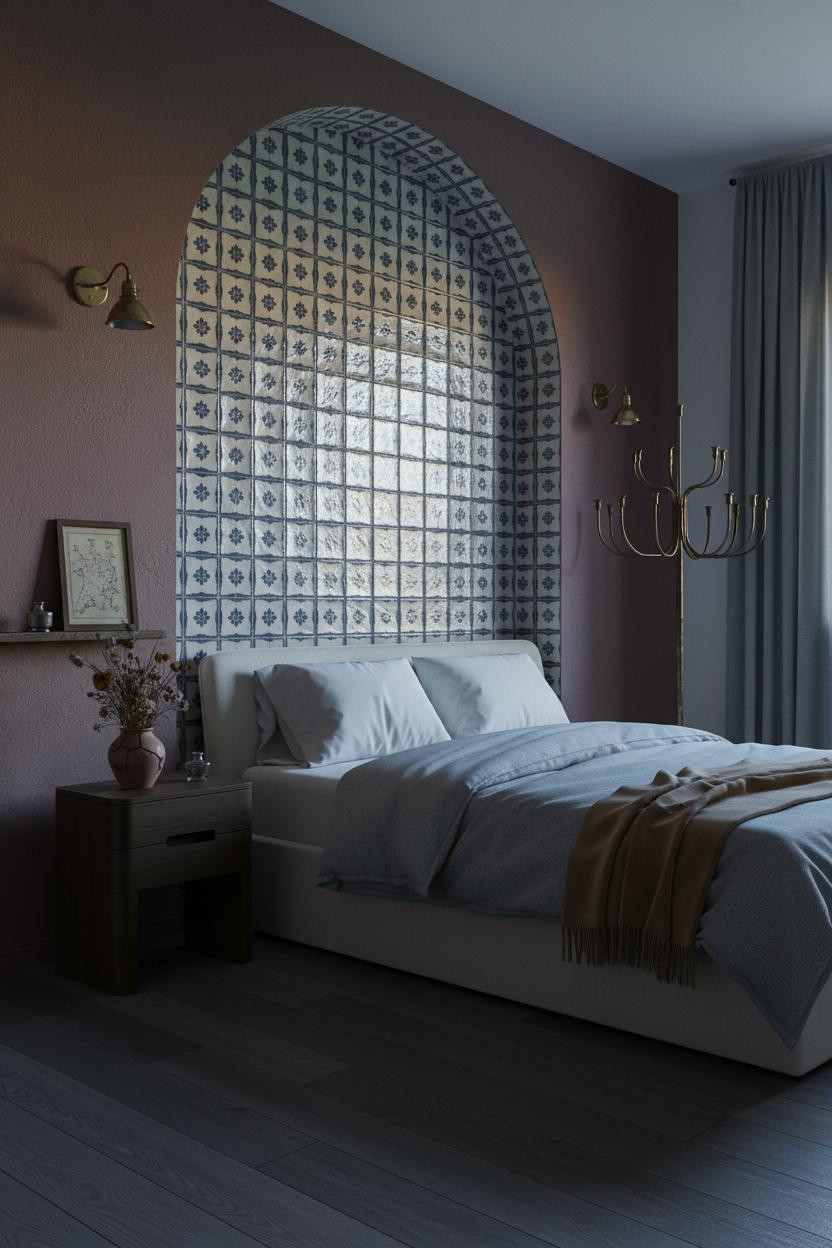
I keep coming back to this one. There's something about tilework at this scale that makes the whole room feel genuinely ancient.
What gives it presence: The indigo and cream azulejo tiles in a floor-to-ceiling arched alcove catch cool north light across every raised relief edge, so the pattern reads three-dimensional even in flat photography.
Use plum-rust plaster on the flanking walls so the blue in the tiles doesn't go icy. That warmth on the sides is what holds it together.
When a Bookshelf Wall Becomes the Architecture
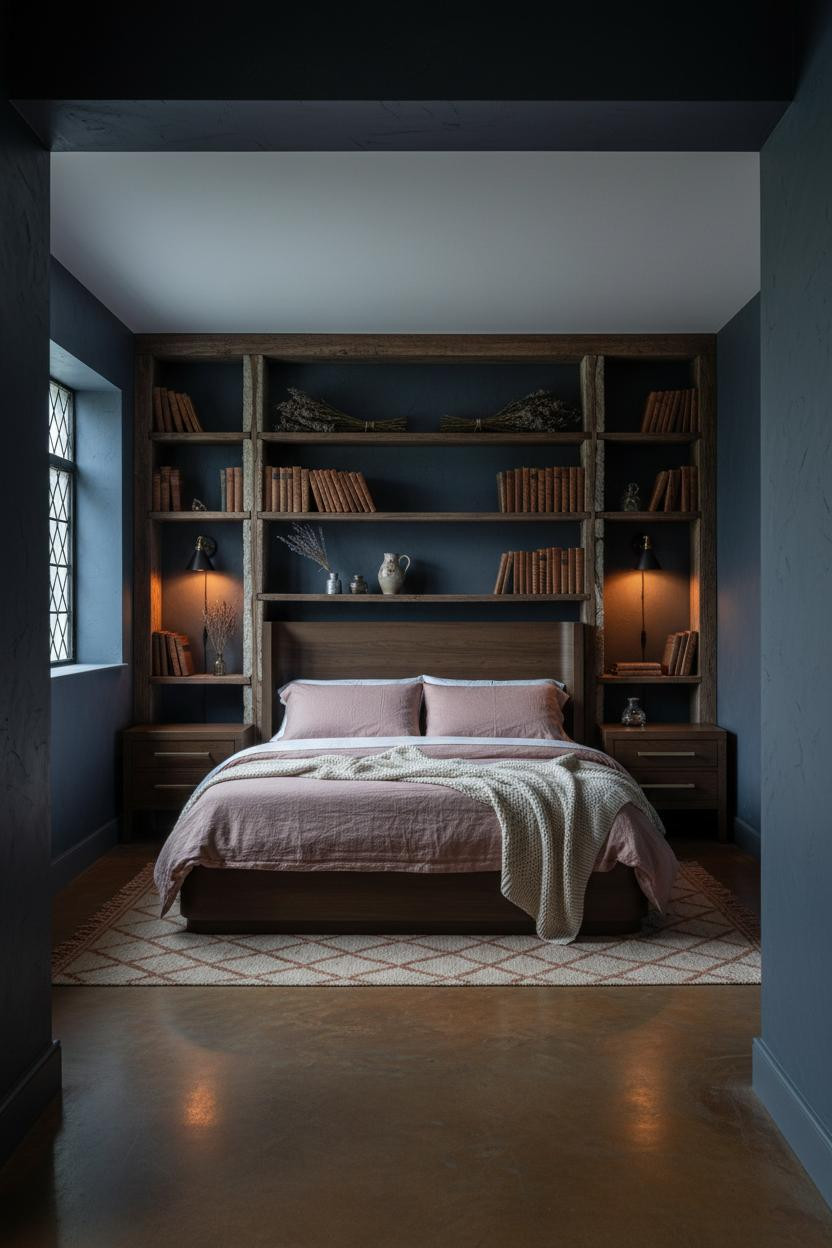
The room feels collected rather than decorated, and honestly that's the hardest thing to actually pull off.
Why it looks custom: A full-width built-in shelf wall in dark iron-painted timber creates a rhythm of shadow and light across every loaded shelf, so the books and dried botanicals feel like they belong to the architecture.
The easy win: Lay a faded Moroccan wool rug over polished concrete to keep the room from reading too austere at floor level.
Walnut Paneling That Does All the Heavy Lifting
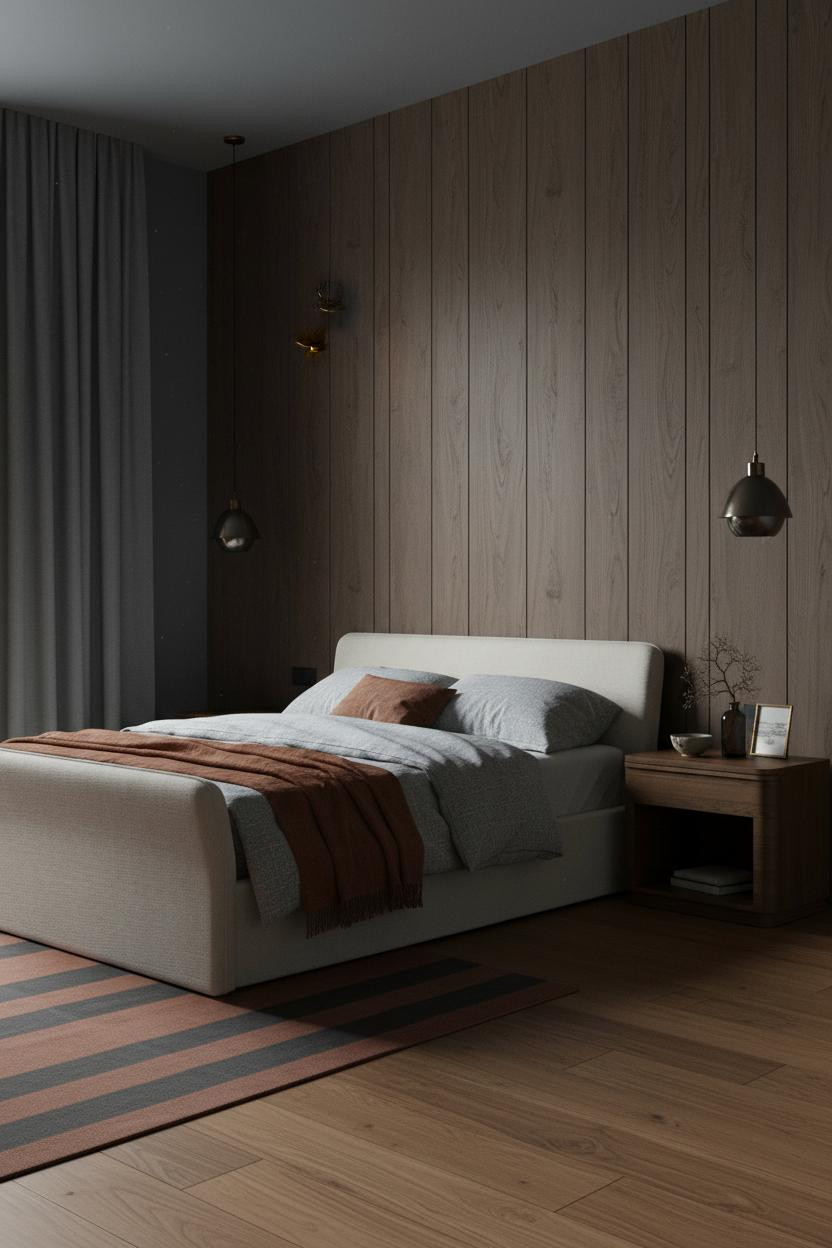

Full-height vertical paneling in aged walnut on the headwall is the kind of move that looks expensive because it is, a little. But there's no shortcut that replicates it.
Design logic: Each board joint casts a precise shadow line, so the wall reads as deeply textured rather than flat, especially when the brass sconce hits the grain from the side. The mushroom-grey plaster on adjacent walls keeps it from going too dark overall.
Aged Stone That Makes the Room Feel Centuries Old
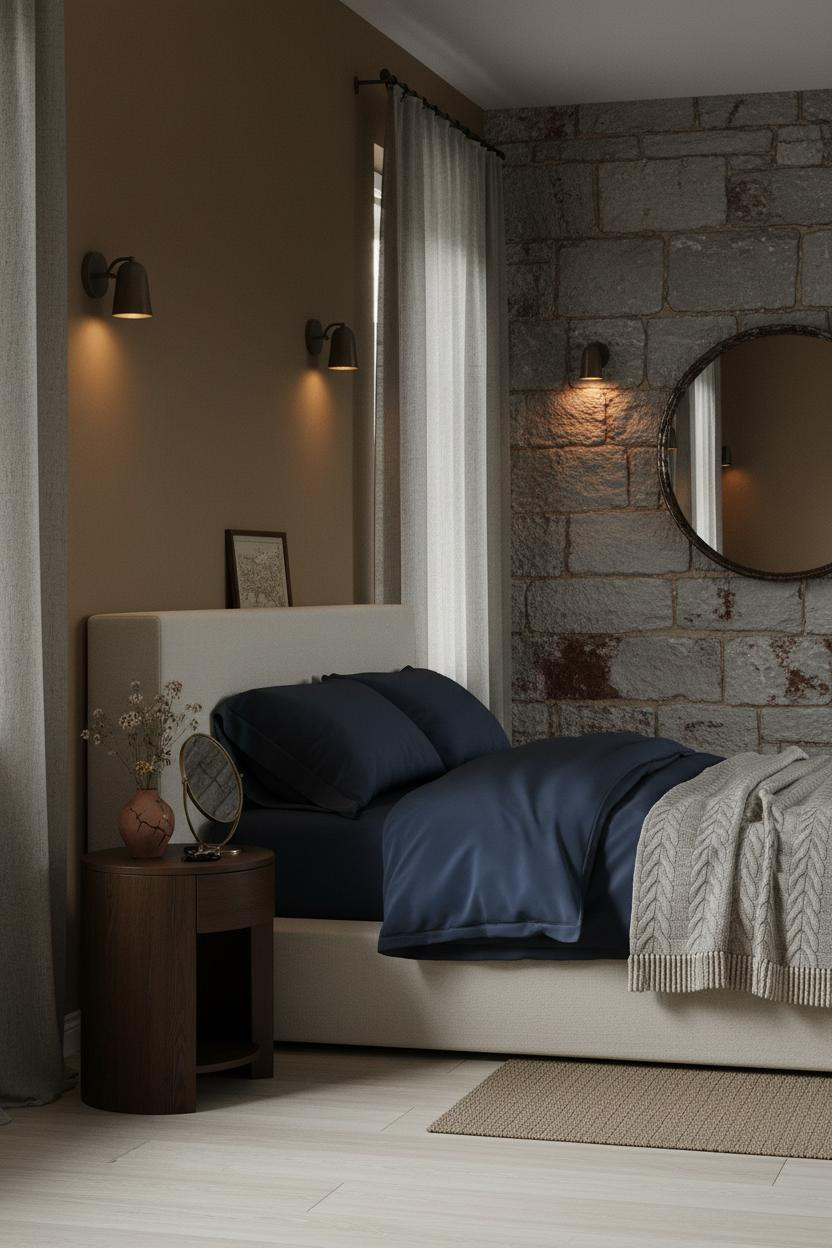

Fair warning. A floor-to-ceiling rough-hewn limestone wall is not a subtle choice, and it will define every other decision in the room.
Why it holds together: The mineral bloom and faint rust staining on the stone surface means warm iron sconces read as natural rather than styled, in a way that feels genuinely aged rather than faked.
Pro move: Lean an oversized tarnished iron mirror against the stone rather than hanging anything. The contact matters.
Timber Beams and Sage Plaster in a Swedish Manor
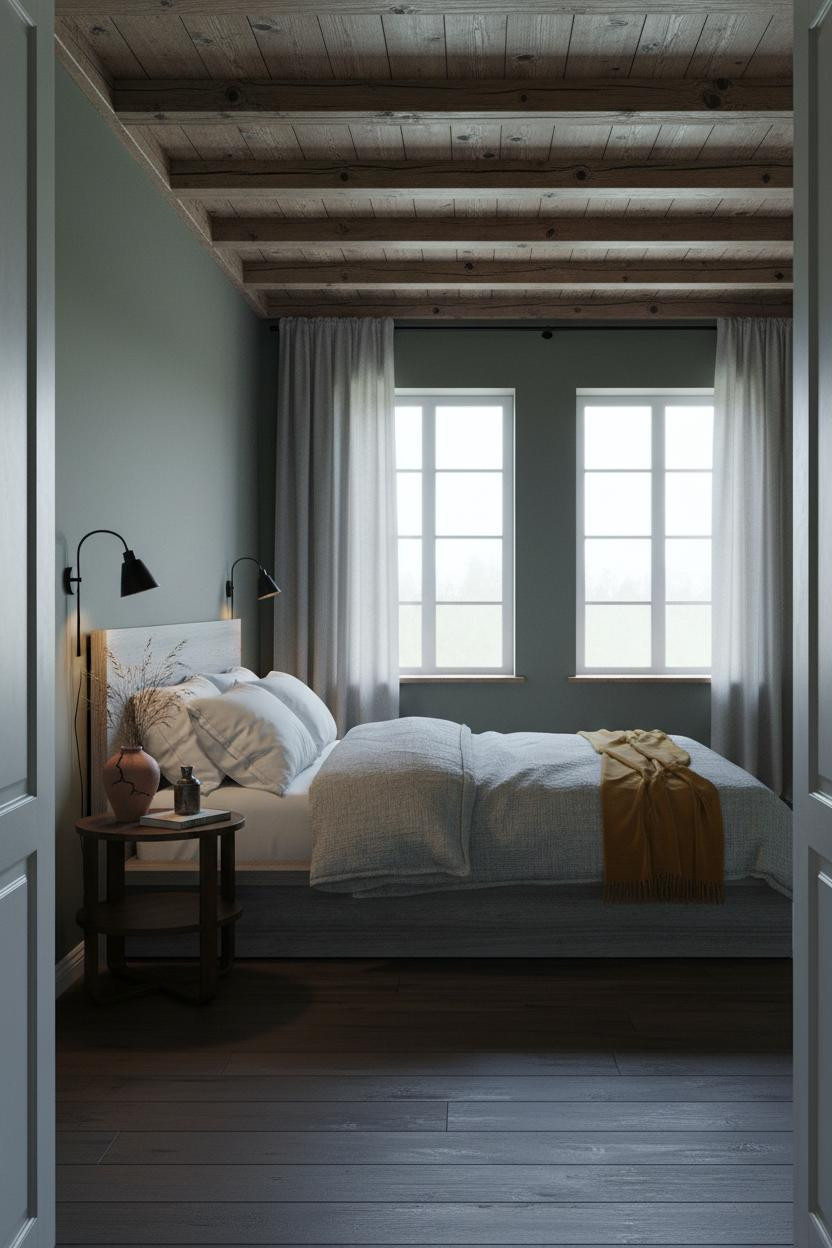

This is the moody cottage bedroom for people who want atmosphere without full darkness. The room feels warm without being heavy, which is a harder balance than it sounds.
What carries the look: Exposed chestnut ceiling beams running the full length of the room create enough visual structure that the sage-grey walls don't need to work hard. The beams do it for them.
Where to start: Floor-to-ceiling linen curtains pooling on dark walnut boards are the single fastest way to get this mood into a room with normal walls.
Board-and-Batten With a Terracotta Twist
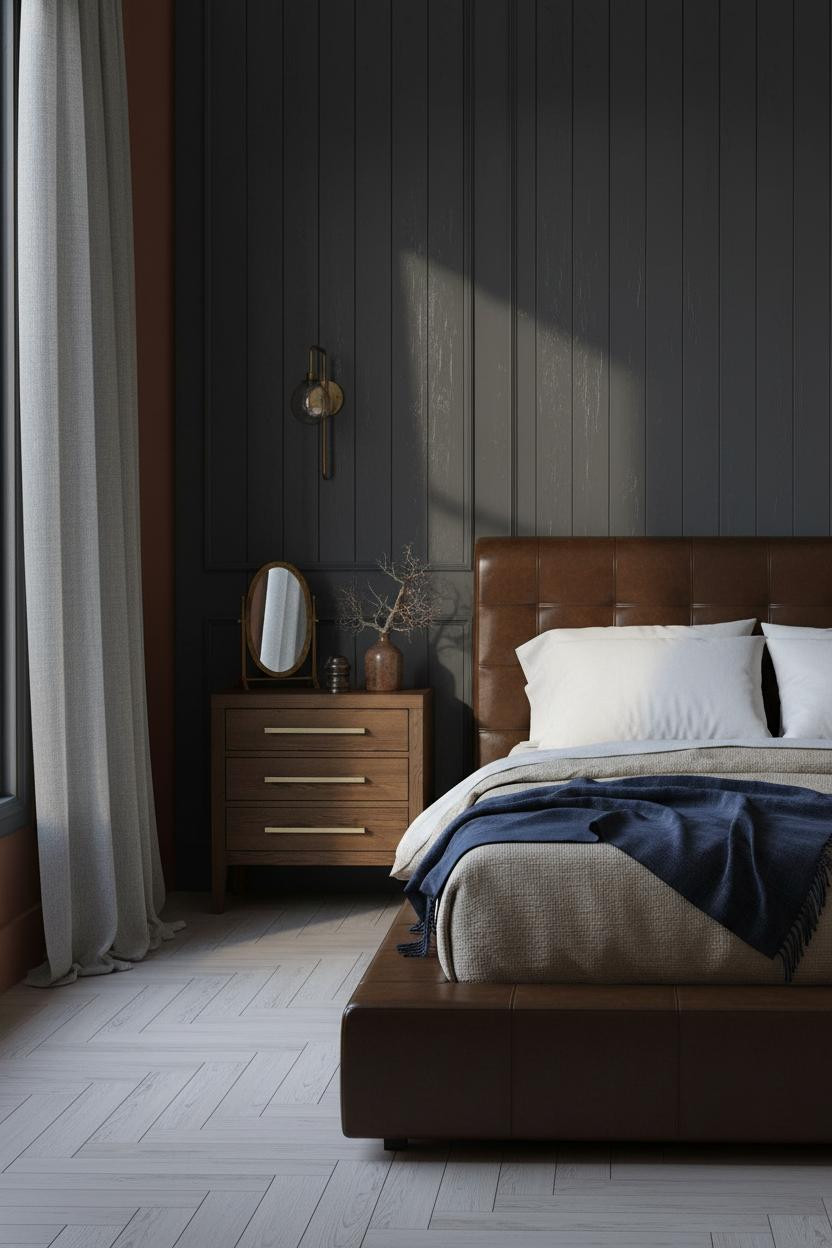

I almost scrolled past this. Glad I didn't.
What makes this one different: Full-height charcoal-painted board-and-batten against terracotta-clay flanking walls shouldn't feel warm, but the amber sconce light catching the vertical batten edges makes the whole composition glow. The contrast between the cool panel face and the warm clay plaster is the whole trick.
Avoid this mistake: Don't pick a warm grey for the paneling. It needs to read genuinely dark to hold against that clay.
Limestone Chimney Breast as a Room Anchor
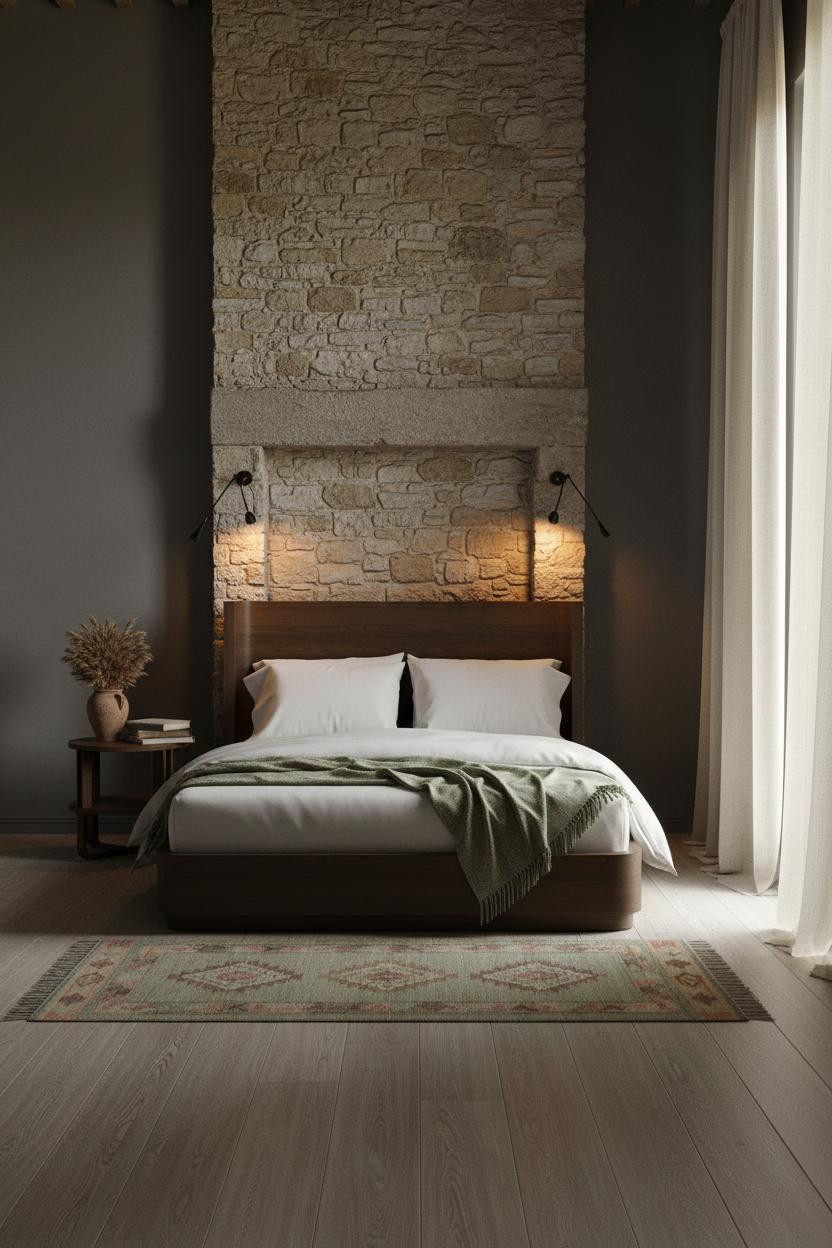
Having a raw limestone chimney breast as the headwall changes how you actually use the room. It becomes a reference point for everything else.
The reason this feels Tuscan rather than rustic-farmhouse is the charcoal-grey plaster on the flanking walls. Cream or white would have killed it. Dark walls keep the stone from looking like a feature and make it look like structure.
Worth copying: Stack leather-bound books and a dried wheat bundle on the nightstand. Nothing too matchy, just enough texture to keep things interesting.
The Arched Alcove Bed Nook That Earns Its Keep
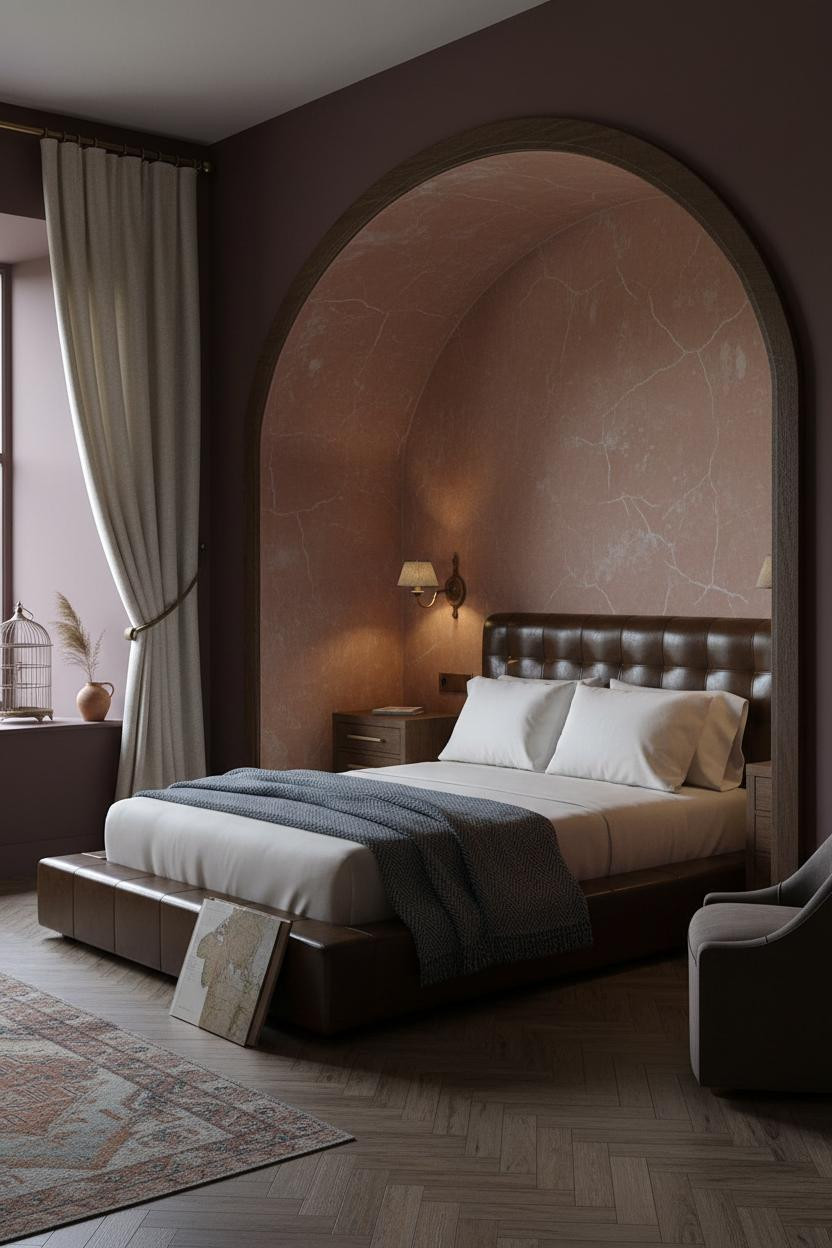
This is the dark cottagecore bedroom for people who actually want to sleep in a cave. Affectionately.
Where the luxury comes from: A recessed alcove with an arched dark walnut timber lintel frames the bed so completely that the room feels like it was built around the idea of rest. The cracking and mineral staining on the terracotta plaster inside the arch reads as patina, not damage.
The smarter choice: Keep the bedding pale (cream percale works) so the deep burgundy walls outside the alcove stay the dominant note.
Plum Walls and Chestnut Timber in a Feminine Moody Space
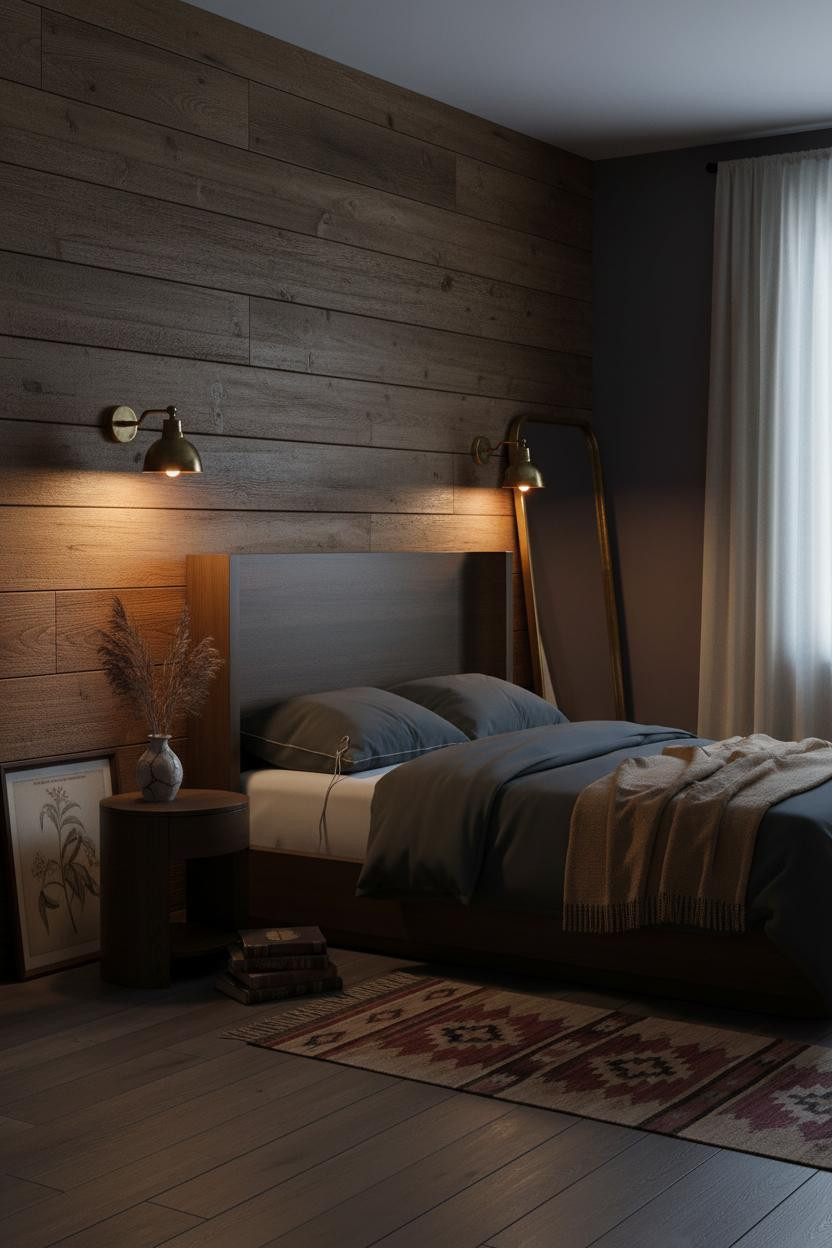
Somehow the combination of deep plum and weathered chestnut timber paneling ends up feeling romantic instead of heavy. I didn't expect it either.
Why the palette works: Paired brass sconces flanking the bed push warm amber light upward across the horizontal timber grain, and that upward wash softens the plum wall color on each side while still feeling moody.
One smart swap: Replace any central overhead fixture with a large tarnished brass mirror leaning against the far wall. The reflected lamplight does more work than any ceiling light.
Forest Green and Whitewashed Beams for Provençal Warmth
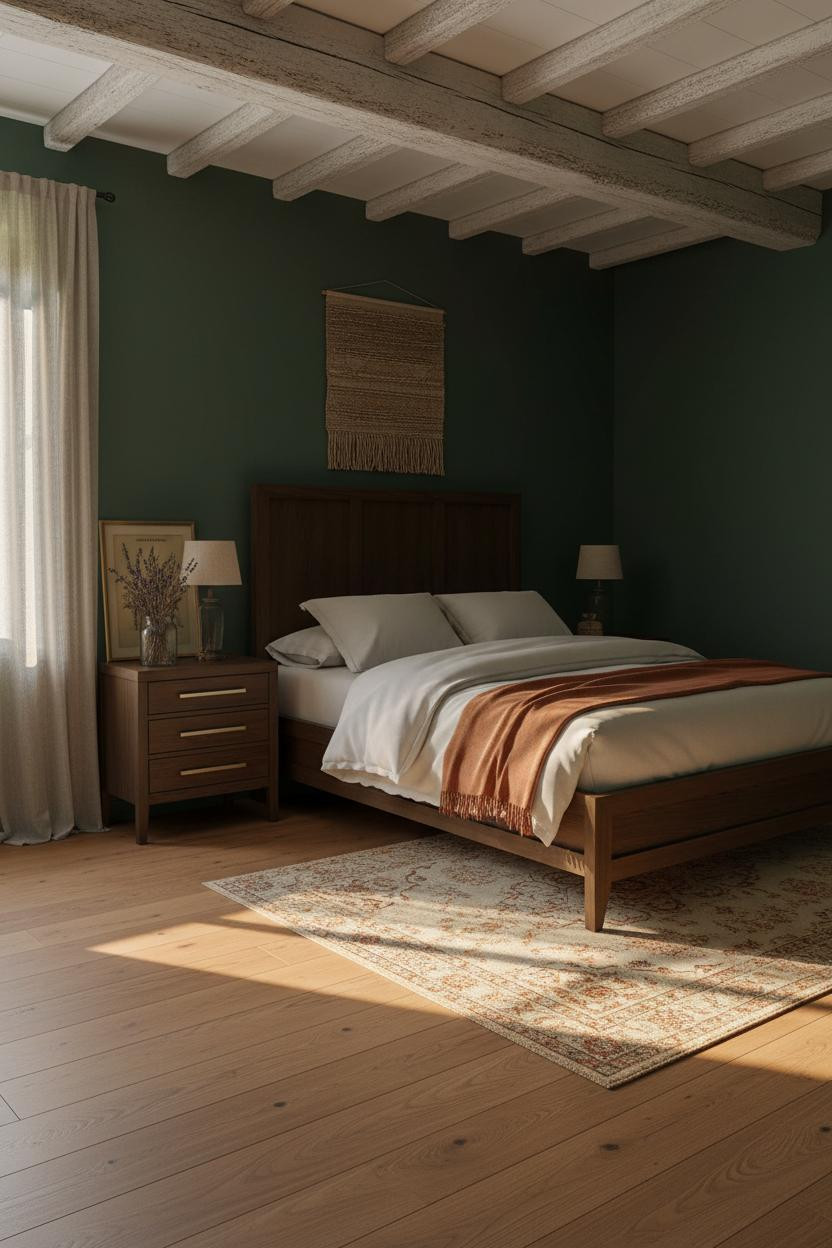

This one is the lightest read in the group, but the deep forest green plaster walls still carry real weight once that late afternoon light starts raking across the reclaimed oak floor.
Why it feels intentional: Whitewashed ceiling beams with a grey aged patina reflect warmth downward without competing with the green below, so the low ceiling actually feels like an asset. It holds the light in.
The finishing layer: A woven wall hanging above the bed in natural undyed fibers keeps the eye from going straight to the ceiling. Just enough texture to keep things interesting.
 Our #1 Pick
Saatva Classic Mattress
America's best-selling online luxury innerspring. 365-night trial, lifetime warranty, free white glove delivery.
Shop Saatva Classic
Our #1 Pick
Saatva Classic Mattress
America's best-selling online luxury innerspring. 365-night trial, lifetime warranty, free white glove delivery.
Shop Saatva Classic
The Foundation Of Every Beautiful Bedroom
All twelve of these rooms get the atmosphere right. But atmosphere is walls and light. What's underneath the linen and the camel wool throw matters just as much, and most people underinvest there.
The Saatva Classic is what I'd put in any of these rooms. Dual-coil support that holds without going stiff, a Euro pillow top that still feels right after years in, and breathable organic cotton that doesn't trap heat on a warm night. Walls get repainted. The mattress stays. Worth getting it right the first time.

The rooms that get saved are the ones where the dark walls and the dried thistles and the iron sconces all feel like they belong to someone who actually lives there. Build from the bed outward. The rest figures itself out.