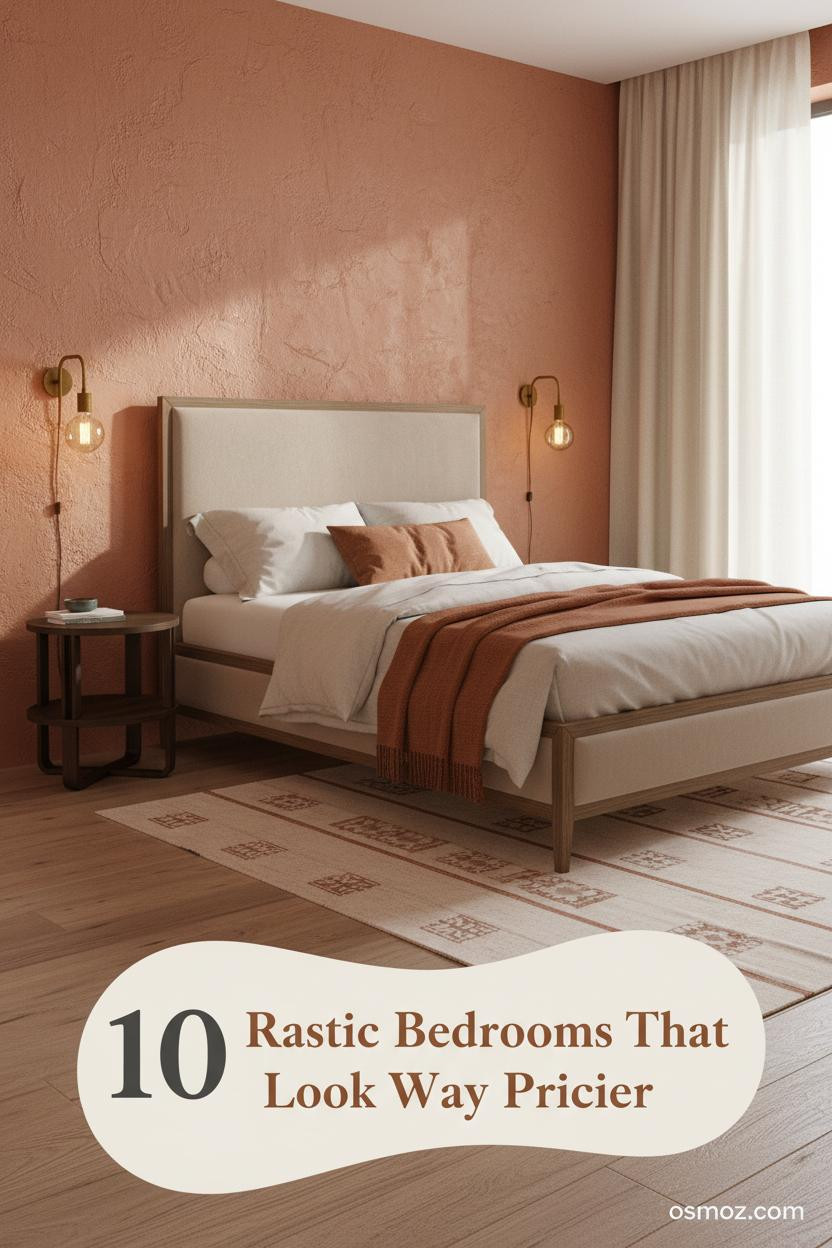
10+ Rustic Chic Bedrooms That Feel Warm Without Feeling Heavy
01 april 2026The first thing you notice in the best rustic chic bedroom isn't the furniture. It's the feeling. Warm without being heavy. Collected without looking staged.
These ten rooms get that balance right. Here's what they're doing, and how to borrow it.
The Alcove Trick That Makes A Bedroom Feel Ancient
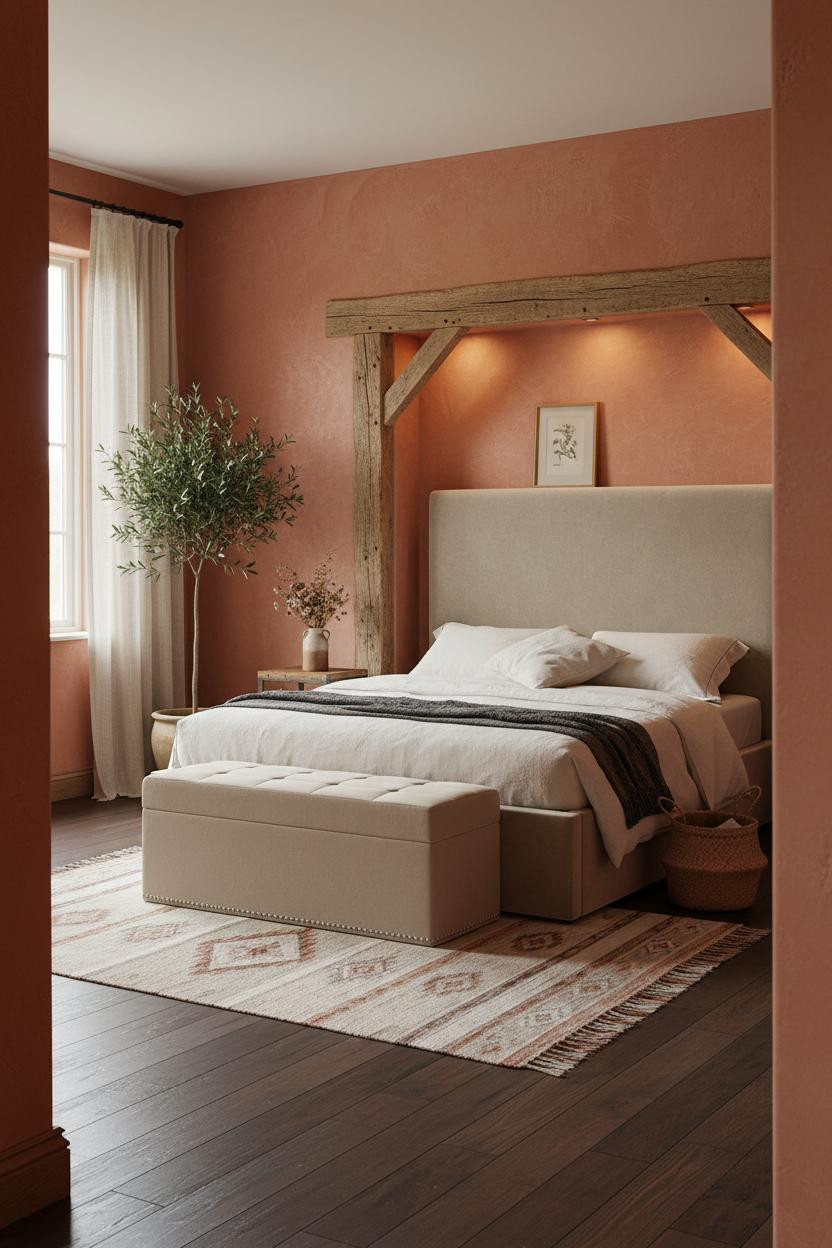

I keep coming back to this one. There's something about a hand-plastered alcove that makes a room feel like it's been there for a hundred years.
Why it holds together: The rough clay surround catches light along every trowel ridge, which makes the niche read as architectural rather than decorative. That's the difference between depth and decoration.
Steal this move: Pair terracotta walls with a kilim runner in cream and rust. The warm tones stay in the same family while the pattern keeps things from feeling flat.
Wainscoting That Earns Its Place On The Wall
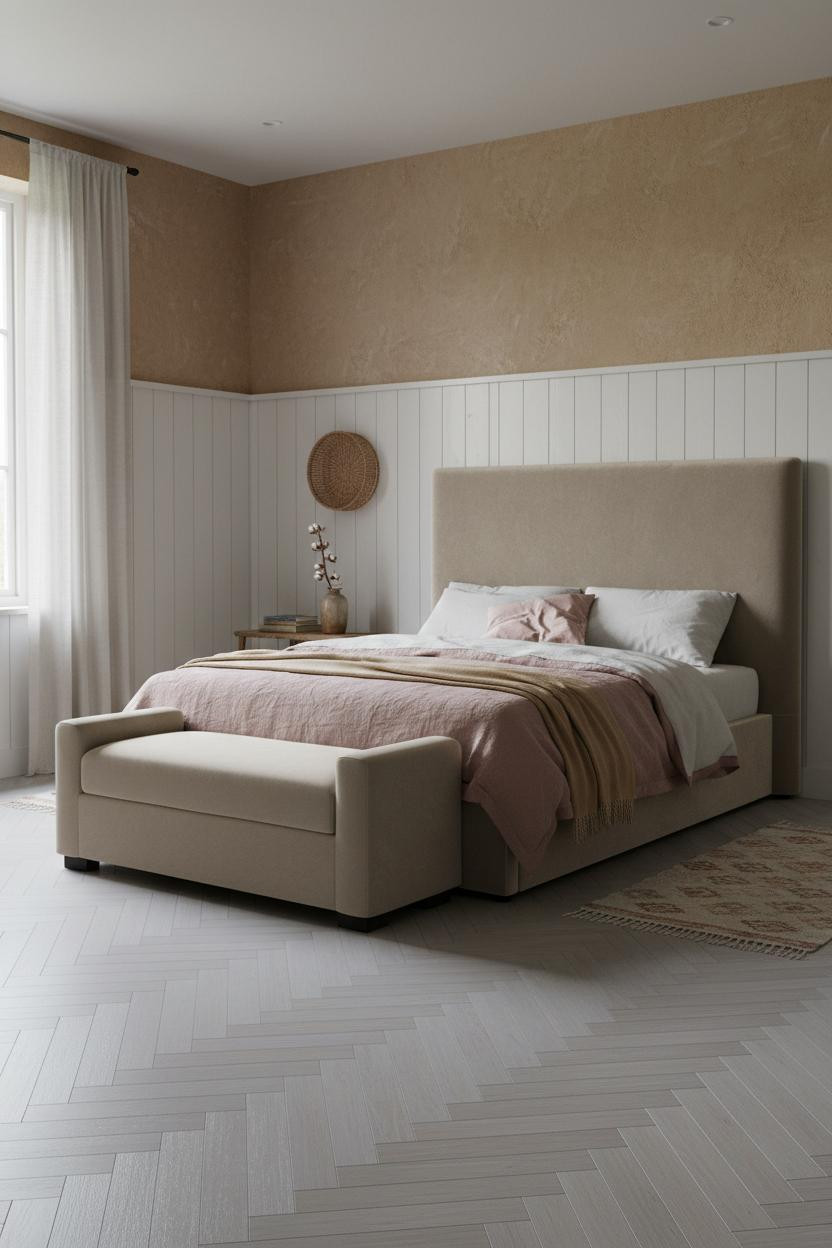
Wainscoting gets a bad rap. Done wrong, it looks like a dentist's waiting room. Done like this, it grounds the whole bedroom.
What makes it work: Chalk-white tongue-and-groove panels topped by a narrow ledge rail stop the room from feeling like it's all one note. The exposed honey clay plaster above the rail keeps the rustic tension alive.
The finishing layer: Add a flat-weave kilim beside the bed. It pulls the worn, antique quality of the paneling down to the floor where you actually feel it.
This Denim Wall Shouldn't Work. It Does.
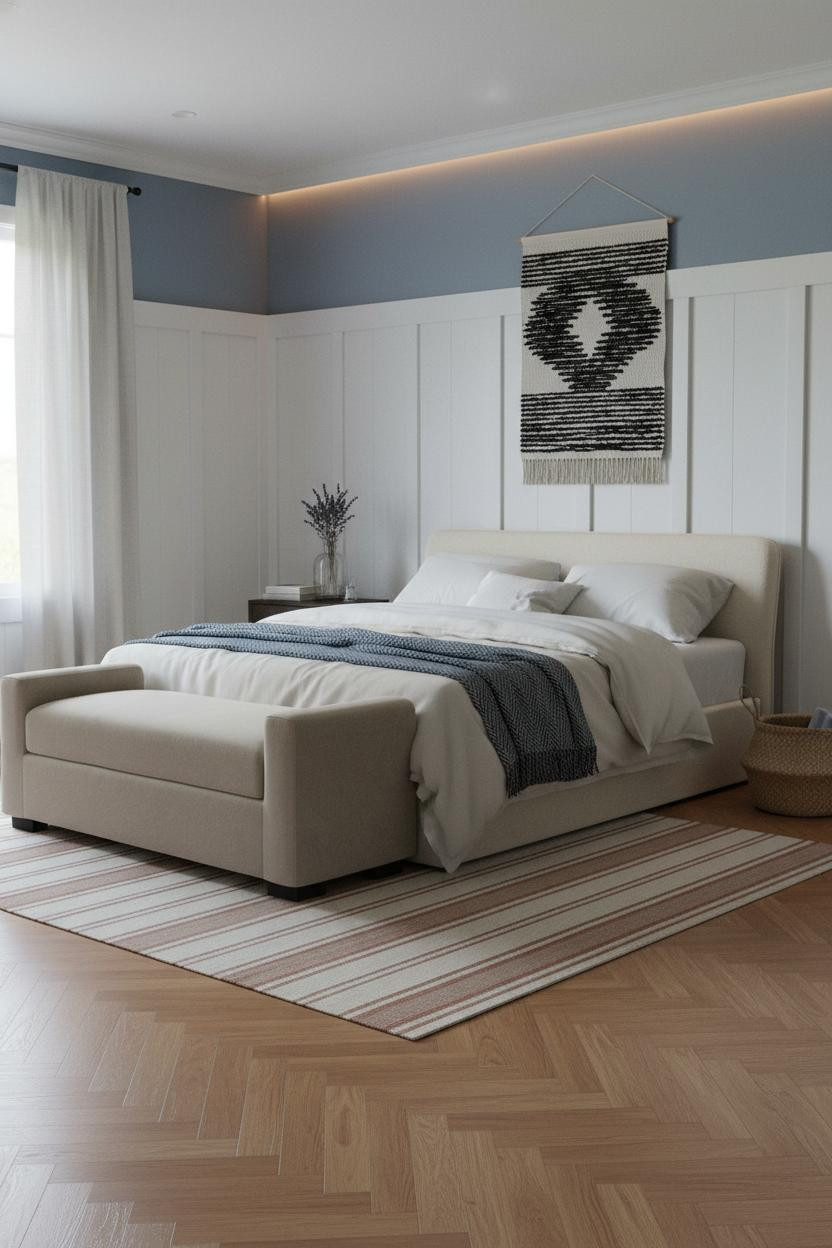

Divisive color. But I'd argue faded denim blue is the most underused wall choice in the farmhouse bedroom conversation.
The reason it feels cozy instead of cold is the whitewashed recessed-panel wainscoting running floor to ceiling below it. All that white wood warms the blue up in a way that flat paint alone never could.
What to borrow: Lay honey oak herringbone underfoot and the whole palette clicks. Warm floor, cool wall, crisp white timber. Three materials doing all the work.
Terracotta Plaster At Night Is A Different Room Entirely
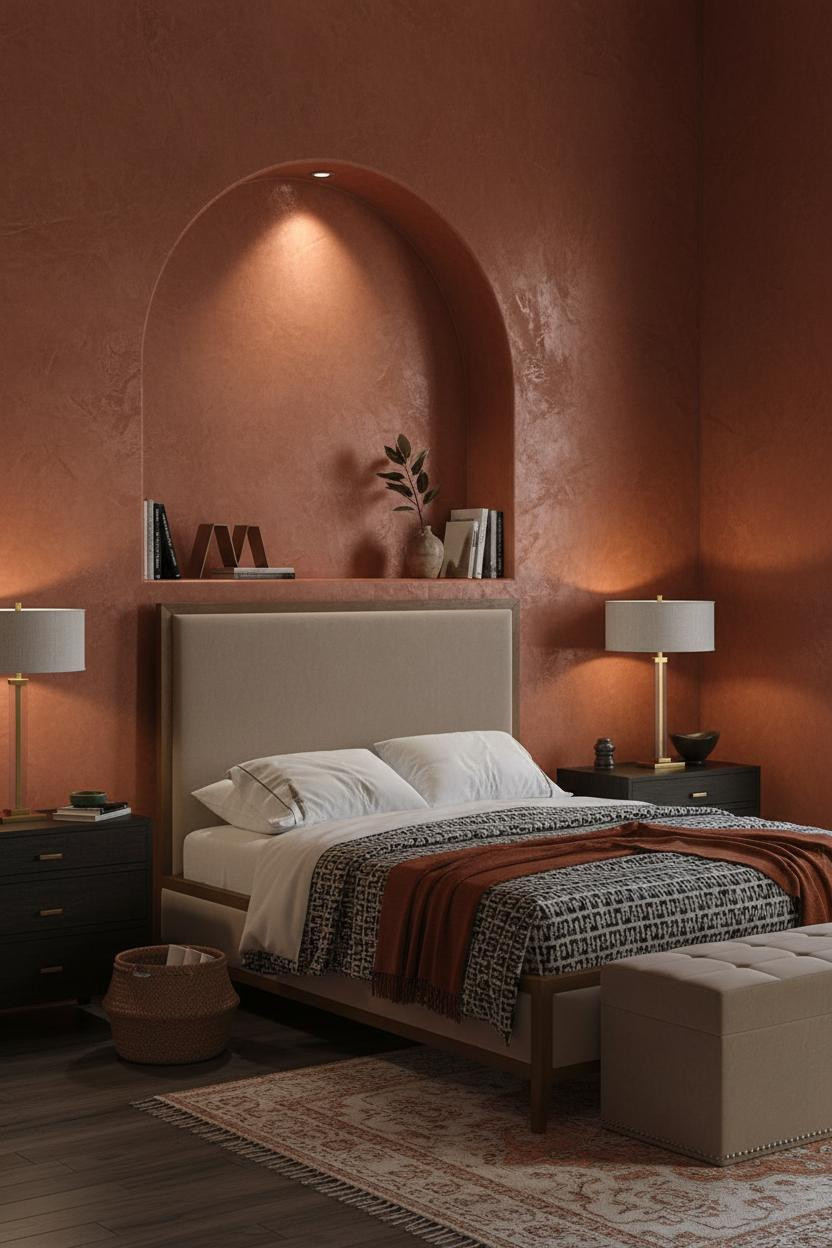

This is a room that looks completely different after dark. And honestly, that's the point of a deep rust-clay terracotta plaster wall.
Why it feels expensive: Lamp light raking across hand-troweled plaster catches every ridge and hollow, turning a flat wall into something that looks carved. The texture does what paint simply cannot.
Avoid this mistake: Don't pair this wall color with cool white bedding. The contrast kills the mood. Stay in the warm family: cream, rust linen, charcoal.
Corbels Are The Farmhouse Detail Nobody Talks About
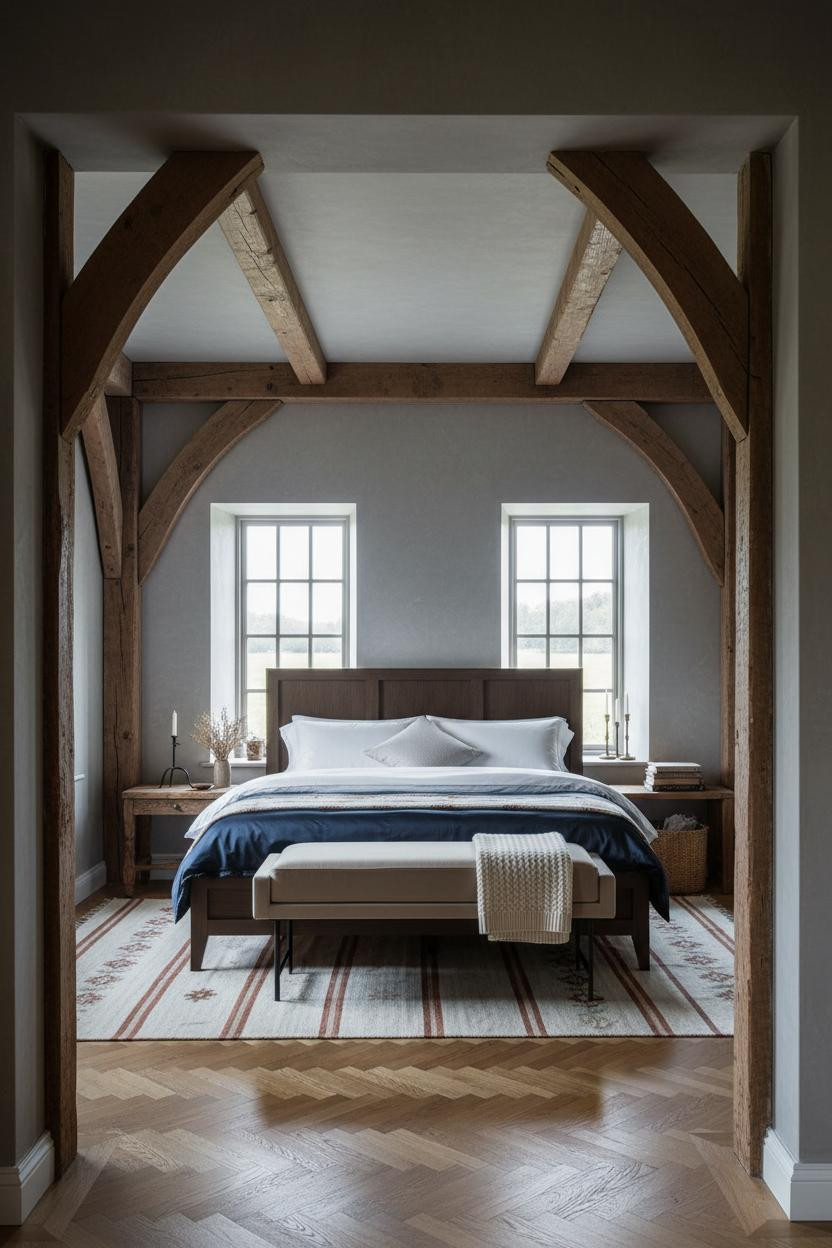
Everyone puts a headboard on the wall. Fewer people think about what's above it. That's where weathered chestnut corbels change everything.
Why it looks custom: Exposed wooden brackets framing a ceiling alcove pull the eye upward, which makes the whole room feel taller. Each bracket casts its own shadow under grey daylight, so the detail reads even without warm lamp light.
Pair with muted stone grey walls. Nothing too precious. The corbels are the architecture. Let them carry it.
Sage Green And Lime Plaster: A Quiet Pairing That Stays
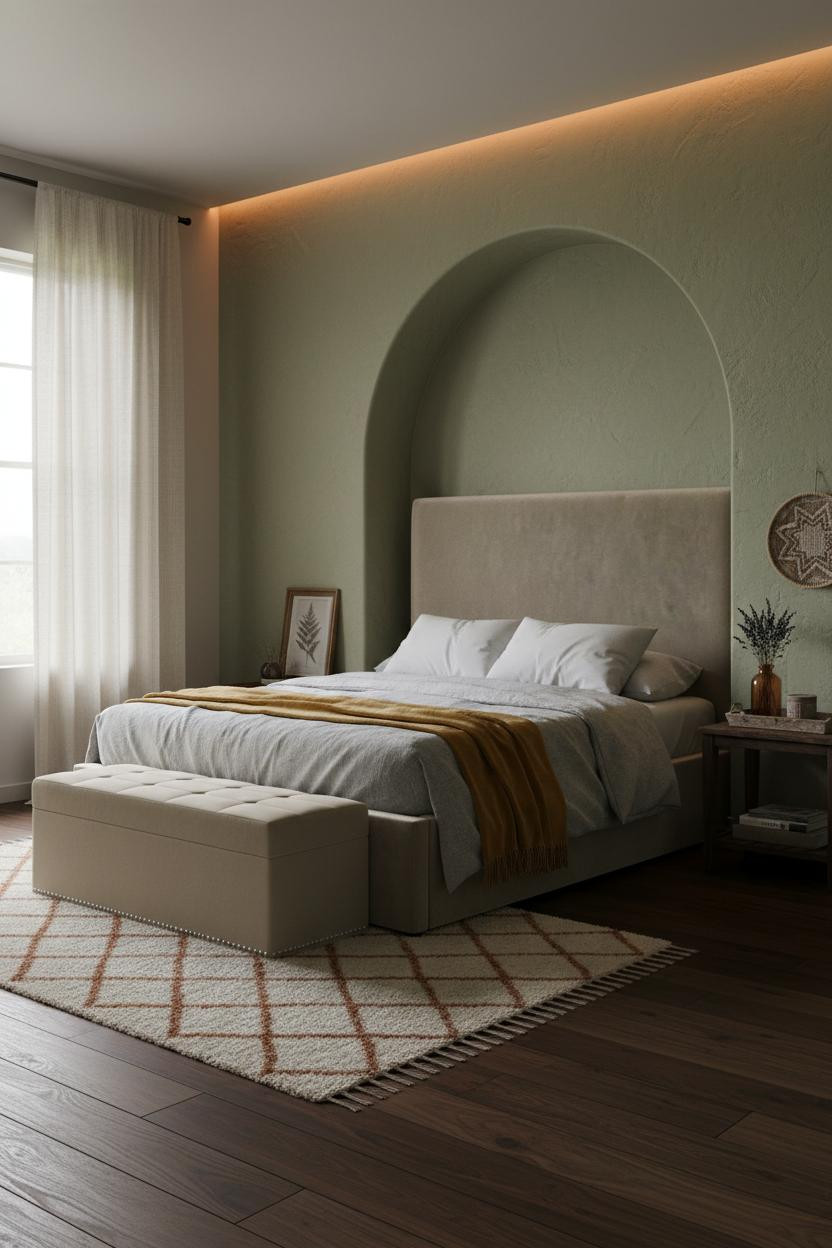
Sage green is everywhere. But pair it with a raw lime plaster arch above the bed and it stops looking like a trend.
What gives it presence: The curved plaster niche frames the bed like a chapel recess, which makes the sage walls feel intentional rather than just a color choice someone made in a paint store. The room feels collected rather than decorated.
The easy win: A Moroccan wool rug in cream and rust underfoot ties the earthy arch to the floor. One anchor, whole room lands.
I Wasn't Sure About Stone Walls In A Bedroom
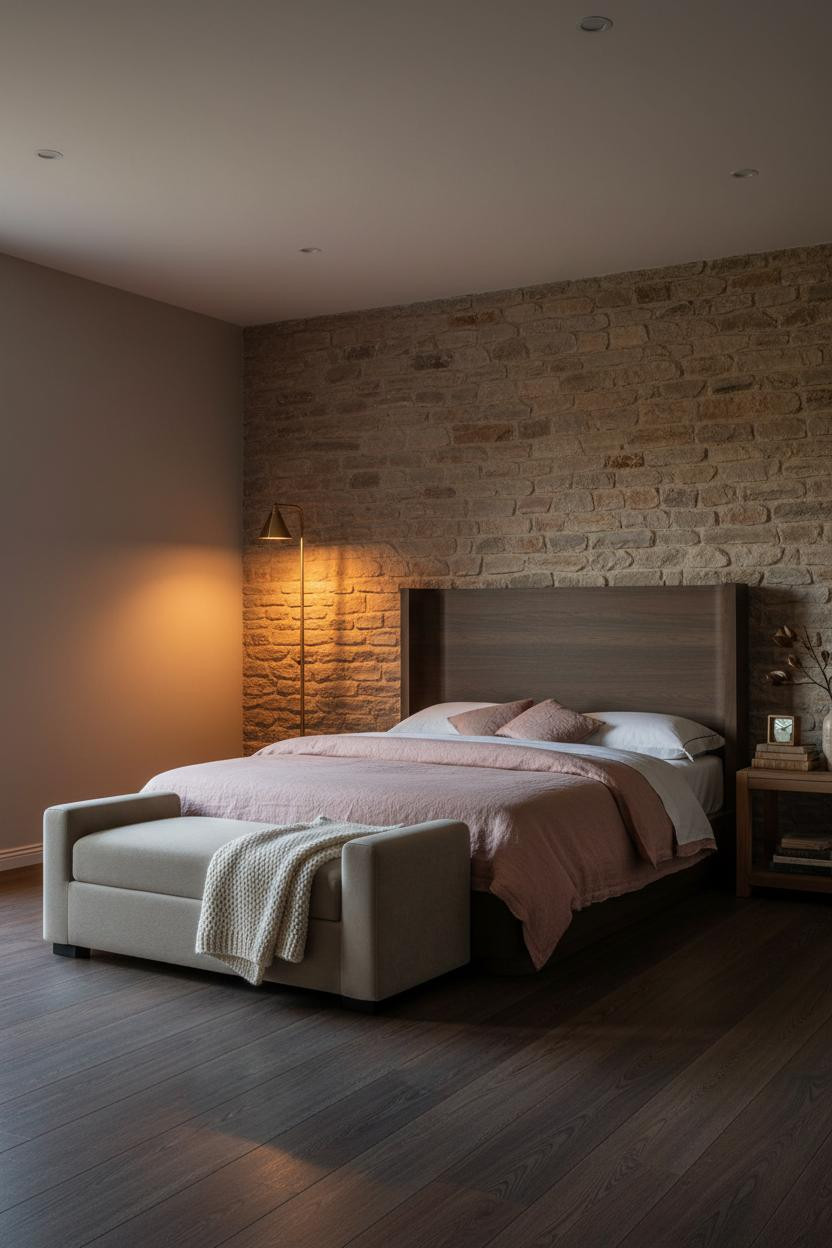

My instinct was that irregular coursed fieldstone behind a bed would feel more cave than bedroom. I was wrong.
Why it works: Warm lamp light raking across deeply raked mortar joints turns the stone wall into something that feels alive, while soft mushroom plaster on the flanking walls keeps it from tipping into cold.
What softens the room: Layer a dusty pink linen duvet with a chunky-knit cream throw. Soft textiles against rough stone. That contrast is the whole formula.
Board-And-Batten In Dusty Rose Is Braver Than It Sounds
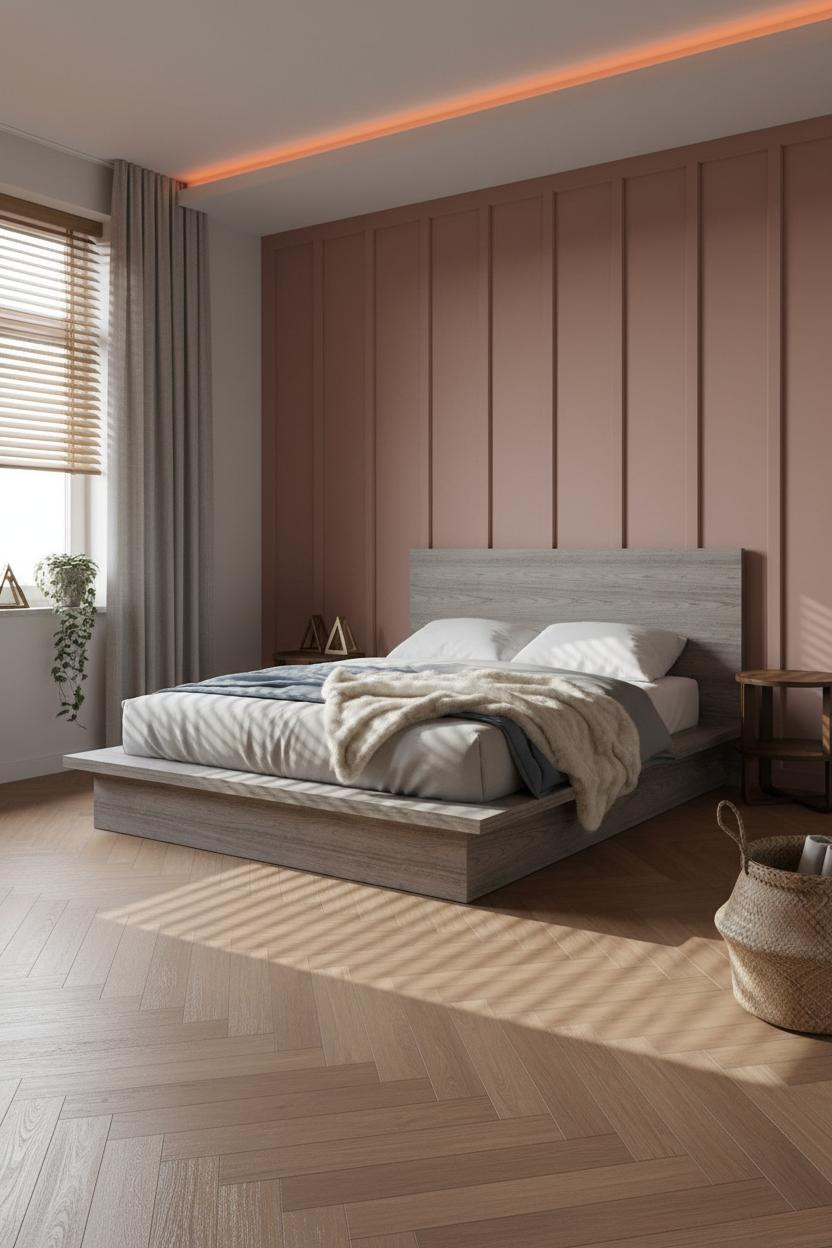

Fair warning. Dusty rose board-and-batten is a committed move. But the rooms that pull it off are the ones people save twice.
What makes it feel farmhouse rather than feminine is the matte texture of the painted battens. Each vertical strip casts a hairline shadow under diffused light, which gives the wall physical depth in a way that flat paint never does.
The smarter choice: Keep the bedding in slate and cream so the dusty rose panels stay architectural, not decorative.
Whitewashed Shiplap Still Has Something To Say
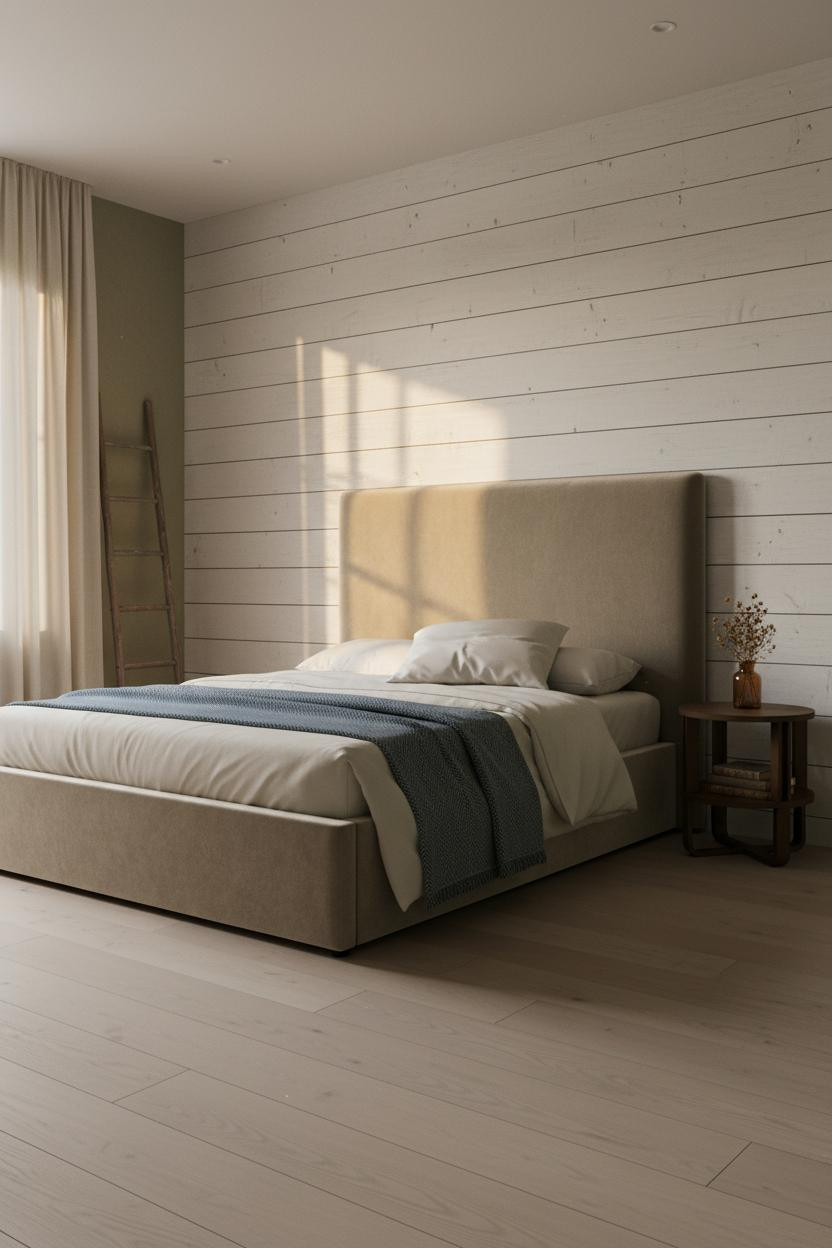
Shiplap got overused. Admittedly, I was skeptical. But rough-hewn planks with visible nail holes and grain variation are a completely different thing from the smooth primed boards on every renovation show from 2017.
The real strength: Whitewashed shiplap flanked by soft olive green plaster walls means the white reads warm, not clinical. The olive takes the brightness down just enough. And late afternoon light raking across the grain does the rest of the work for free.
Exposed Beams Are The One Detail That Actually Ages Well
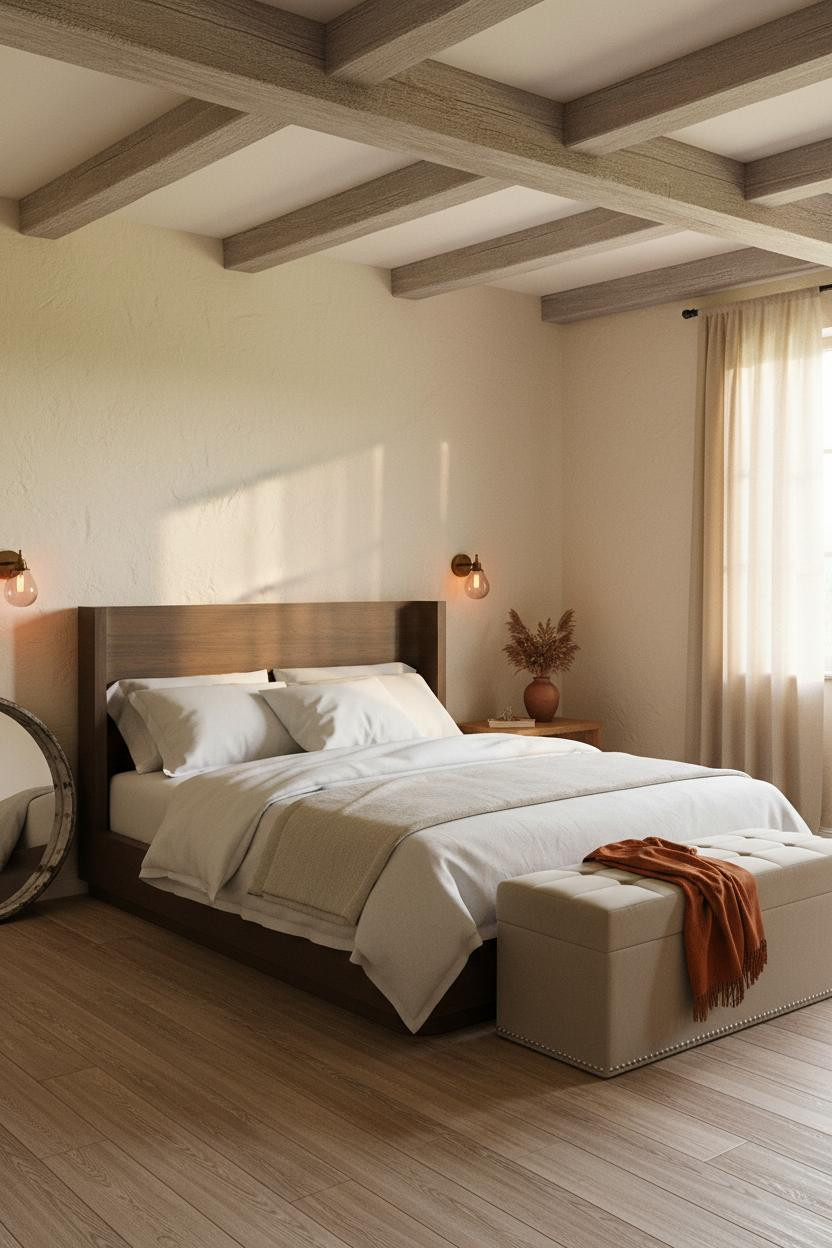
Every trend eventually looks dated. But hand-hewn timber beams weathered to a grey-brown patina somehow keep getting better. That's the whole argument for committing to real architectural material over decorative overlay.
Why it feels balanced: Lime-washed cream walls beneath the beam ceiling keep the room light in a way that feels grounded. The reclaimed wide-plank floor carries the same worn patina as the beams, so nothing looks imported.
Pro move: Drape a burnt orange mohair throw at the footboard. One warm accent against all that grey-toned timber. That's enough contrast to make the whole palette feel intentional.
 Our #1 Pick
Saatva Classic Mattress
America's best-selling online luxury innerspring. 365-night trial, lifetime warranty, free white glove delivery.
Shop Saatva Classic
Our #1 Pick
Saatva Classic Mattress
America's best-selling online luxury innerspring. 365-night trial, lifetime warranty, free white glove delivery.
Shop Saatva Classic
The Foundation Of Every Beautiful Bedroom
Walls get repainted. Linen gets swapped out. But the mattress stays, and it shapes how the whole room feels to actually live in.
The Saatva Classic is what I'd put under every one of these rooms. The dual-coil support system holds up the way a good piece of furniture holds up, while the breathable organic cotton cover keeps things from feeling like you're sleeping under a tent. And the Euro pillow top is soft without losing structure. It still feels right years in.
The bed is the room. Start there.

These ten rooms prove that rustic chic isn't about accumulating texture. It's about choosing the right two or three materials and letting them carry the whole space. Good design ages well because it's made well.