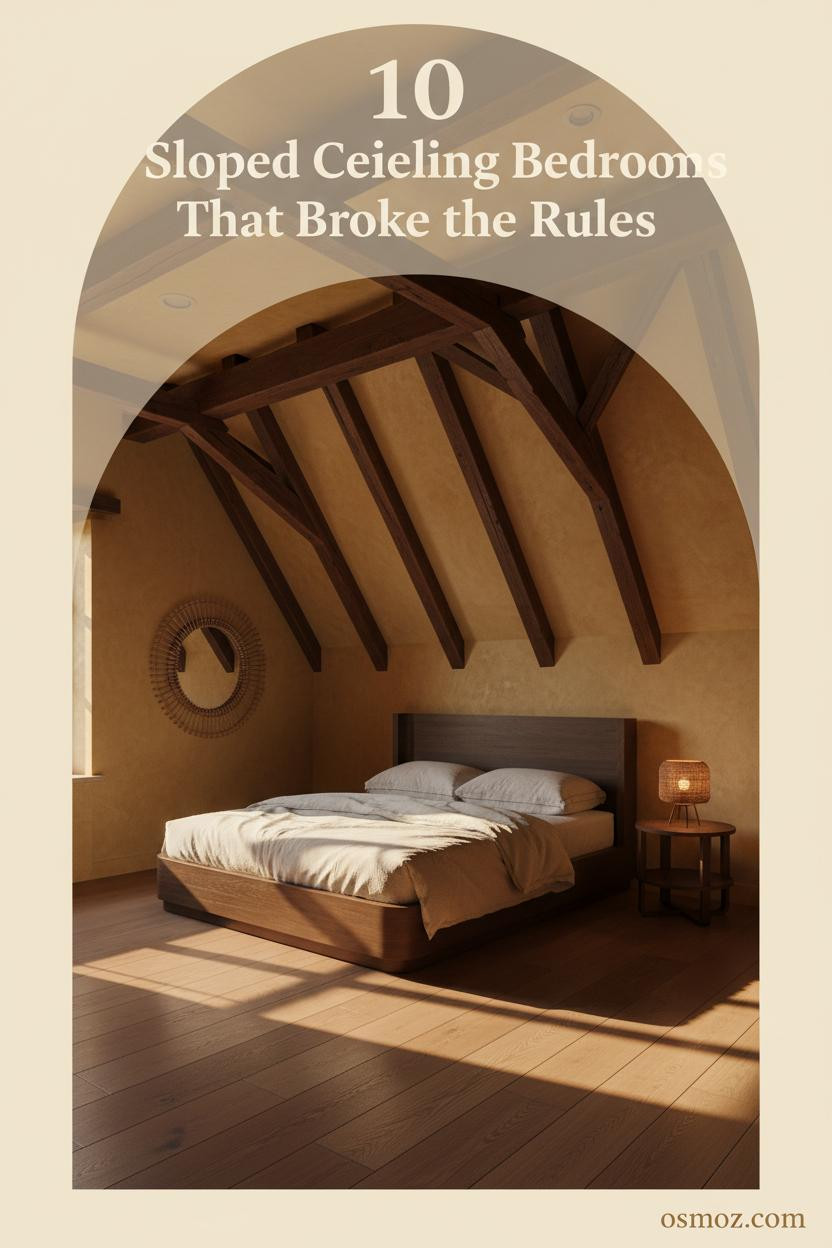
10+ Sloped Ceiling Bedrooms That Actually Make the Angles Work
28 march 2026Think your attic is too awkward to work with? The best sloped ceiling bedroom designs prove the opposite. The angle isn't the problem. It's the whole point.
Here are ten rooms where the pitch of the roof became the thing people notice first.
Dark Walnut Rafters That Turn a Low Ceiling Into a Feature
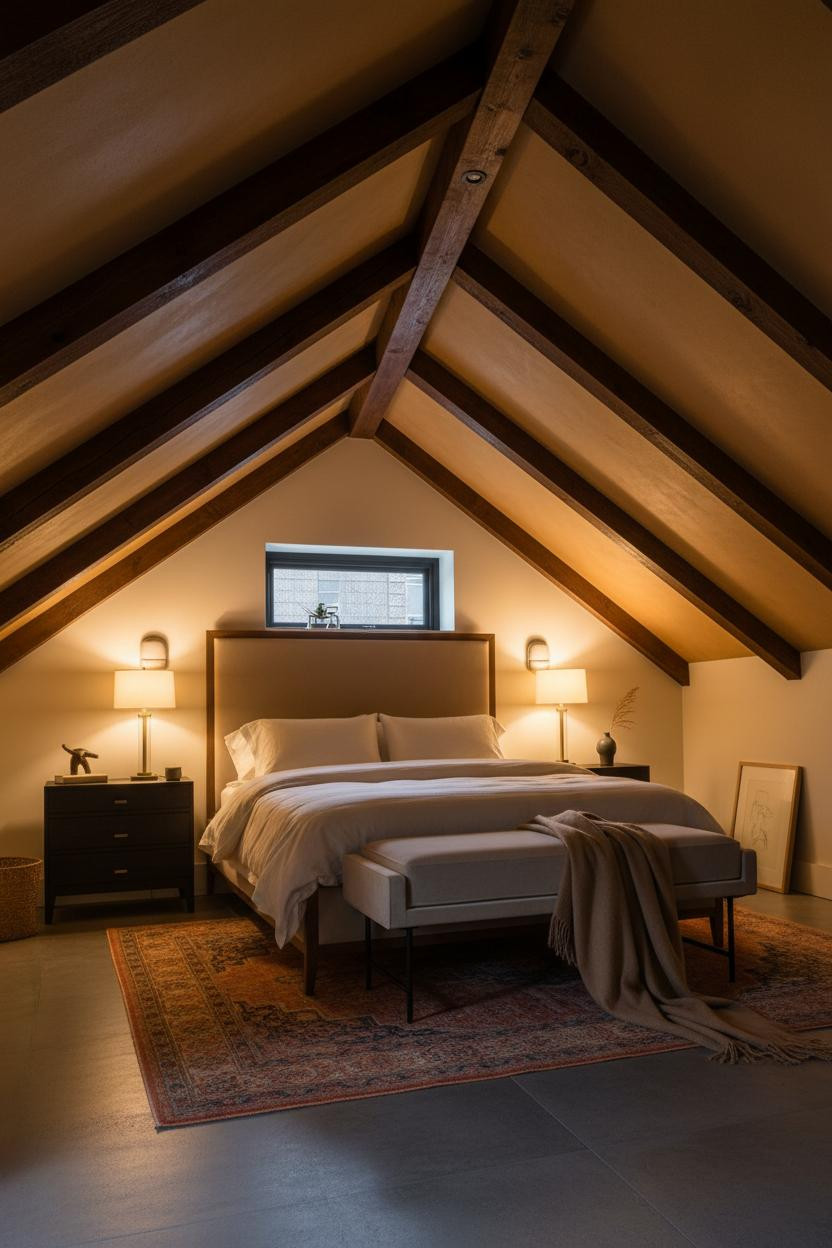

This room feels enclosed in exactly the right way. Lamp-lit, deliberate, like a room that knows what it is.
Why it holds together: The dark walnut rafters cast hard diagonal shadows across the ochre plaster slope, which turns the low ceiling into graphic geometry instead of a liability.
Steal this move: Pair warm plaster tones with dark stained timber and let the beam shadows do the decorating. You need almost nothing else on the walls.
How Pale Birch Boards Make a Small Attic Feel Intentional
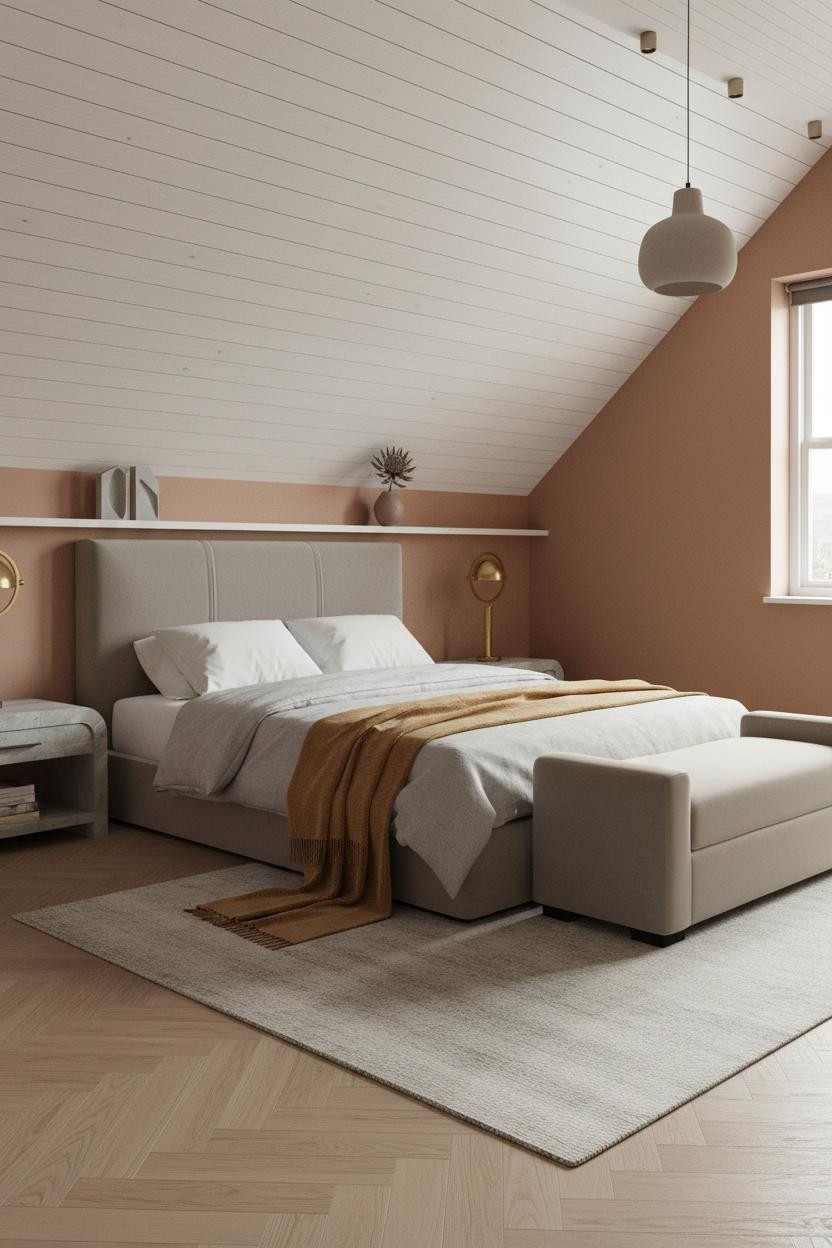

Quiet geometry. Morning stillness. This is the Scandi approach done right.
The raw pale birch tongue-and-groove boards pull the eye upward along the slope, which makes the compact footprint feel wider than it is. Each board edge throws a razor-thin shadow stripe that multiplies across the ceiling like deliberate pattern.
The smarter choice: Keep lower walls in a warm terracotta tint so the pale ceiling boards read as light rather than cold. That contrast is what gives the room its balance.
Board-and-Batten White That Makes Angles Look Architectural
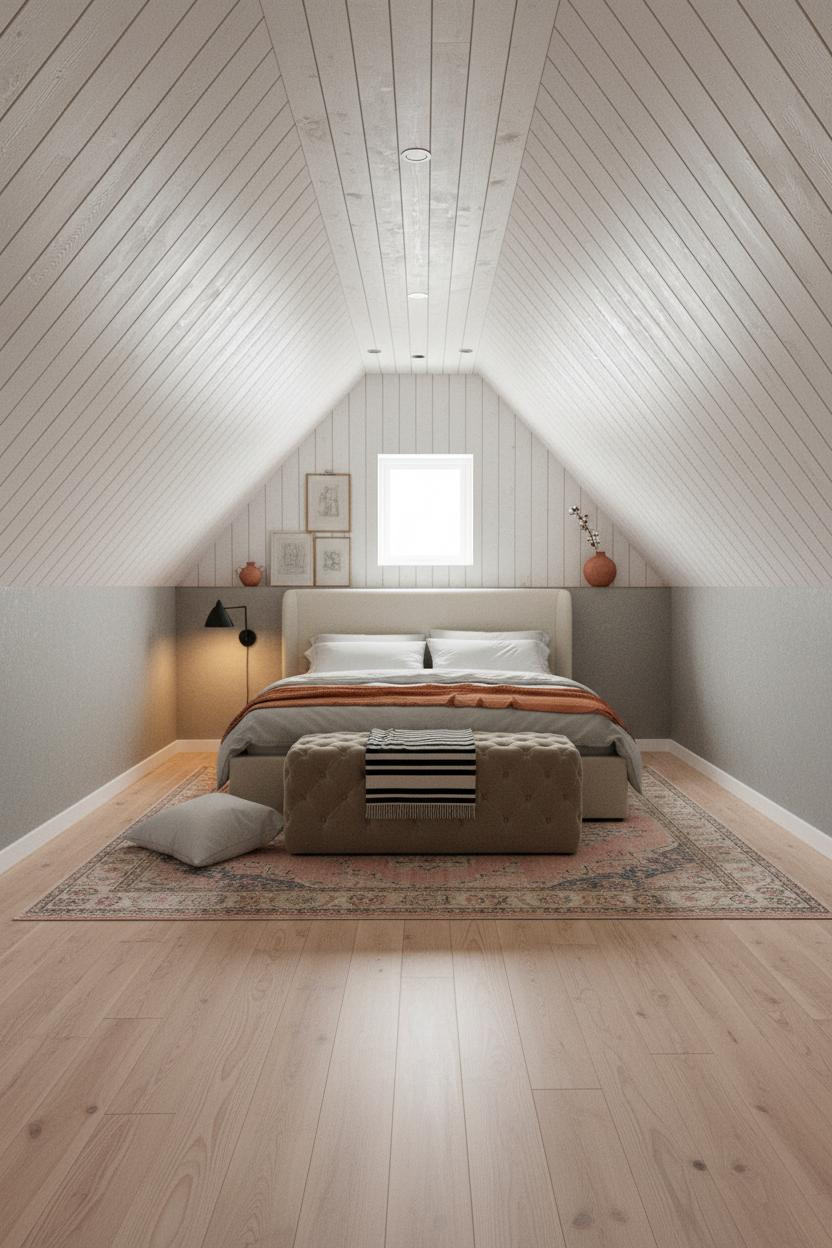

I keep coming back to this one. It shouldn't feel this calm, but it does.
What gives it presence: White-painted board-and-batten timber panels on the slope give each vertical batten a crisp shadow line, so the ceiling reads as strong graphic relief rather than a low awkward plane.
Where to start: Let the batten rhythm guide your textile choices. Stripes on the ottoman, stripes on the rug. The geometry carries itself when the walls are already doing the work.
MCM Caramel Tongue-and-Groove That Earns Its Retro Look
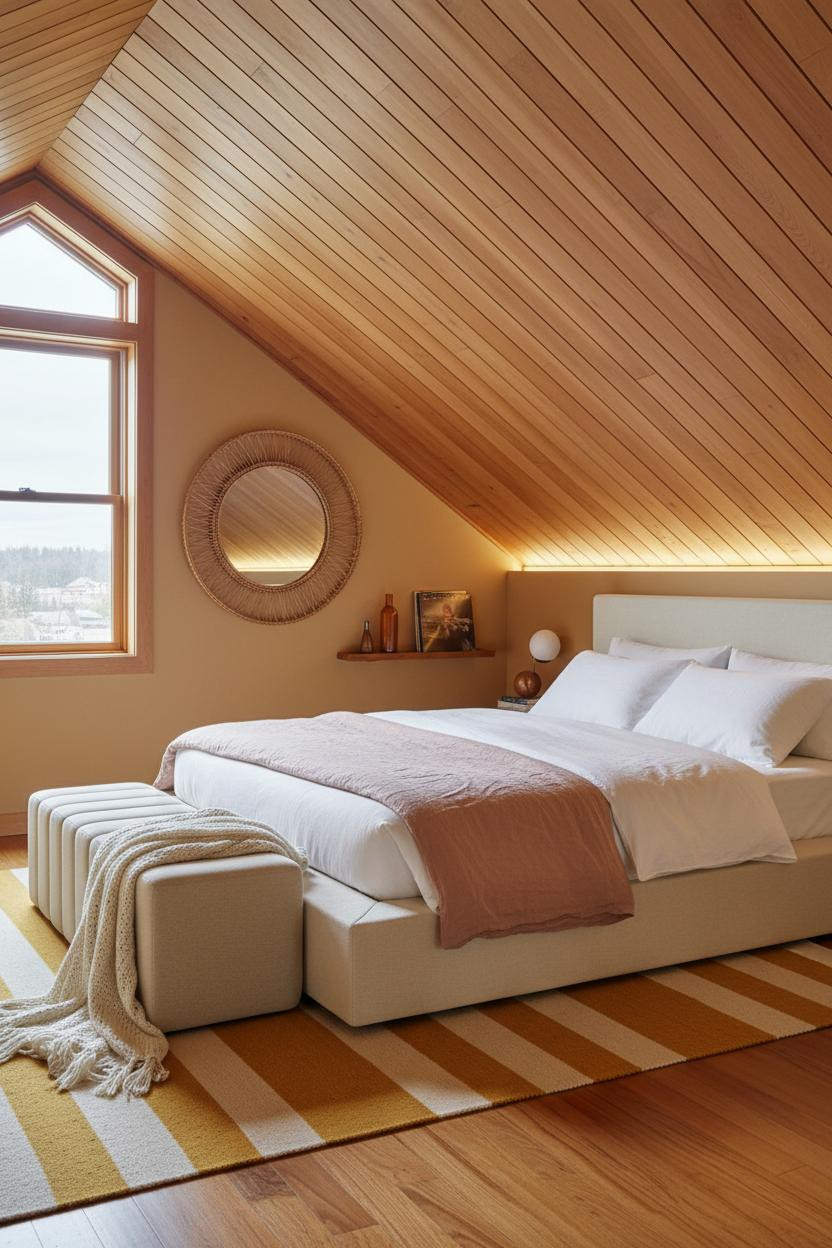
Divisive. But only until you see it in person.
Why the materials matter: Caramel-stained tongue-and-groove planks absorb flat overcast light in a way painted drywall never could. Each plank edge catches the grey-white luminosity and throws warm shadow lines that stripe across the angled plane in rhythmic sequence.
A round rattan mirror on the knee wall is the right call here. Avoid this mistake: Don't try to lighten a ceiling like this with white accessories. Lean into the warmth.
Why a Woven Wall Hanging Works Better Than Art in a Boho Attic
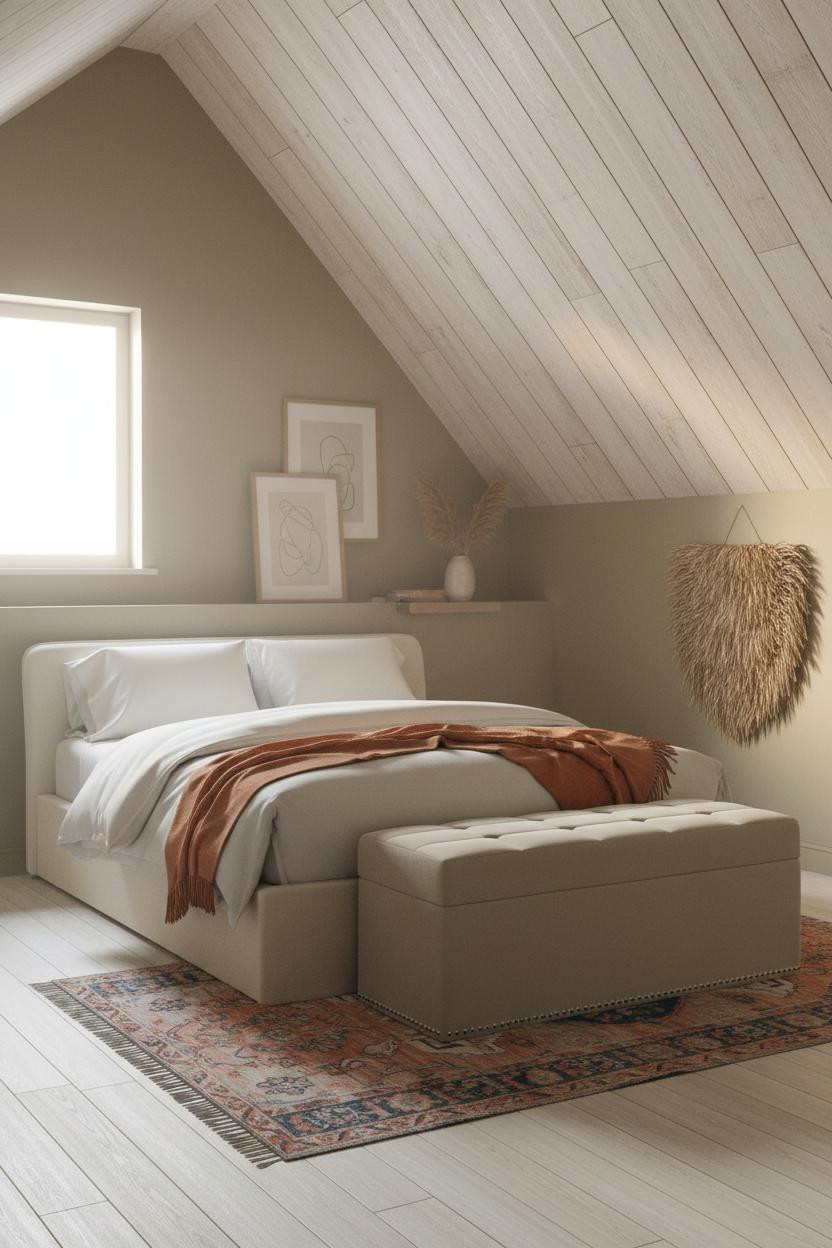

The room feels like a quiet refuge. Not precious. Just soft and layered in a way that took actual thought.
What carries the look: Pale weathered timber boards on the slope catch scattered midday light, turning the architectural constraint into linear texture. The woven wall hanging on the knee wall softens what could read as too geometric, while still feeling collected rather than decorated.
Worth copying: A kilim runner in faded rust grounds the bed zone without fighting the muted olive plaster walls. One warm, low-key palette. That's all it needs.
Sage Green Walls Under Whitewashed Planks: The Quiet Pairing That Always Works
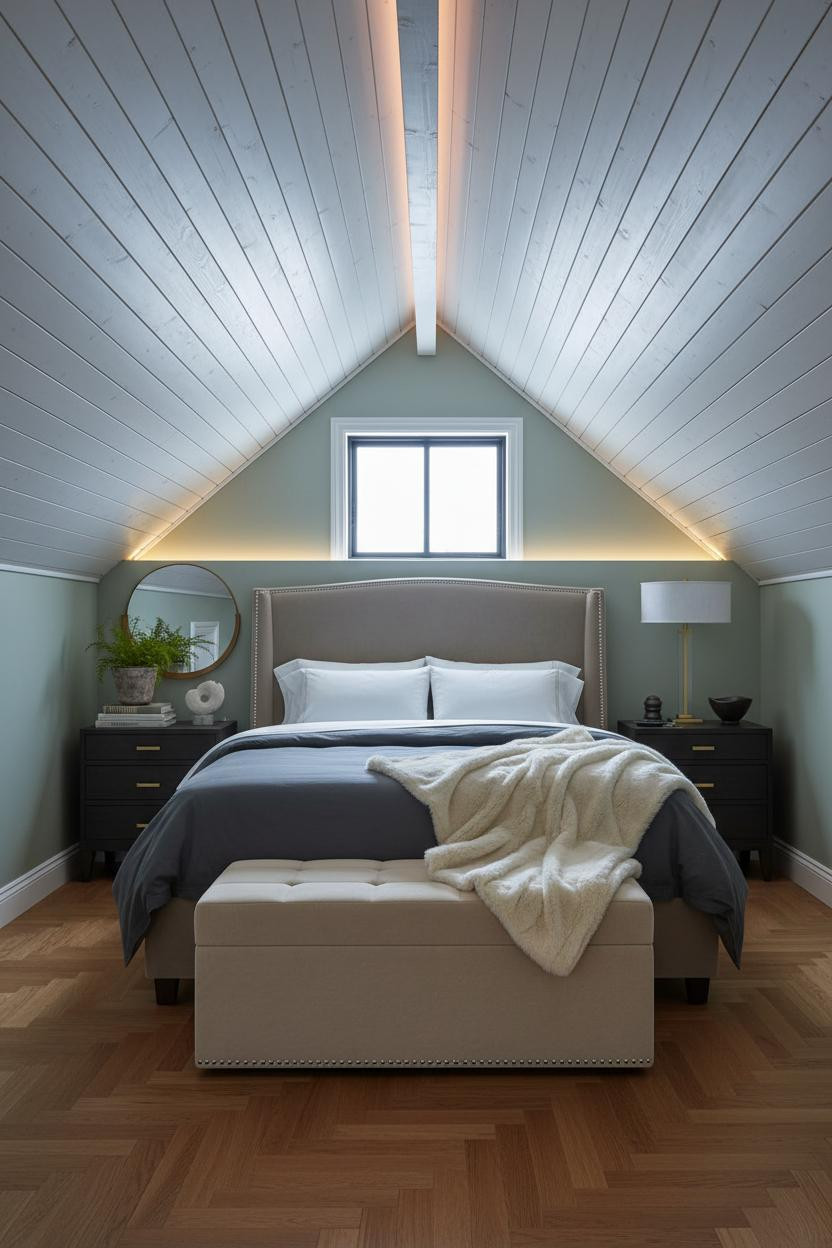

Honestly, this is the combination I'd pick for a low-ceiling attic bedroom if I had to start from scratch.
Why the palette works: Pale whitewashed timber planks on the slope bounce cool morning light downward, which makes the sage-green plaster walls read as grounded rather than dark. The contrast between the cool ceiling and the earthy walls is what keeps the room from feeling flat.
The easy win: A round mirror on the knee wall reflects the beam geometry back into the room, adding depth without requiring you to move a single wall.
Charcoal Shiplap on a Sloped Ceiling: Bolder Than You Think
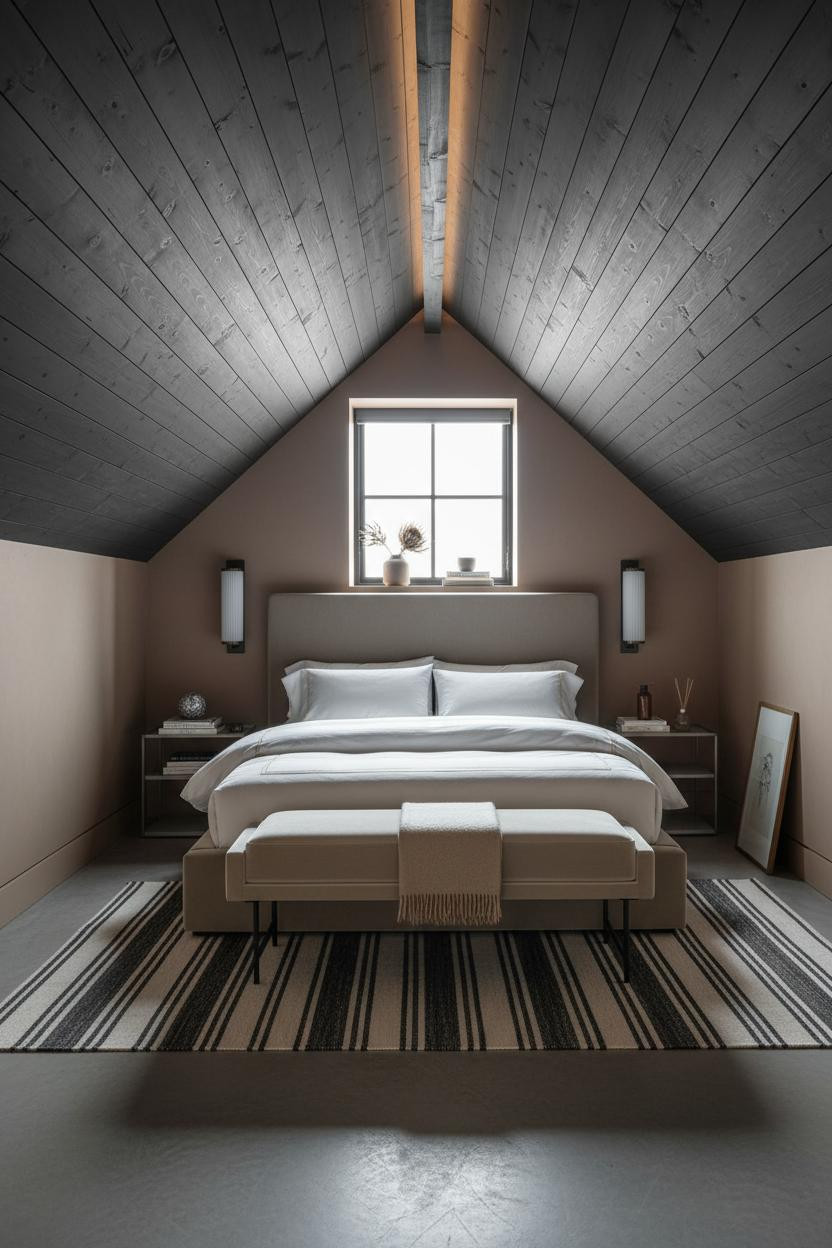

Fair warning. This is not the safe version. But I think it's the best version.
And here's why: raw charcoal-stained shiplap on a sloped ceiling catches diffused grey light in a way that turns the whole plane into bold graphic rhythm. Most people would paint it white. The ones who don't end up with the room people talk about.
What not to do: Don't fight the darkness with busy patterns. Keep the rug and duvet in ivory and cream so the ceiling stays the statement it's supposed to be.
The Skylight Trick That Changes How an Angled Roof Bedroom Breathes
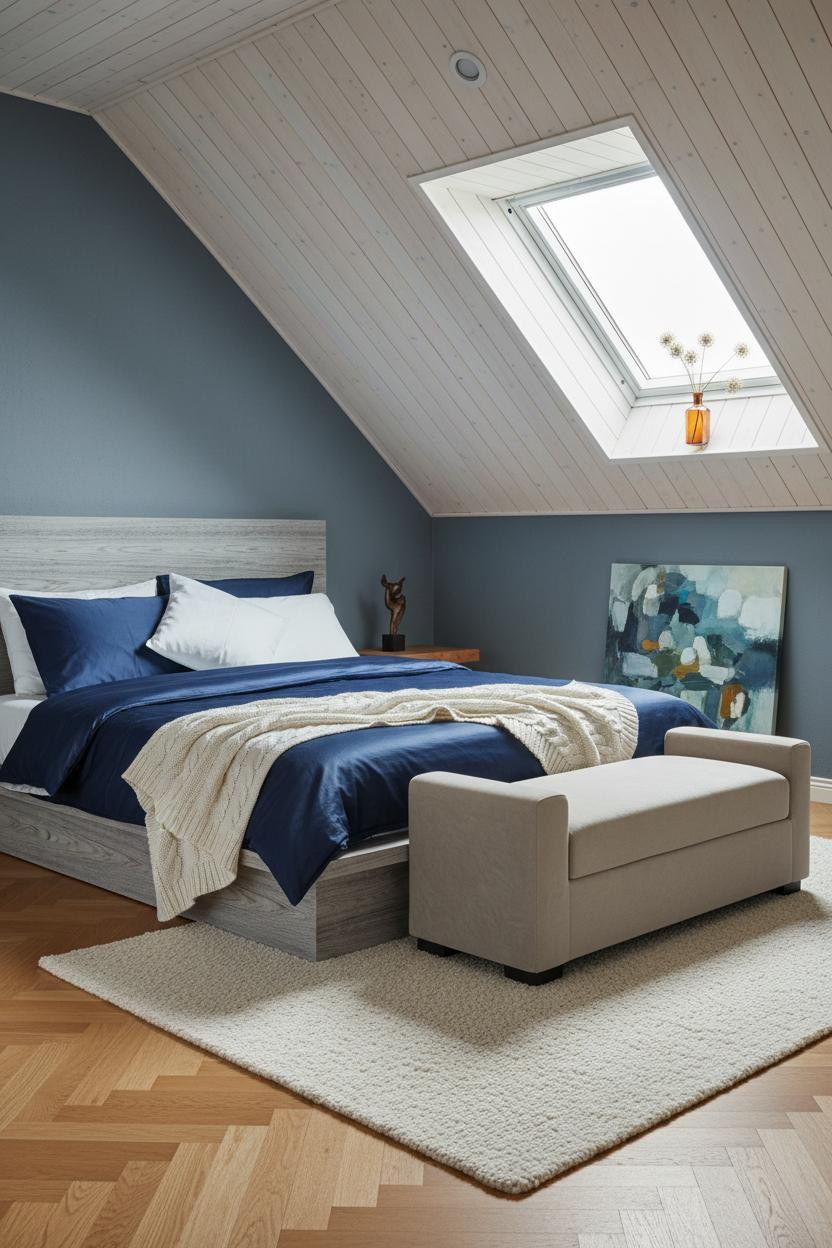

A skylight cut into the slope changes the entire logic of a small attic room. The room feels airy in a way a dormer window alone can't replicate.
What makes this one different: Pale painted tongue-and-groove pine boards run parallel to the rake, so the skylight pours cool diffused light across every groove and makes the angled geometry feel open rather than pressing down.
Pro move: Pair a navy sateen duvet with a cable-knit cream throw. The contrast between the dark bed and the pale ceiling is immediate, in a way that feels grounded without heavy layering.
My Favorite Version of the Low Rafter Attic Bedroom
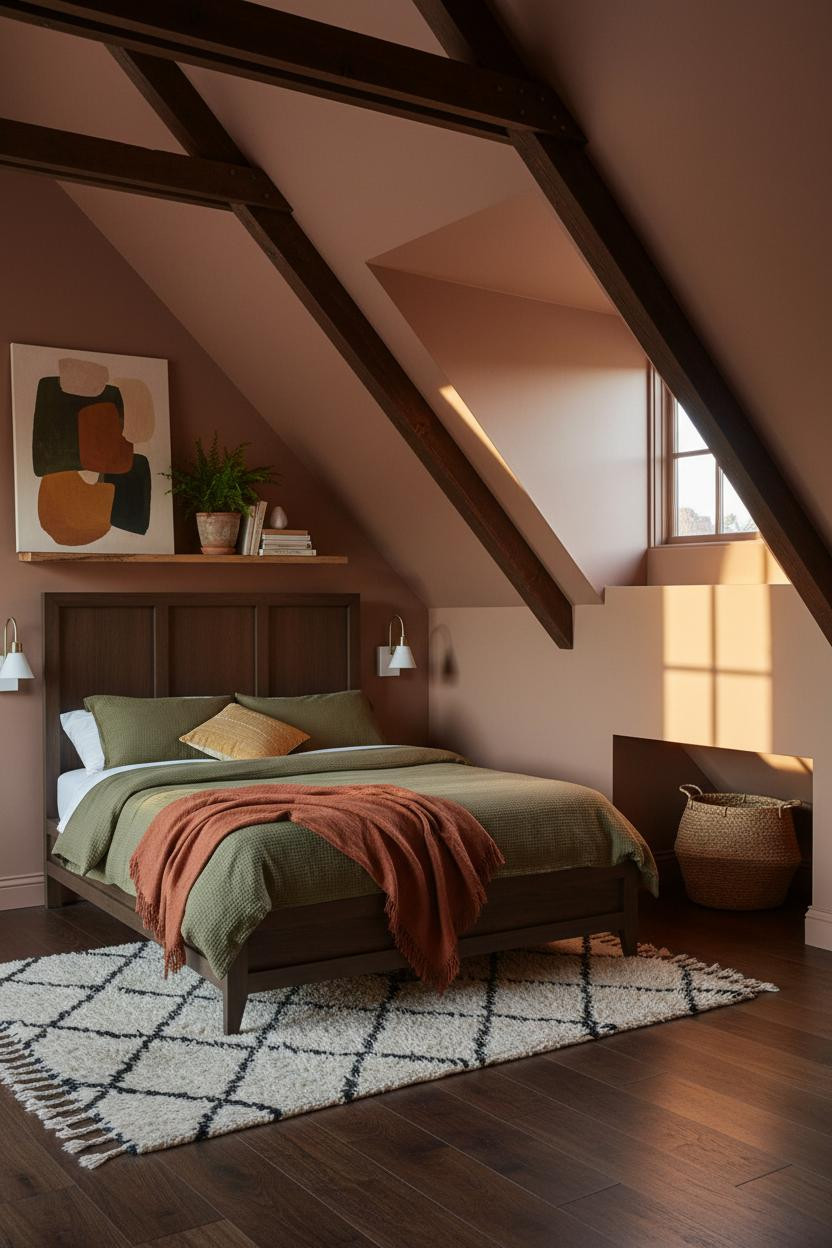
I almost scrolled past this. Glad I didn't.
The dark-stained timber rafters descend at a dramatic angle, and the golden late afternoon light pools amber across the walnut floor beneath them. It shouldn't feel intimate at this scale. But it does.
The detail to keep: Dusty rose plaster and warm clay on lower walls keep the room from reading too heavy under those dark beams. The color contrast is what holds the whole thing together.
Where people go wrong: Putting tall furniture near the low eave wall. Keep it low and tucked. The rafter geometry is the ceiling feature. Don't compete with it.
Whitewashed Beams and Japandi Calm in a Low Attic Space
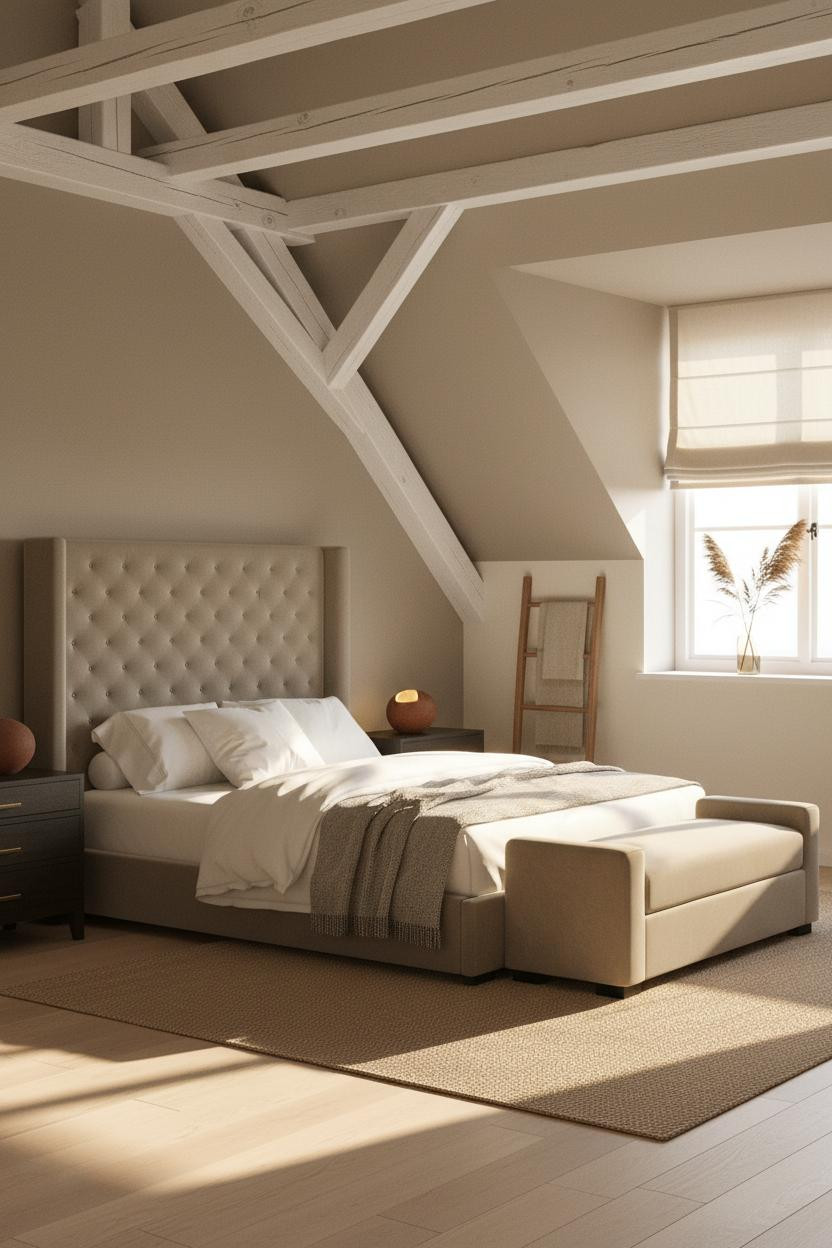

Nothing fancy. That's the point.
What creates the mood: Exposed whitewashed wooden beams on the slope catch morning light from the dormer and cast precise linear shadows across the greige plaster between them. The Japandi read comes from restraint: a flat-weave jute rug, a wooden ladder shelf, a cream linen shade. Nothing too matchy.
The finishing layer: A warm bedside lamp at a low level pools light on the nightstand and keeps the upper beam shadows in play. Skip any overhead pendant. The beams carry the visual weight already.
 Our #1 Pick
Saatva Classic Mattress
America's best-selling online luxury innerspring. 365-night trial, lifetime warranty, free white glove delivery.
Shop Saatva Classic
Our #1 Pick
Saatva Classic Mattress
America's best-selling online luxury innerspring. 365-night trial, lifetime warranty, free white glove delivery.
Shop Saatva Classic
The Foundation Of Every Beautiful Bedroom
All ten of these rooms get the surfaces right. The timber, the plaster, the angles. But the thing that actually makes an attic bedroom feel like somewhere you want to sleep? The bed itself.
The Saatva Classic is the one I'd put in any of these rooms without hesitation. Dual-coil support that holds up through years of use, a breathable organic cotton cover that doesn't trap heat under a low ceiling, and a Euro pillow top that's soft without losing its shape. It feels like the bed the room deserves.
Walls get repainted. Linen gets swapped. The mattress stays. Start with the right one.

The best sloped ceiling bedrooms in this list work because every decision, from the ceiling cladding down to the bed frame, points in the same direction. Nothing fights anything else. Good design ages well because it's made well.