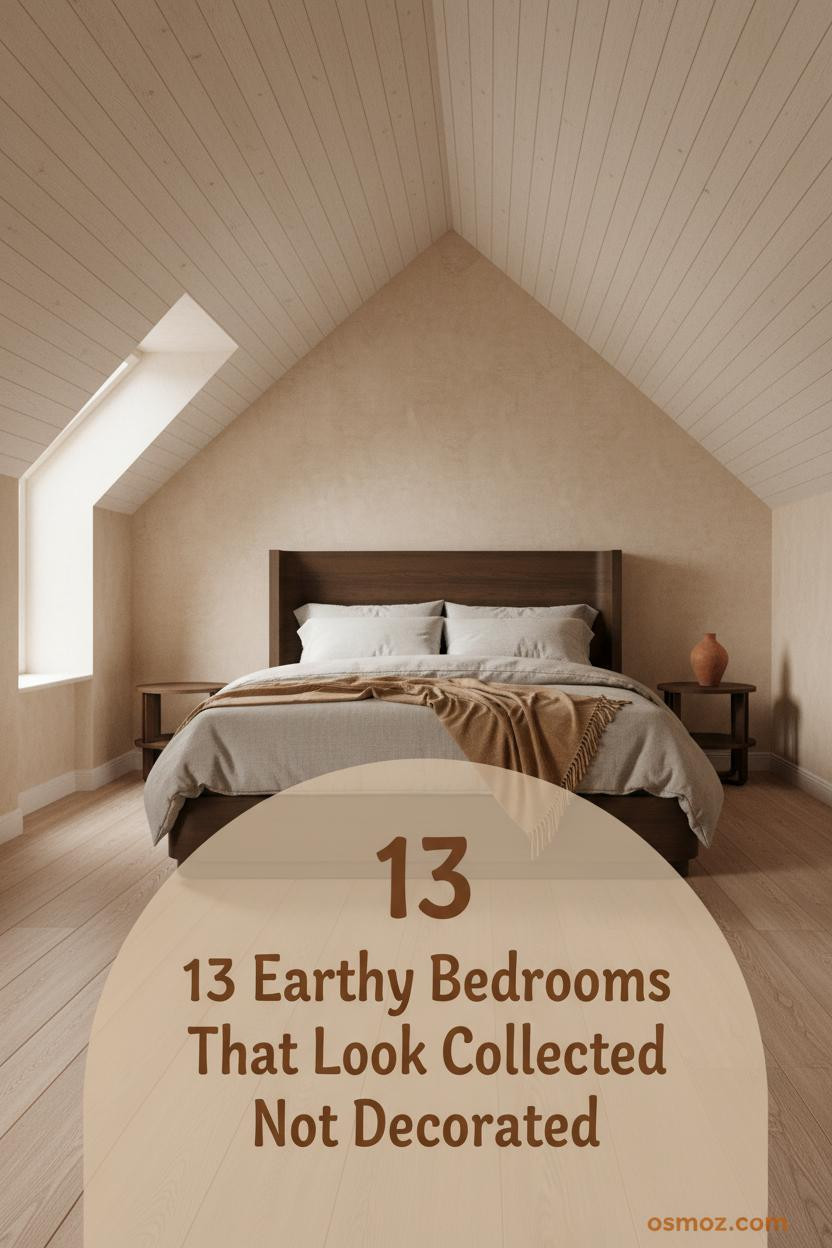
13+ Modern Earthy Bedrooms That Feel Collected Rather Than Decorated
17 march 2026The best Modern Earthy Bedroom doesn't look like it was styled. It looks like it was lived in, slowly, by someone with good taste and no rush.
These 13 attic bedrooms lean into raw plaster, pale wood ceilings, and organic textiles in a way that feels collected rather than decorated. Honestly, that's the whole point.
The Attic Ceiling That Does All the Work
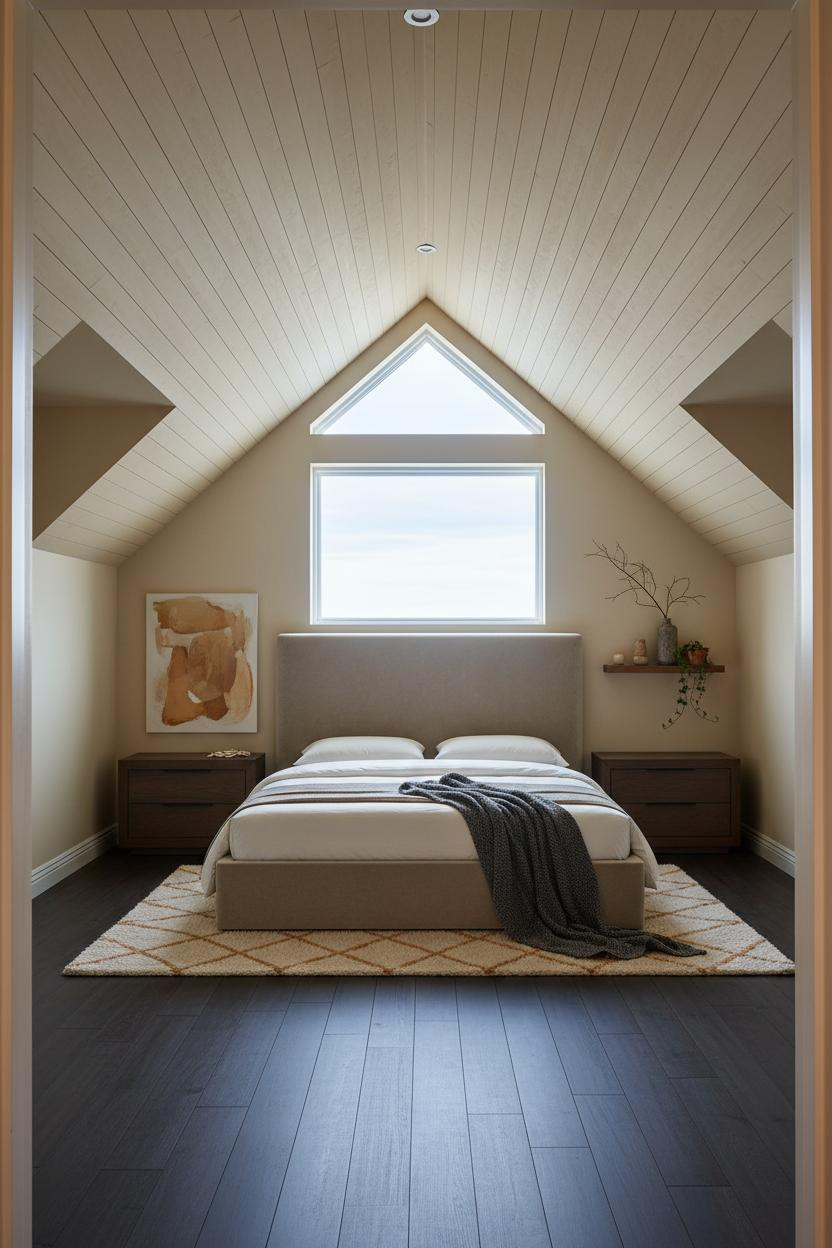

I keep coming back to this one. The ceiling geometry alone is worth the scroll.
Why it holds together: Pale ash tongue-and-groove planks running ridge-to-eave create converging lines that pull every other element into order, so the ochre walls and dark flooring don't compete.
Steal this move: Anchor the floor with a Moroccan wool rug in cream and sand. It grounds the room without killing the warmth the ceiling already built.
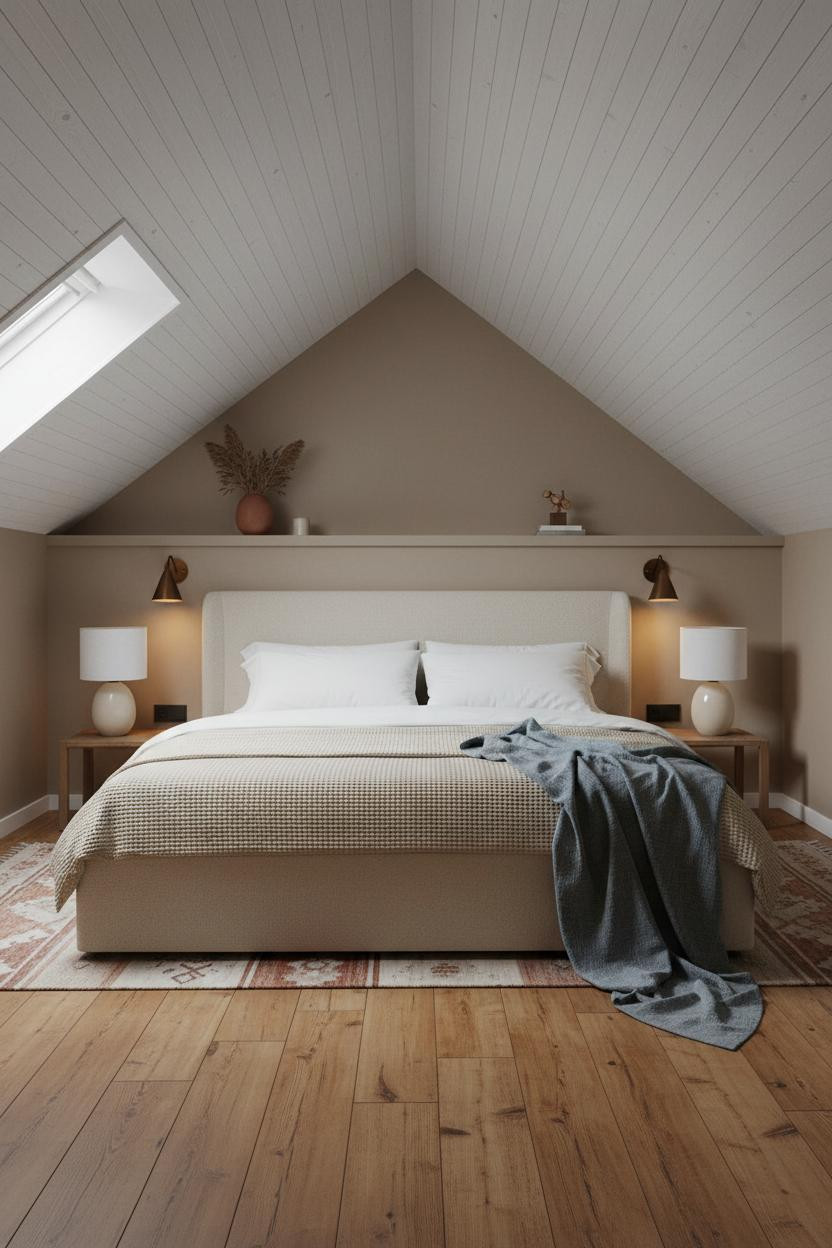
Golden Hour Never Looked This Deliberate
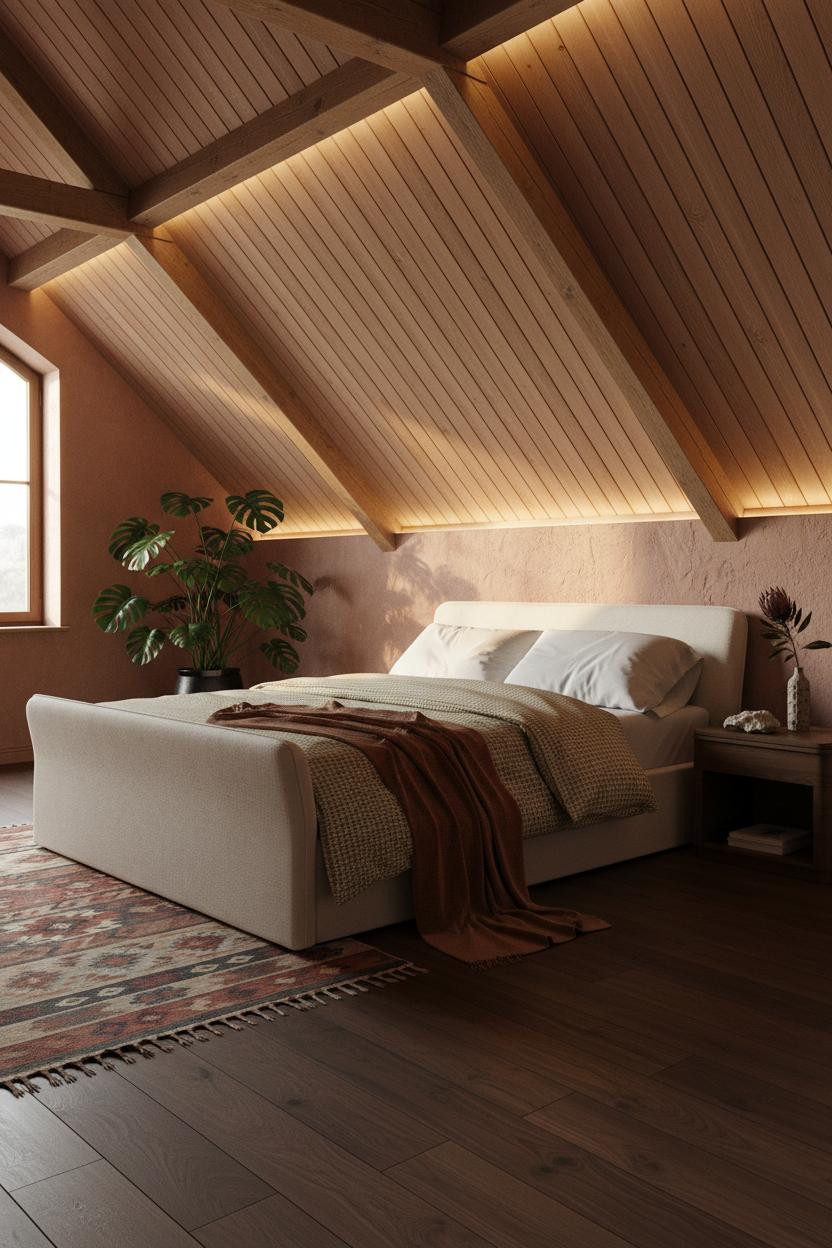

Dark and warm. Not always an easy combination to get right.
But when the walls are dusty rose plaster and the ceiling is natural pine board-and-batten, the amber light does the heavy lifting. The room feels lived-in and intimate, not staged.
The easy win: Swap flat overhead lighting for a floor lamp in the corner. That single change shifts the whole mood toward something softer, especially with a rust linen throw on the footboard.
Why Overcast Light Makes Earthy Rooms Sing


People chase golden hour for attic bedrooms. I think grey morning light is actually better.
What makes it work: Cool diffused light makes pale birch ceiling planks glow without washing out the warm sand plaster walls. The contrast stays readable. Nothing competes.
Pro move: Add flanking sconces that warm up the bed zone at night. The cool-warm contrast you get morning to evening makes the room feel like it changes personality. In the best way.
This Japandi Geometry Is the Real Feature
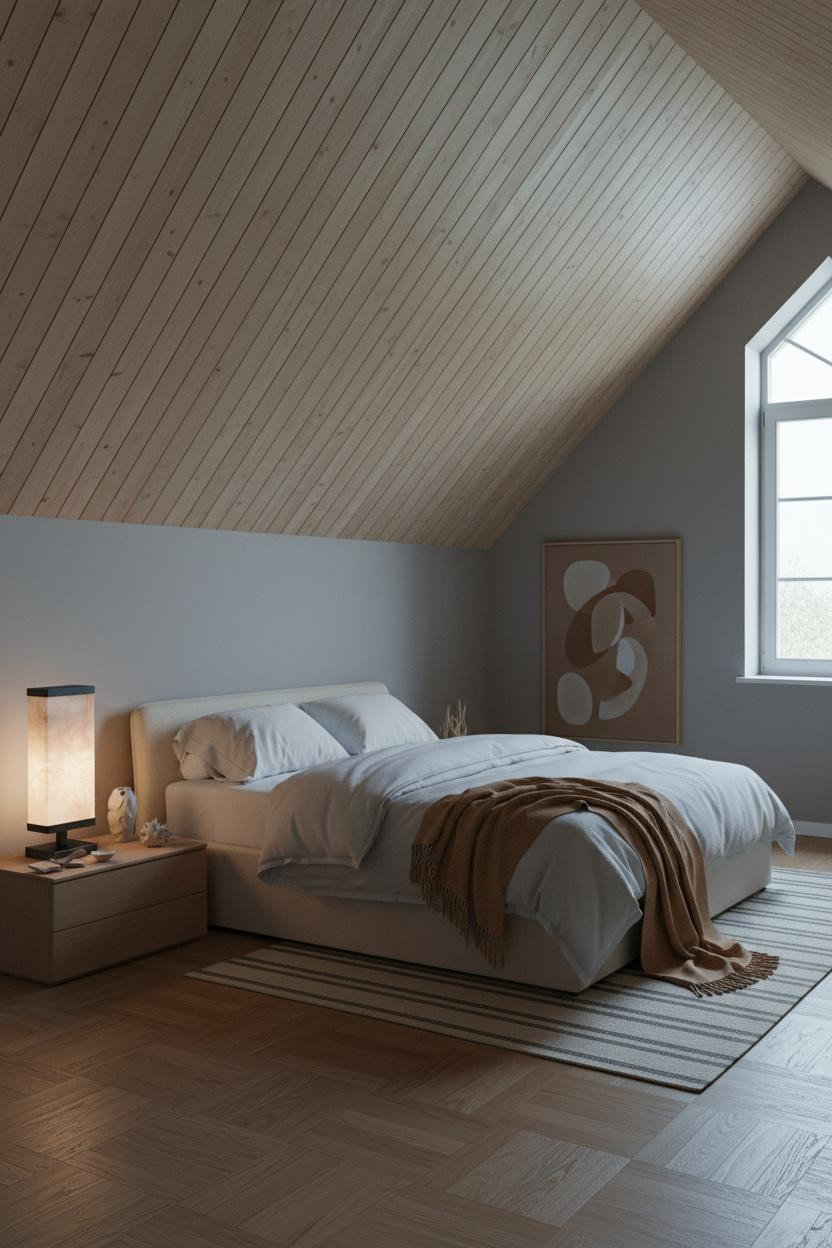
The vertical battens on that sloped ceiling are doing more than anyone gives them credit for.
What gives it presence is narrow timber board-and-batten running toward the ridge apex, casting fine parallel shadow lines that create architectural rhythm flat plaster simply can't. The warm grey walls let the ceiling win.
Worth copying: A camel wool throw folded at the foot and a ceramic vessel on a wooden tray beside the bed. Nothing too precious. Just enough texture to keep things interesting.
I Didn't Expect the Round Mirror to Work This Well
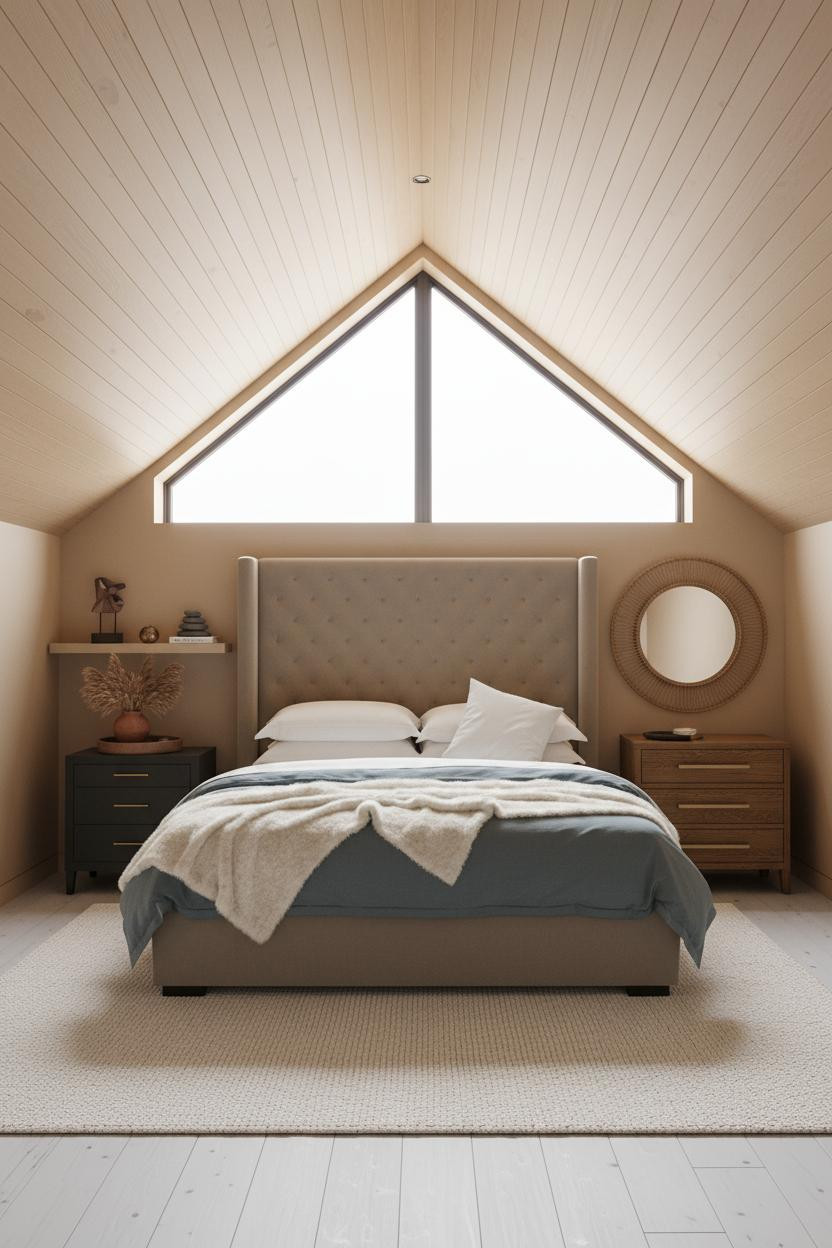


It shouldn't be the focal point. But somehow it is, and it works.
What changes the room: An oversized aged rattan mirror mounted beside the bed introduces organic curve against the hard geometry of a vaulted larch ceiling, which keeps the whole palette from feeling too stiff.
Lean into warm minimalist layering here. Bleached pine floors, a chunky cream wool rug, honey walls. One circular form softens all those converging lines above.
Oak Battens and Taupe Plaster: The Quiet Formula
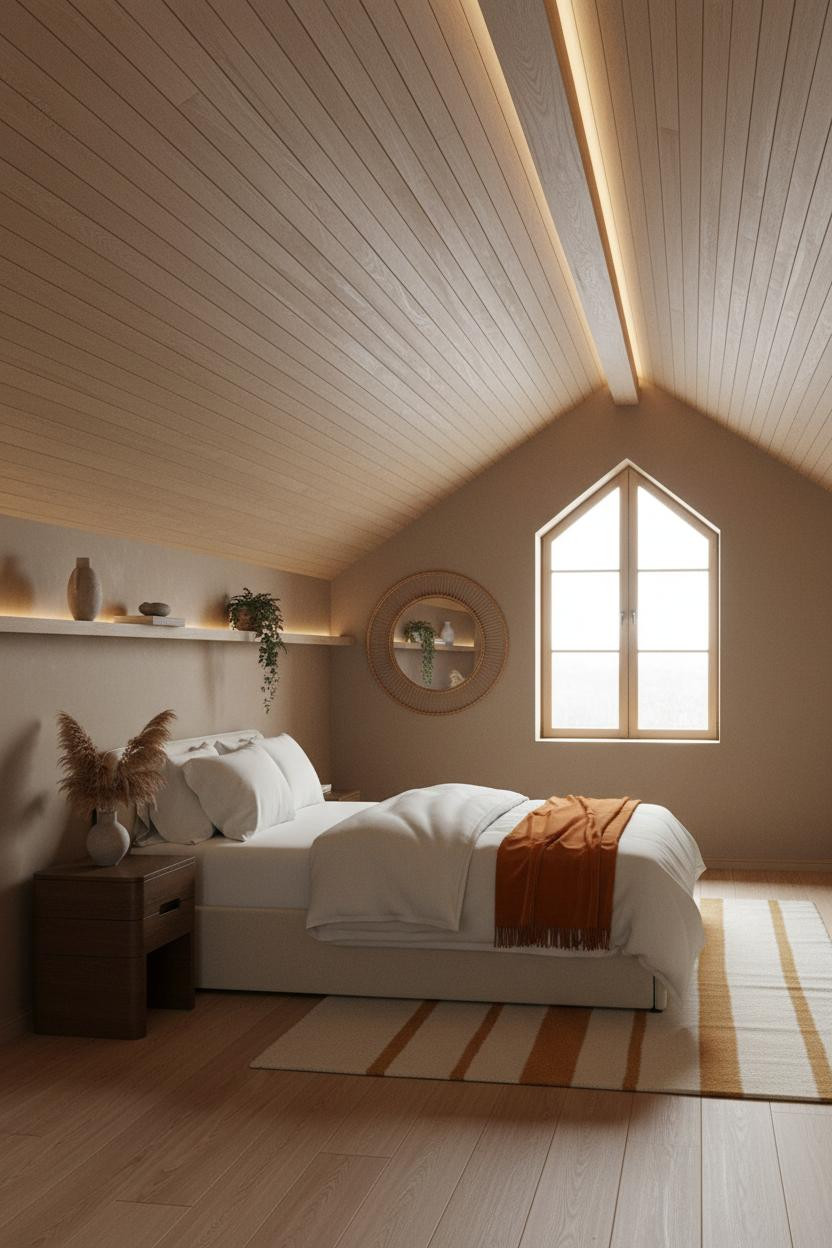
Nothing fancy. That's the point.
Why the palette works: Natural oak board-and-batten on a sloped ceiling reads warmer against taupe matte plaster than it would against white. The warmth in both materials meets in the middle, and the room feels calm and cohesive rather than busy.
The finishing layer: A burnt orange mohair throw over an oatmeal linen duvet. Just enough contrast to keep the neutral palette from going flat.
Charred Larch Is Not for the Timid
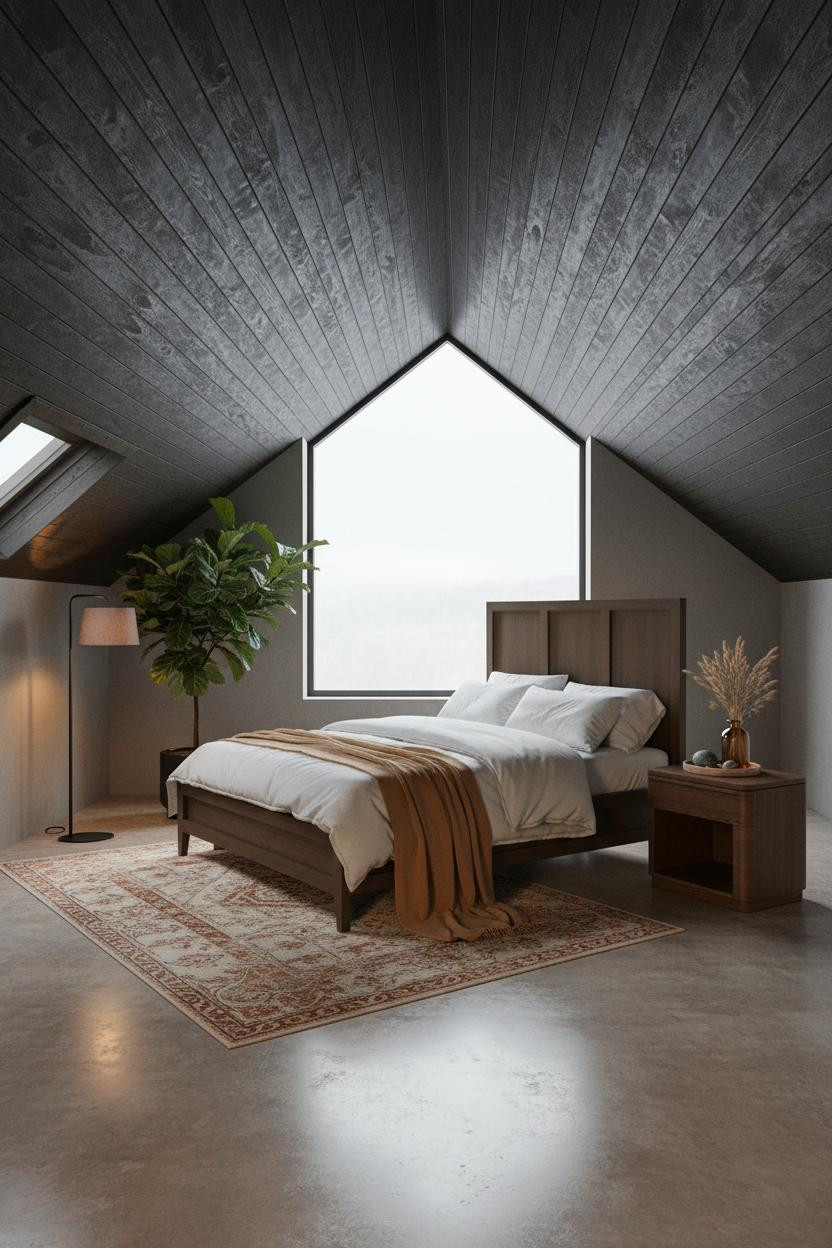

Bold choice. Fair warning: this one is divisive.
But the people who commit to darkened charred-larch plank ceilings against stone grey plaster never go back. The carbonized grain texture adds depth that painted wood just doesn't have, especially when a warm floor lamp counters the cool of the walls.
Don't ruin it with: heavy furniture or dark bedding. Keep the duvet white or cream. The ceiling is already doing enough.
Whitewashed Pine and the Art of Doing Less
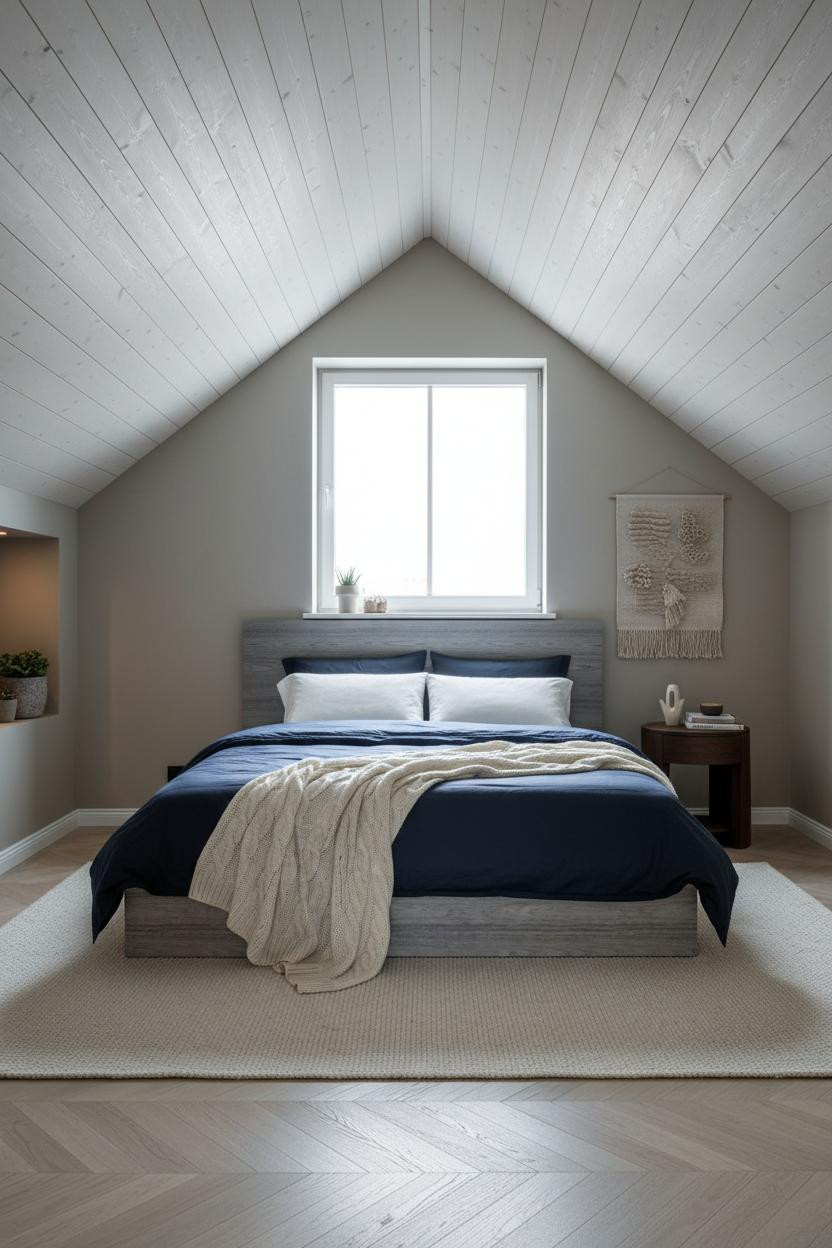

This one is surprisingly calming. Not dramatic. Just right.
The reason it feels warm instead of clinical is the tongue-and-groove whitewashed pine overhead. Pale grain and shadow-filled joints give the ceiling enough texture to anchor the room, while the greige plaster walls stay quiet beneath it.
The detail to keep: A large woven wall hanging above the bed in undyed wool. It adds softness at eye level, in a way that feels intentional without looking like you tried too hard.
Muted Olive Walls Actually Change Everything
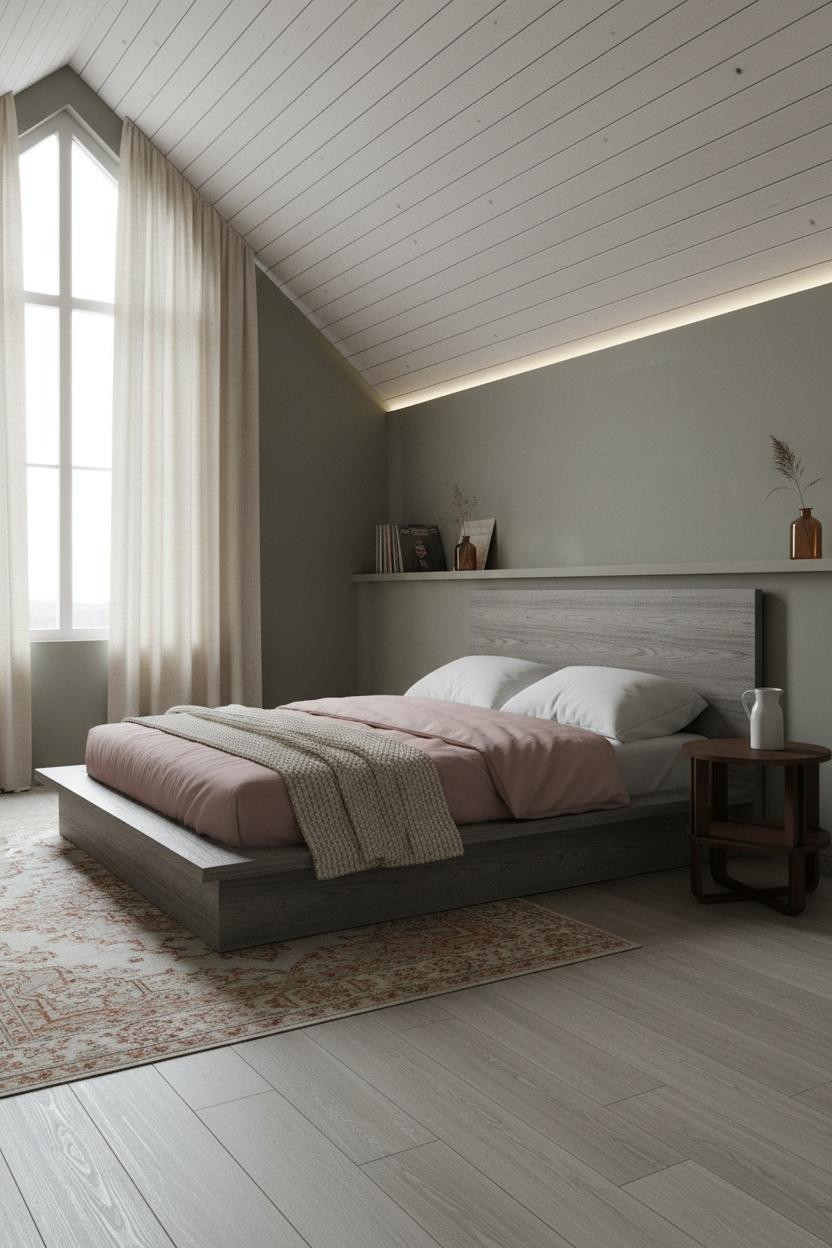

I almost picked sage. Glad I didn't. Muted olive reads more grounded.
What gives it depth: Whitewashed timber battens on the sloped ceiling pull the cool grey of an overcast dormer downward, and the olive walls absorb that light in a way that makes the room feel warm without being heavy.
Where to start: Floor-to-ceiling raw linen curtains. They frame the window and add height while still feeling relaxed. One panel slightly bunched at the floor is the right amount of imperfection.
Cedar and Mushroom Plaster: A Warmer Take on Neutral
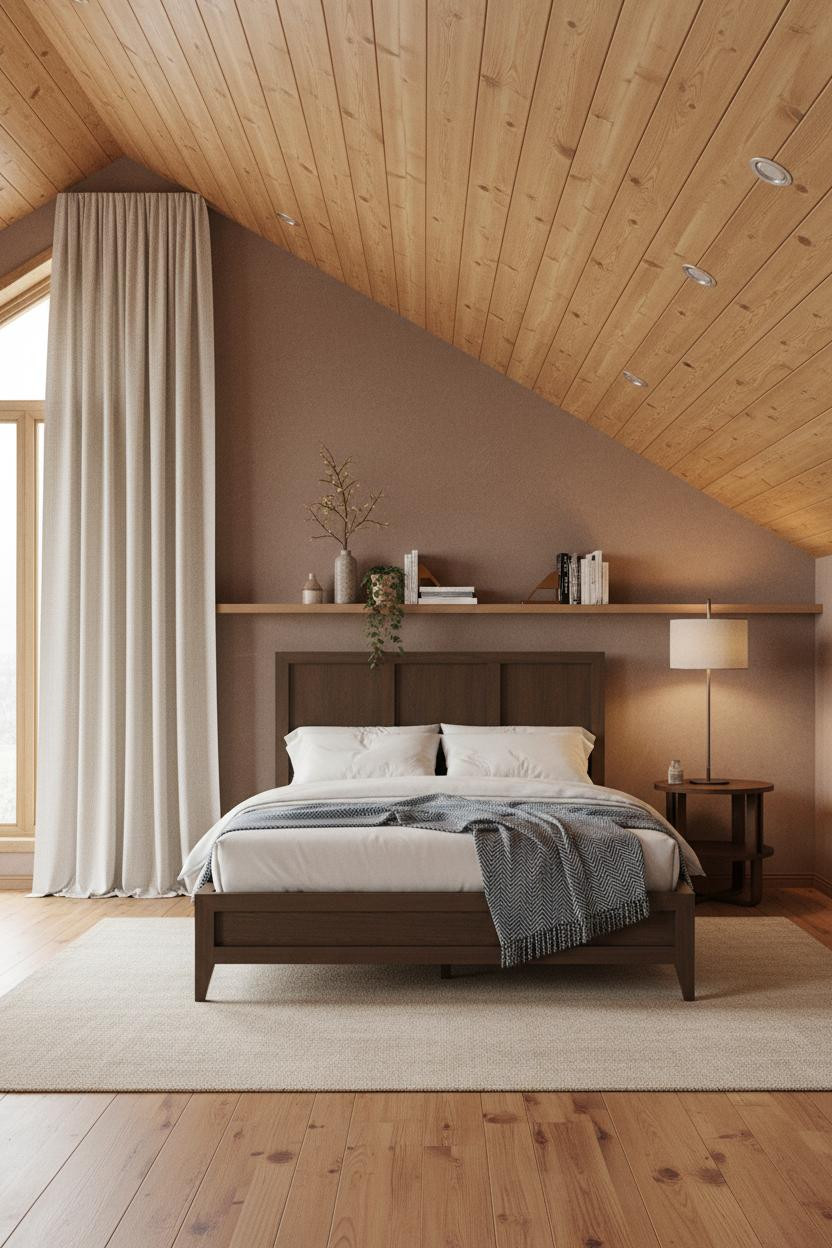
Mushroom is the neutral that actually earns its place. Not beige. Not grey. Something in between that works with almost everything.
Why it feels expensive: Wide honey-toned cedar planks running diagonally to a ridge apex add enough warmth to keep mushroom plaster walls from going flat. The two materials genuinely need each other.
The smarter choice: Pair a cream percale duvet with a steel blue herringbone throw at the foot. It's a quiet contrast, just enough to keep the earthy tones bedroom palette from reading too monochrome.
Clay Walls and Whitewashed Shiplap: Texture on Texture
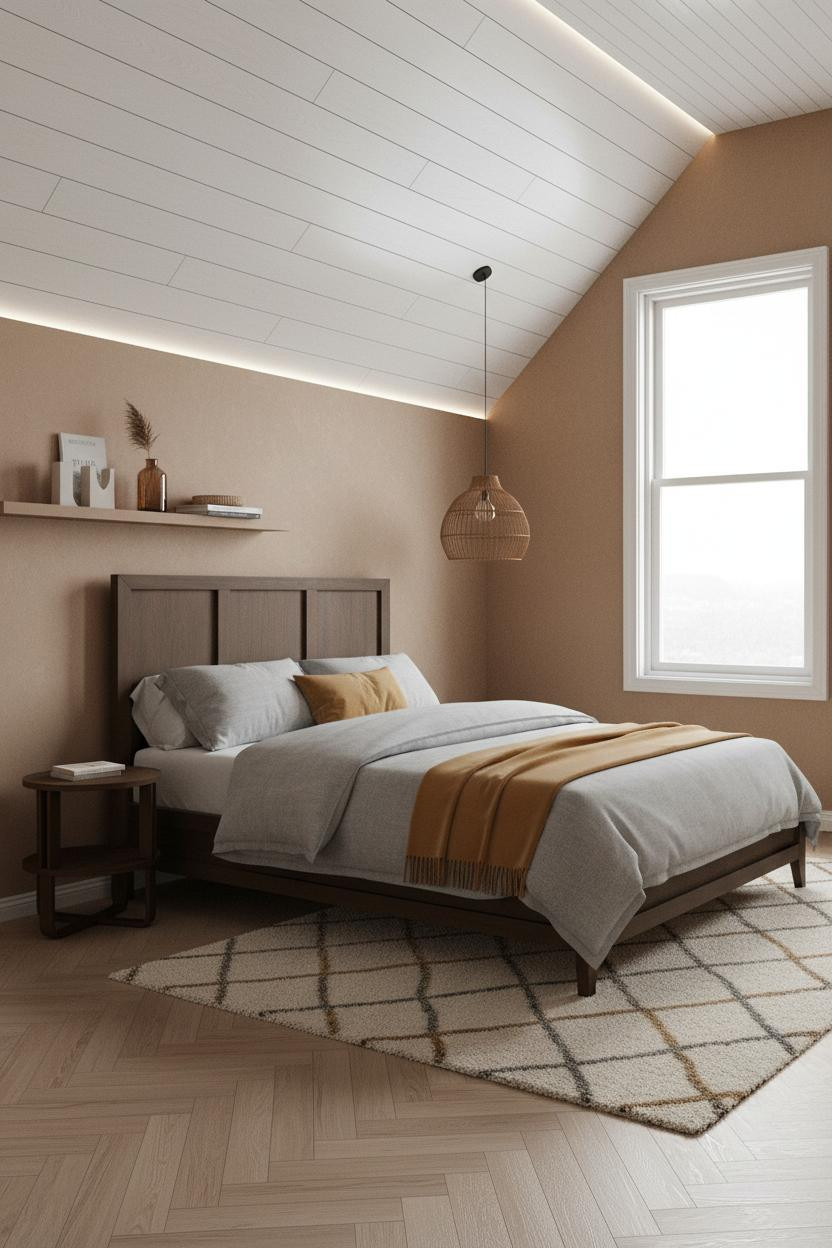
Two textured surfaces layered on top of each other. It sounds like too much. It isn't.
What keeps it elevated: Warm clay plaster walls sit below whitewashed shiplap panels on the vaulted ceiling, and the pale overhead surface amplifies diffused light so the darker walls below don't feel closed in.
A sculptural aged rattan pendant hung off-center above the bed is the detail that makes the whole thing feel considered. And a mustard wool blanket at the foot pulls the warmth back down.
Terracotta Is the Bravest Wall Color in This Roundup
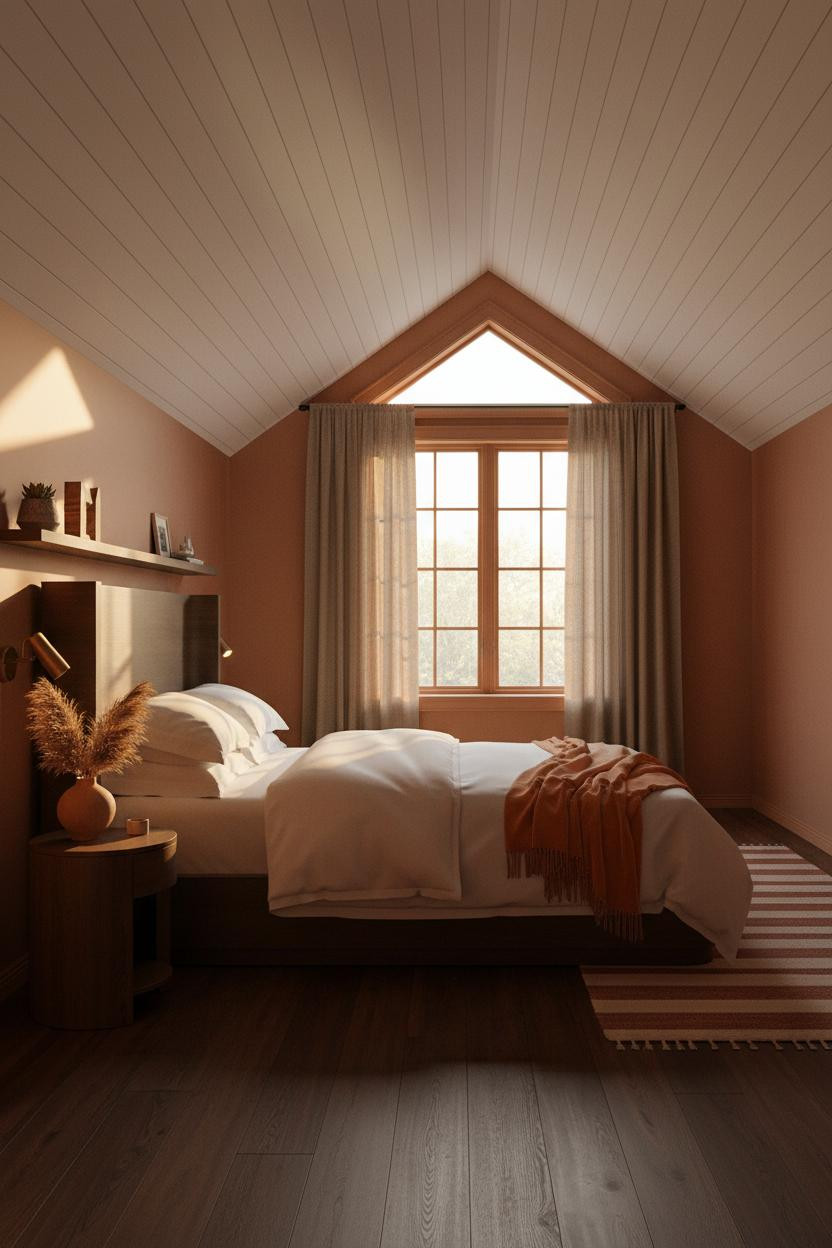

This is the one I send people when they say earthy bedrooms are boring.
Why it lands: Warm terracotta plaster walls catch late afternoon amber light differently at every hour, which means the room actually shifts mood between morning and evening. The white board-and-batten ceiling above keeps it from going too heavy.
Avoid this mistake: Don't match the throw to the walls. A burnt orange mohair on oatmeal bedding is the right call. Matching terracotta to terracotta flattens the whole earthy bedroom aesthetic.
Sage and Exposed Beams: A Japandi Attic Done Right
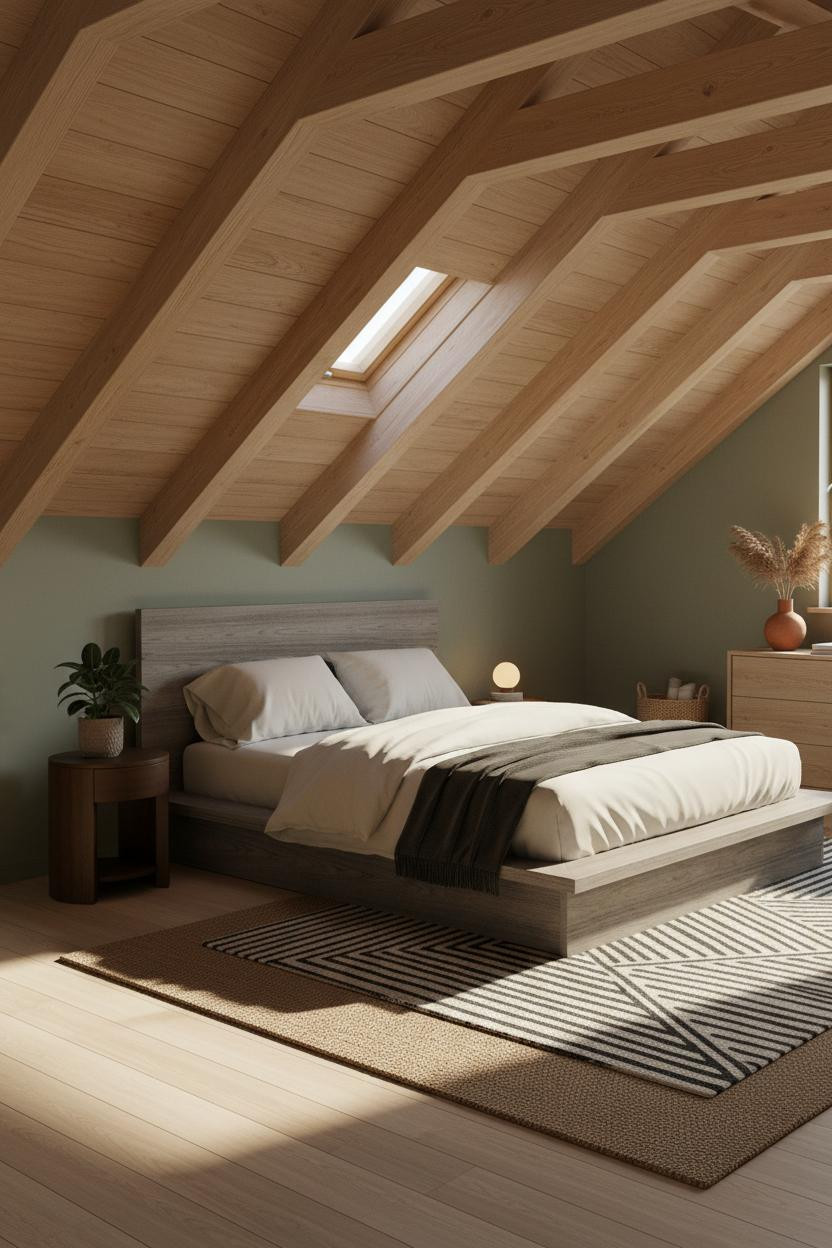
Exposed ceiling beams could feel rustic. These don't. They feel like architecture.
The combination of natural-finish timber beams against soft sage green walls is the whole trick. Sage pulls enough green from the wood grain to tie the two surfaces together, while pale birch flooring keeps the room light and open underfoot.
What to copy first: A charcoal cashmere throw on ivory cotton bedding. Against japandi bedroom sage walls, that contrast is immediate. Simple as that.
 Our #1 Pick
Saatva Classic Mattress
America's best-selling online luxury innerspring. 365-night trial, lifetime warranty, free white glove delivery.
Shop Saatva Classic
Our #1 Pick
Saatva Classic Mattress
America's best-selling online luxury innerspring. 365-night trial, lifetime warranty, free white glove delivery.
Shop Saatva Classic
Why Luxury Bedrooms Always Feel Better
Walls get repainted. Linen gets swapped. The ceiling gets a new treatment. But the mattress stays, and it matters more than most people admit.
The Saatva Classic is the piece I'd prioritize before anything else in these rooms. Dual-coil support that actually holds its shape, a breathable organic cotton cover, and a Euro pillow top that still feels right years in. It's not a trend. It's a foundation.
And honestly, the most beautiful room in the world isn't worth much if you're sleeping on the wrong mattress underneath all that washed linen and reclaimed wood.

These rooms don't look decorated because every choice earned its place. The ceiling texture, the wall color, the throw at the foot of the bed. Nothing accidental. Start with the bed. The rest figures itself out.