21+ Front Yard Landscaping Ideas That Actually Look Expensive
06 march 2026Your front yard shouldn't feel like a chore you're avoiding every weekend. If you're staring at overgrown shrubs and patchy grass wondering how everyone else makes landscaping look effortless, these 21 ideas will show you the shortcuts designers actually use.
From gravel beds that need zero mowing to architectural plantings that thrive on neglect, each approach here solves a specific problem without requiring a degree in horticulture or a contractor on speed dial. Let's get into it.
1. Tiered Boxwood with Pea Gravel and Weeping Cherry Drama
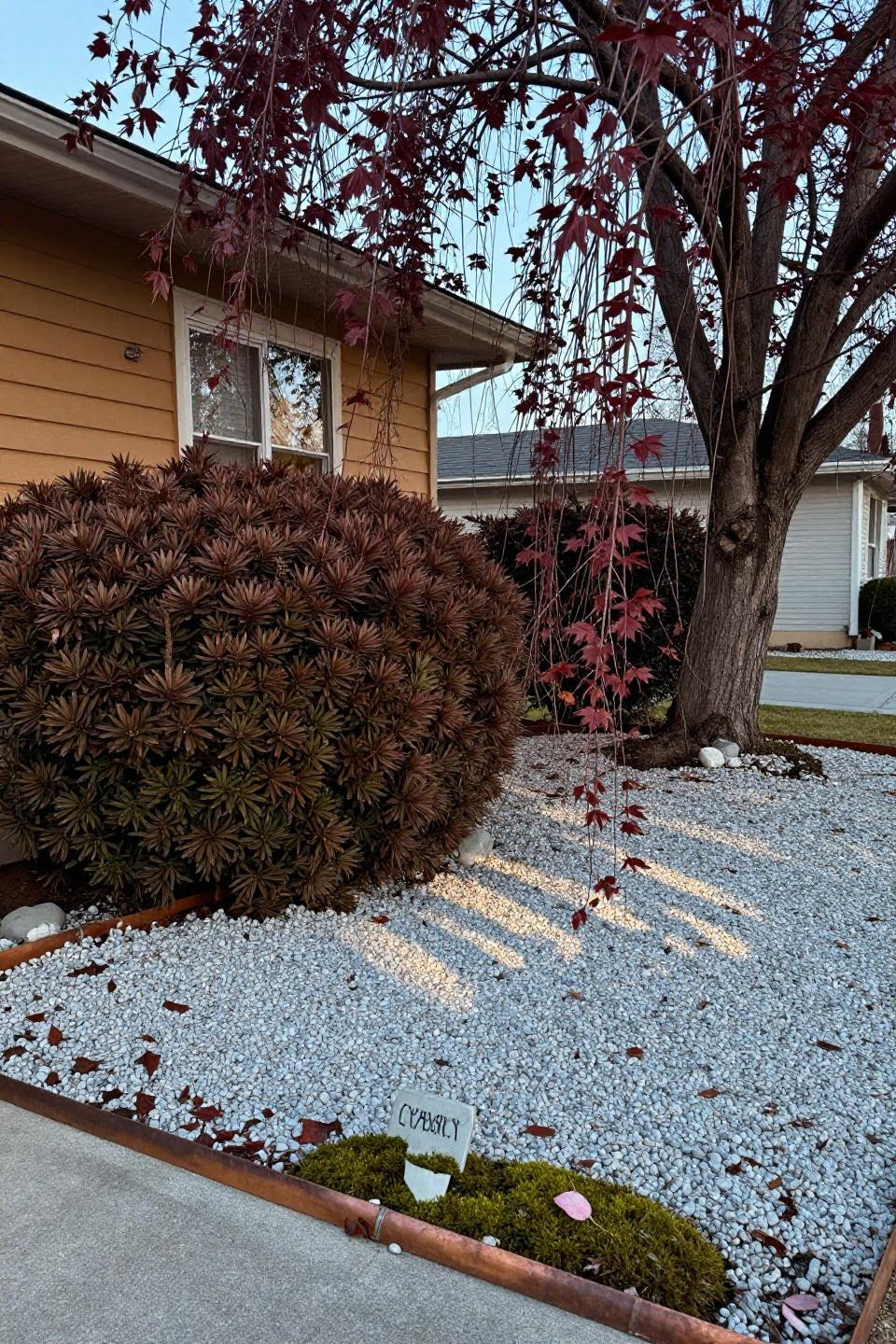
Dense chartreuse boxwood against honey lap siding creates instant curb appeal without the fuss. The pea gravel bed edged in weathered copper needs maybe 10 minutes of raking twice a year, and that weeping cherry? It's doing all the vertical drama for you with zero pruning required beyond removing dead branches.
2. Asymmetrical Gravel Seating Nook with Evergreen Hedging
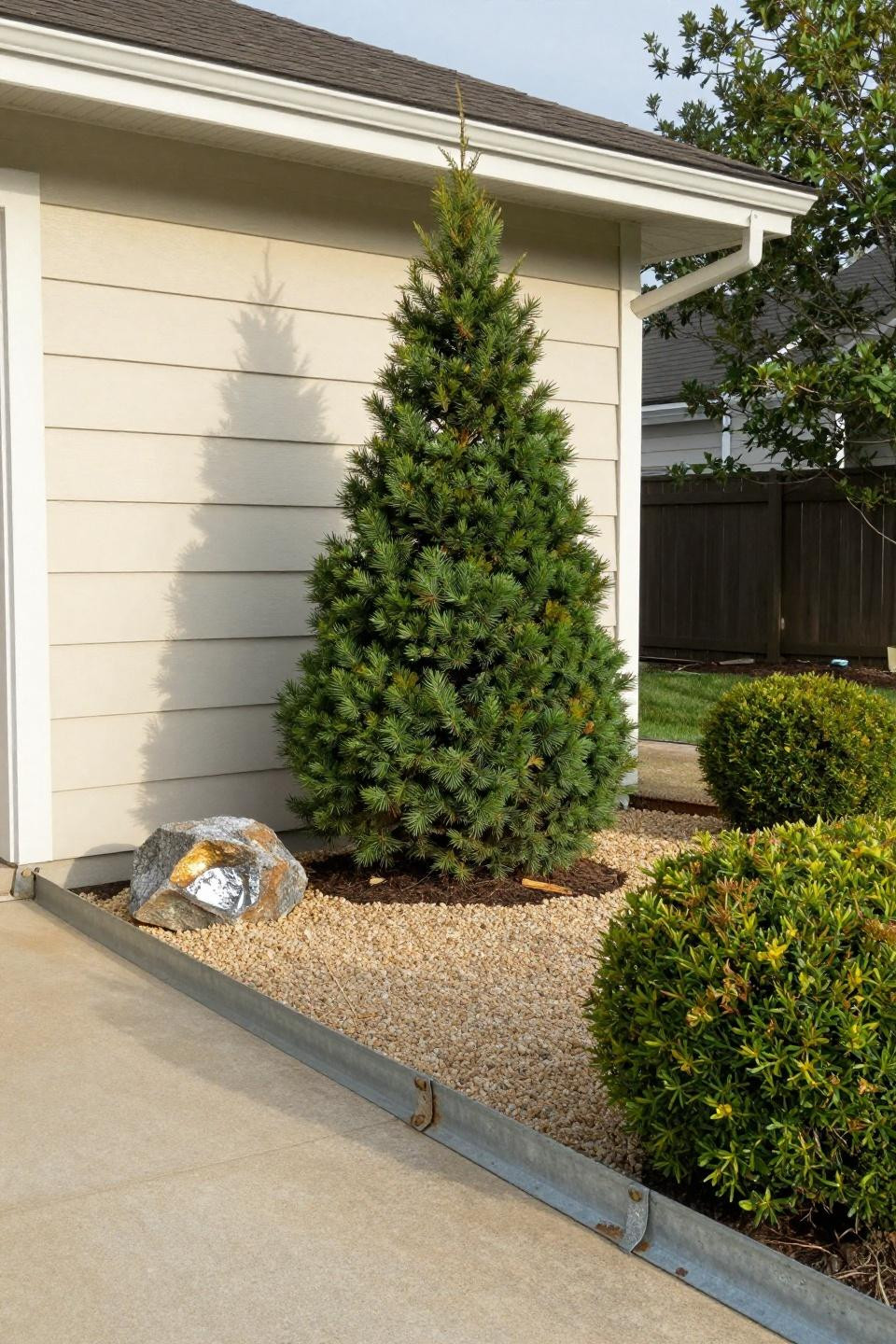
Decomposed granite is the secret weapon here. It compacts like concrete but drains like sand, so you get a clean sandy-beige surface that never puddles. The sculptural boxwood hedging frames the space without needing constant shaping because you're working with its natural mounding habit instead of fighting it.
3. Cottage Garden Overflow with River Rock Pathways
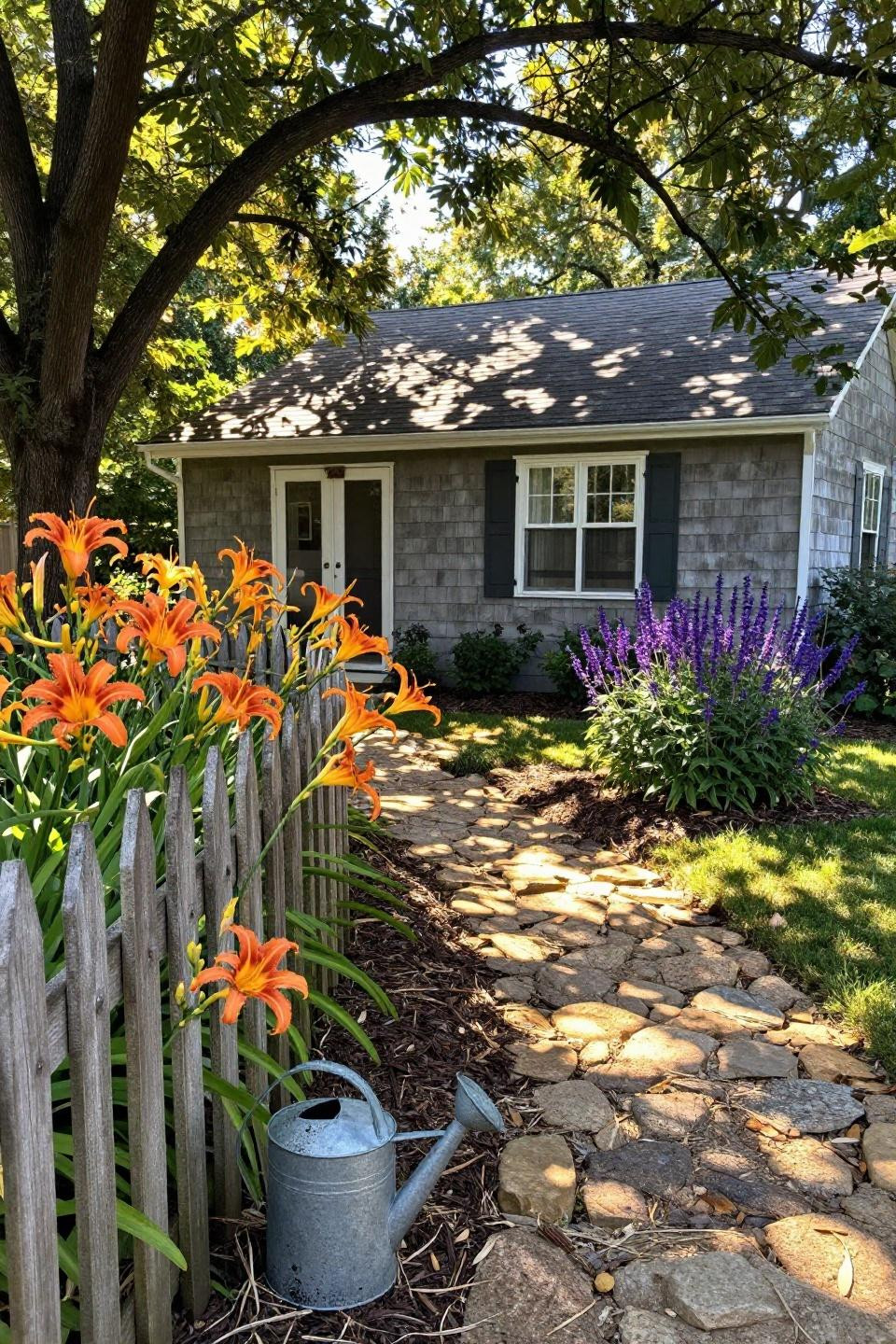
Coral daylilies and purple salvia are bulletproof perennials that come back bigger every year. The winding river rock path costs about $200 for a 20-foot run if you source locally, and those split-rail timber fences age beautifully instead of looking shabby like painted wood.
4. Minimalist Japanese Pine with Steel Fence Geometry
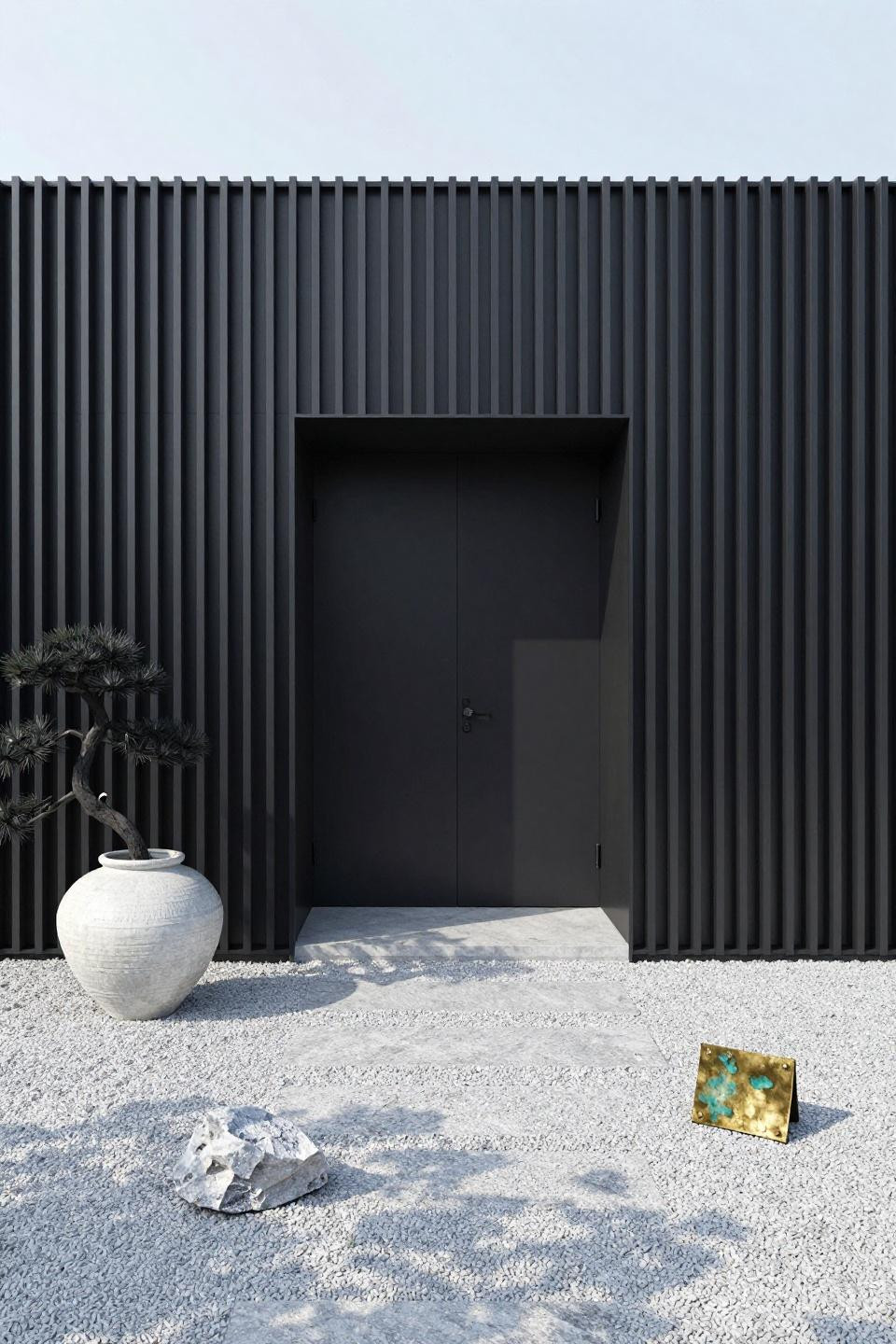
One statement plant beats a dozen mediocre shrubs every time. This Japanese black pine in a pale ceramic pot (try a 24" fiber-clay planter from Home Depot for $80 instead of genuine ceramic) anchors the entire composition. The charcoal steel slat fence from companies like Trex costs around $45 per linear foot installed but lasts 25+ years with zero maintenance.
5. Curved Perennial Drifts with Overhead Documentation Clarity
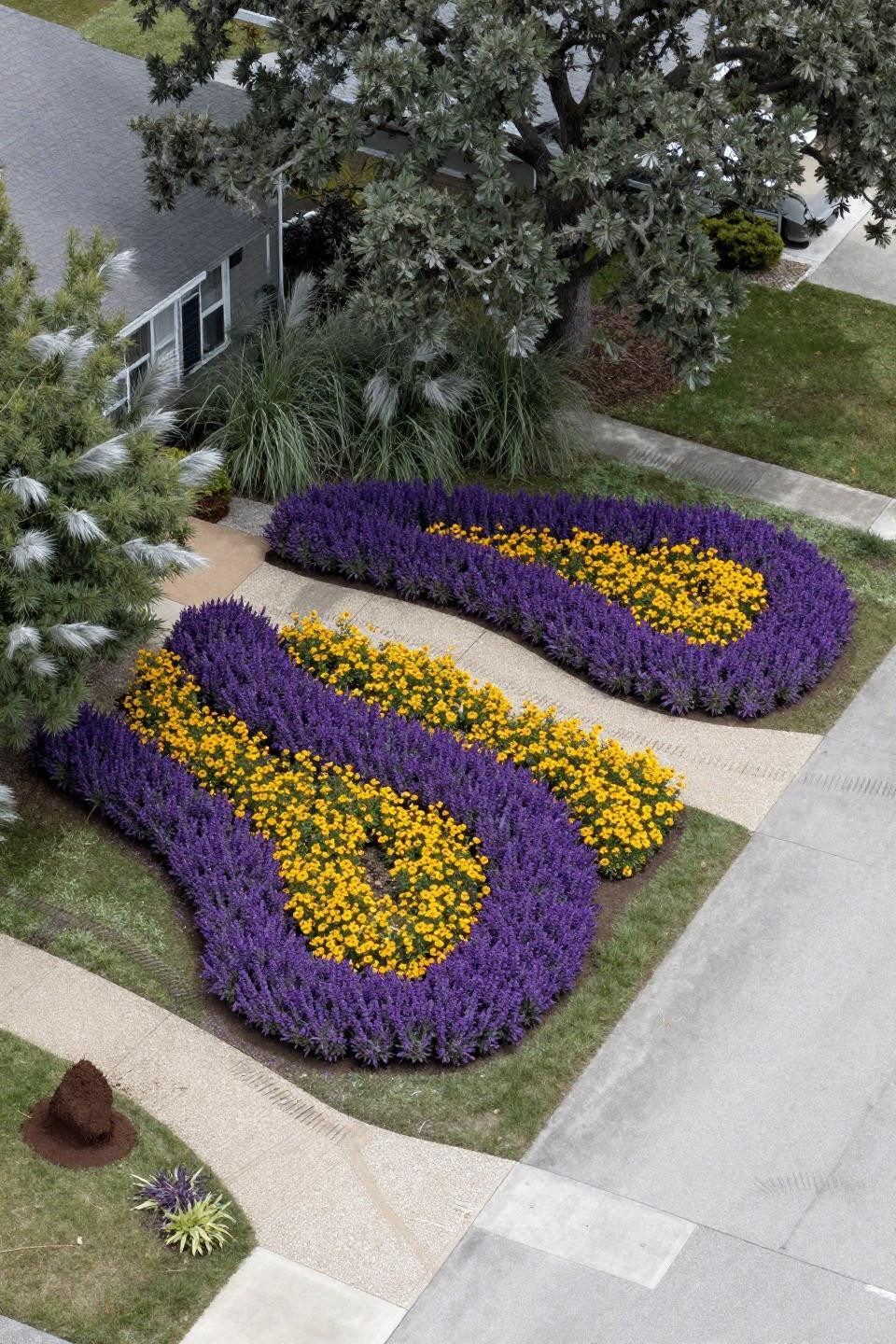
Planting in sweeping curves instead of straight rows tricks the eye into seeing more space than you actually have. Purple liatris and golden coreopsis are both native perennials that need watering maybe twice a summer once established, and they reseed gently without becoming invasive.
6. Hydrangea Side Yard with Pergola Shadow Play
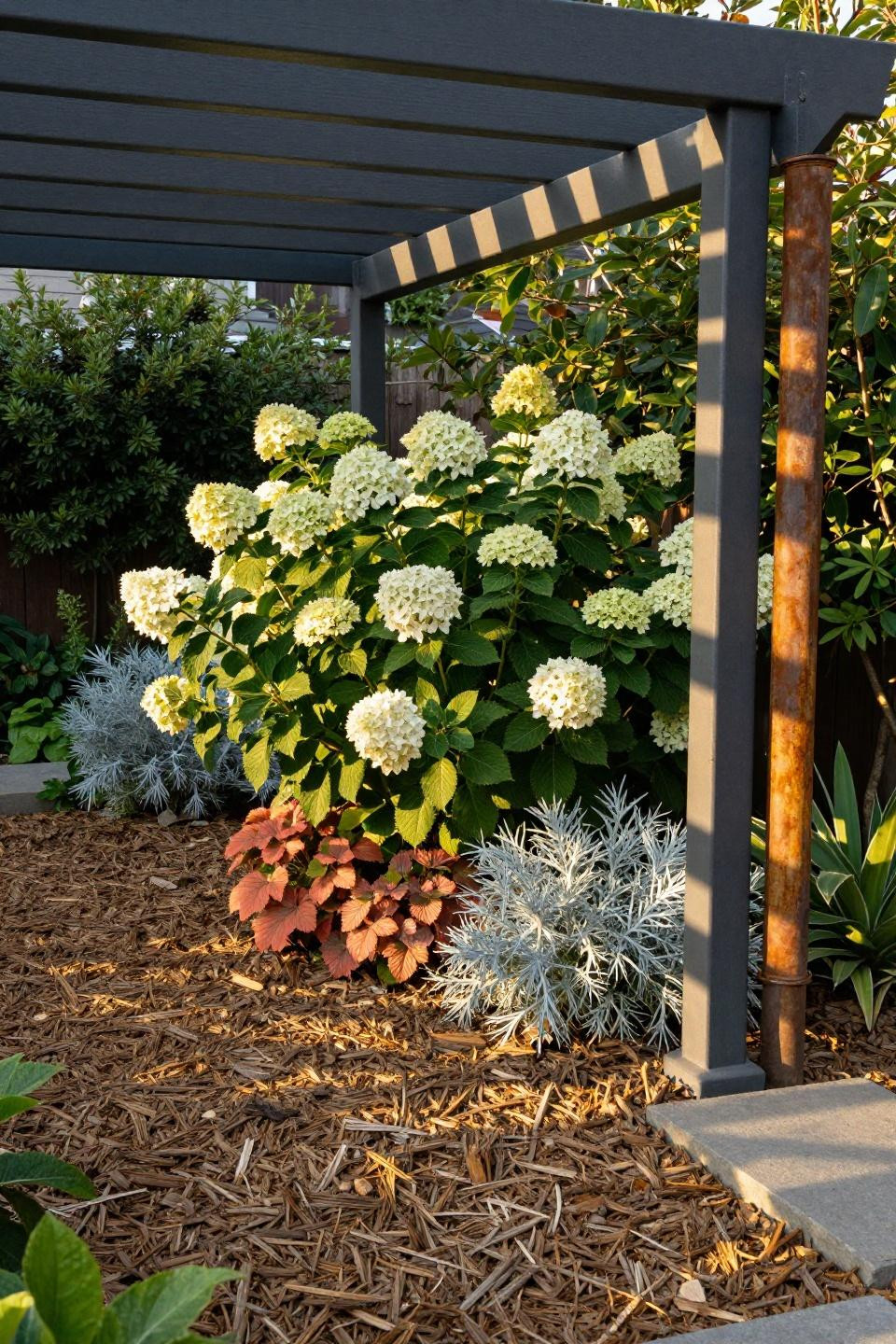
That powder-coated steel pergola creates architectural interest even in winter when everything else is dormant. Lacecap hydrangeas bloom on old wood, so you literally just plant them and walk away. The decorative bark mulch (not dyed red stuff, please) breaks down slowly and actually improves your soil.
7. Geometric Gravel Planes with Ornamental Grass Rhythm
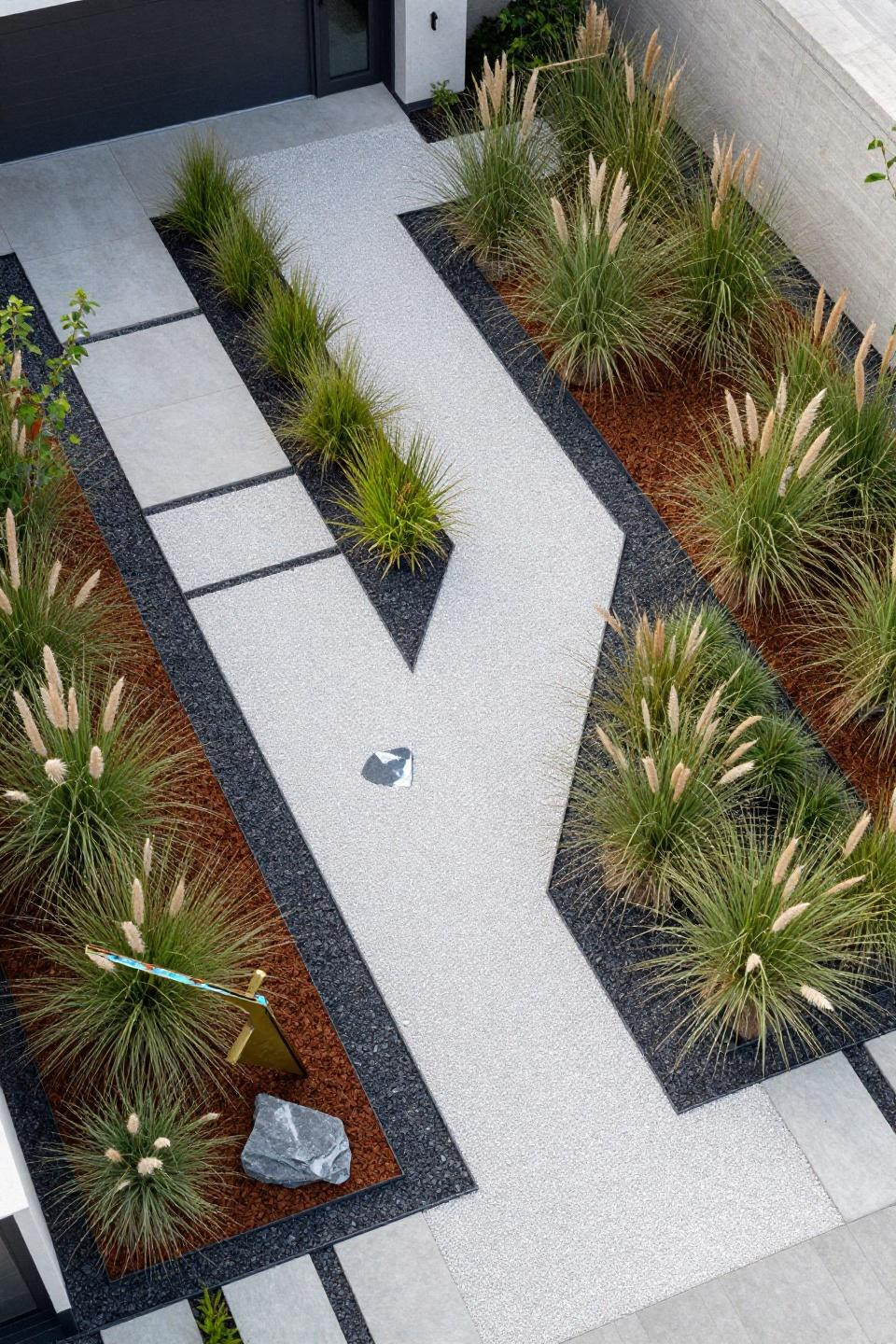
Tall miscanthus and compact festuca create that modern landscape architecture vibe without hiring a designer. The trick is planting in odd-numbered clusters (groups of 3 or 5) and leaving serious negative space between them. Those angular concrete steppers can be DIY'd with quick-set concrete and scrap lumber forms for under $100 total.
8. Industrial Corten Steel Beds with Fuchsia Astilbe Contrast
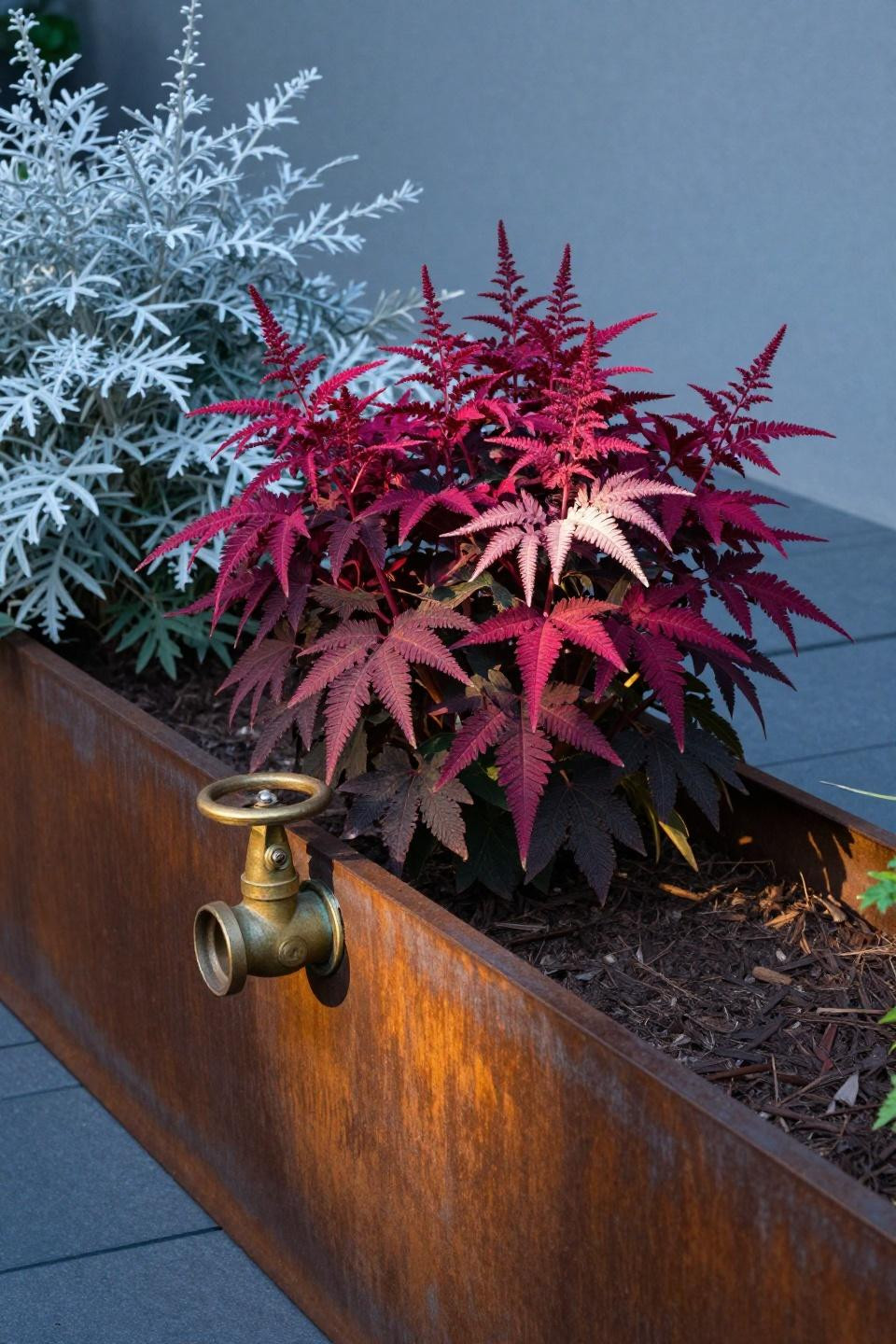
Corten steel develops that gorgeous rust patina naturally and never needs painting. Fuchsia astilbe thrives in part shade where grass struggles, so you're solving a problem instead of creating more maintenance. Honestly, I'd pair this with LED strip lighting under the lip of the raised bed for ridiculous evening drama.
9. Single Japanese Maple Specimen in Steel-Grey Gravel
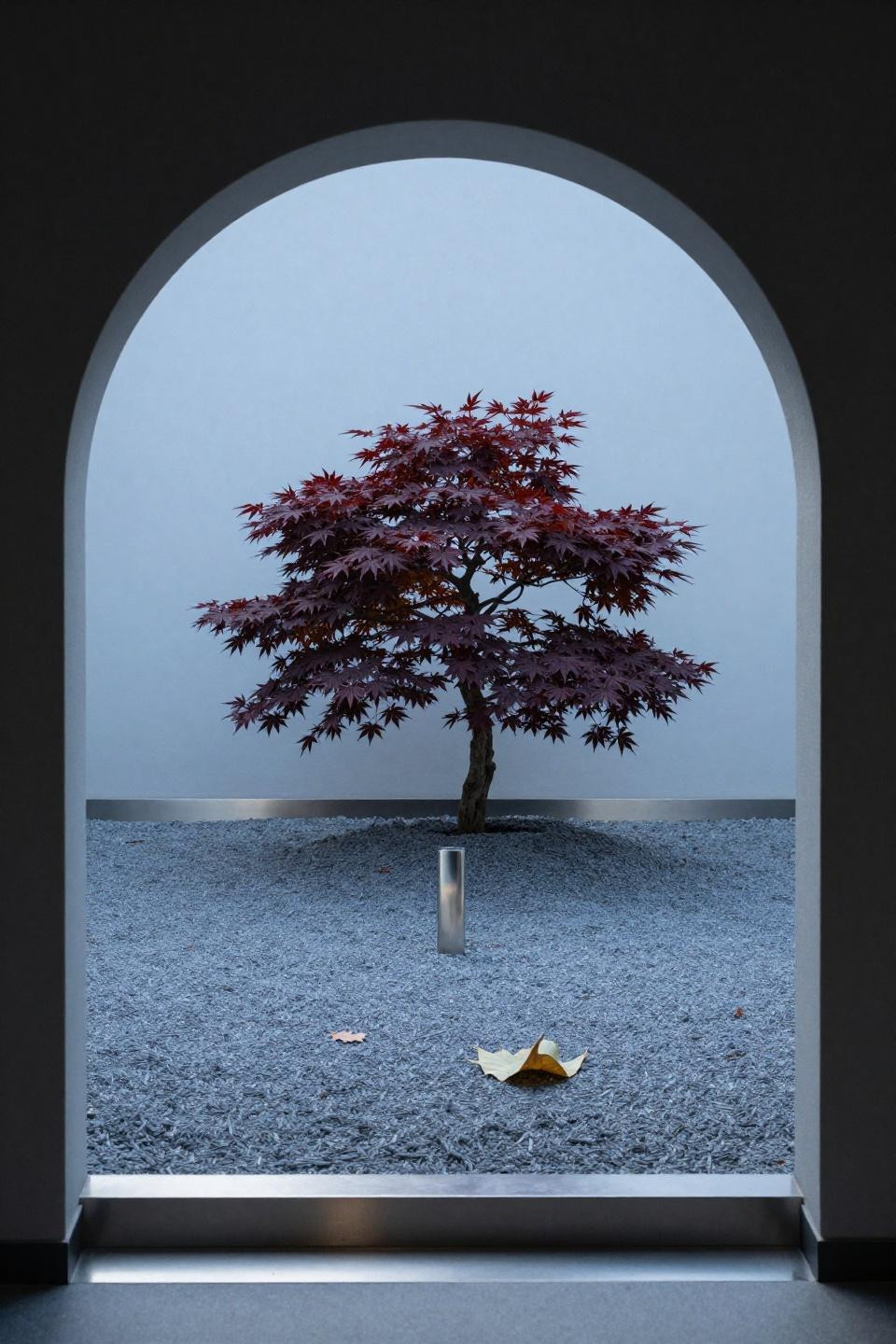
Less is genuinely more here. One spectacular burgundy Japanese maple (try 'Bloodgood' variety for reliability) in a sea of grey gravel makes a stronger statement than a dozen random shrubs. That stainless steel edging costs about $8 per linear foot at landscape supply stores and installs in an afternoon with a rubber mallet.
10. Mediterranean Entry with Dusty Miller and Limestone Steps
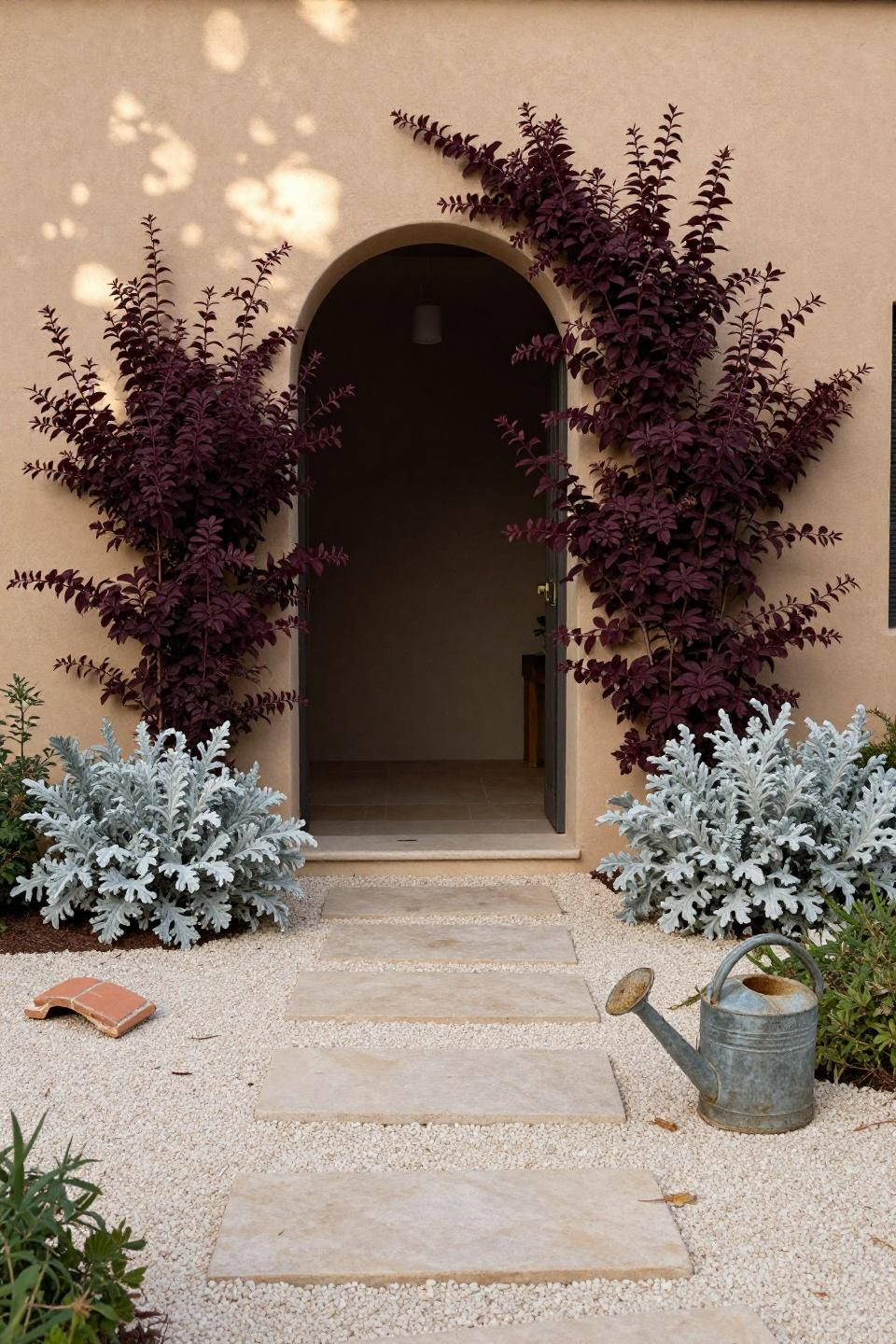
Silvery dusty miller and burgundy barberry are drought-tolerant once established, which means summer watering drops to once weekly max. The irregular limestone steppers feel way more expensive than they are because imperfection reads as authenticity. Skip the matching terracotta pots though and mix in some aged concrete for contrast.
11. Compact Townhouse Corner with Galvanized Raised Beds
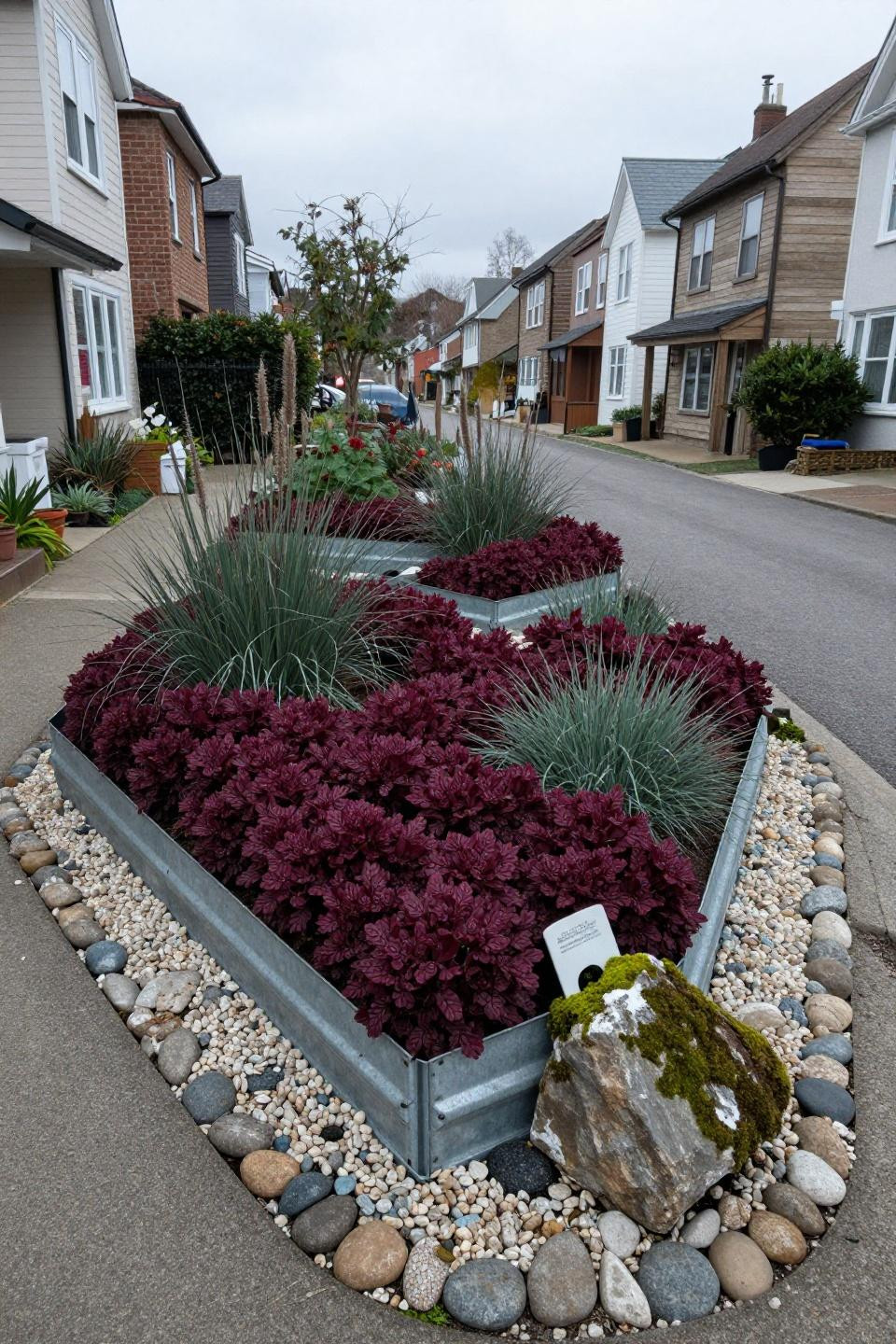
Vertical layering is critical in tight spaces. Burgundy ajuga groundcover grows maybe 4 inches tall but spreads like crazy, while architectural fescue shoots up 18 inches for that height variation. Those weathered galvanized frames develop a soft patina that looks intentional instead of rusty.
12. Low-Maintenance Prairie Garden with Golden Hour Grass Drama
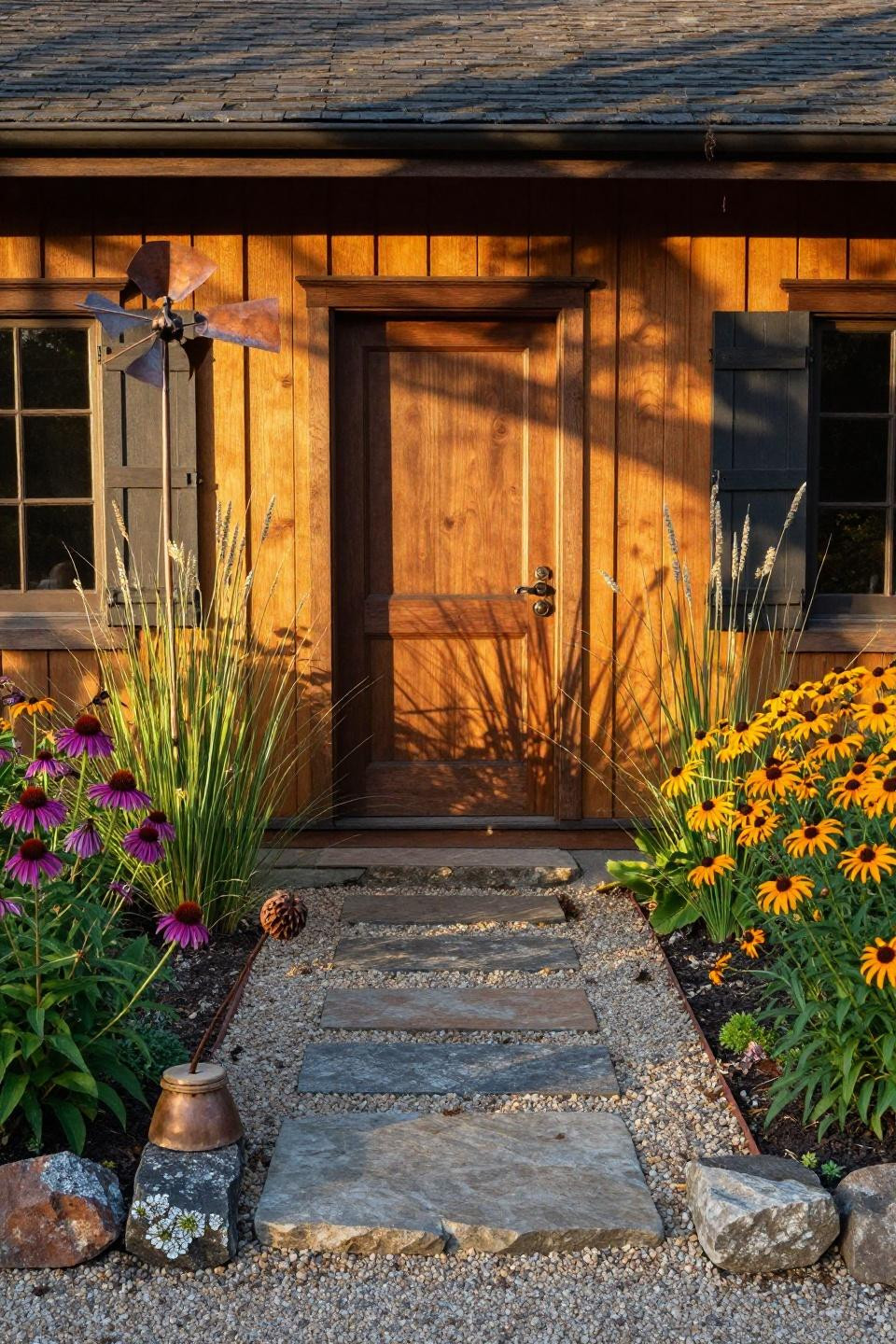
Purple coneflowers and black-eyed Susans are native perennials that actually prefer poor soil and zero fertilizer. That ornamental grass (try Karl Foerster feather reed grass) catches late afternoon light like nothing else and only needs cutting down once a year in early spring.
13. Drought-Resistant Agave Courtyard with Sedum Carpet
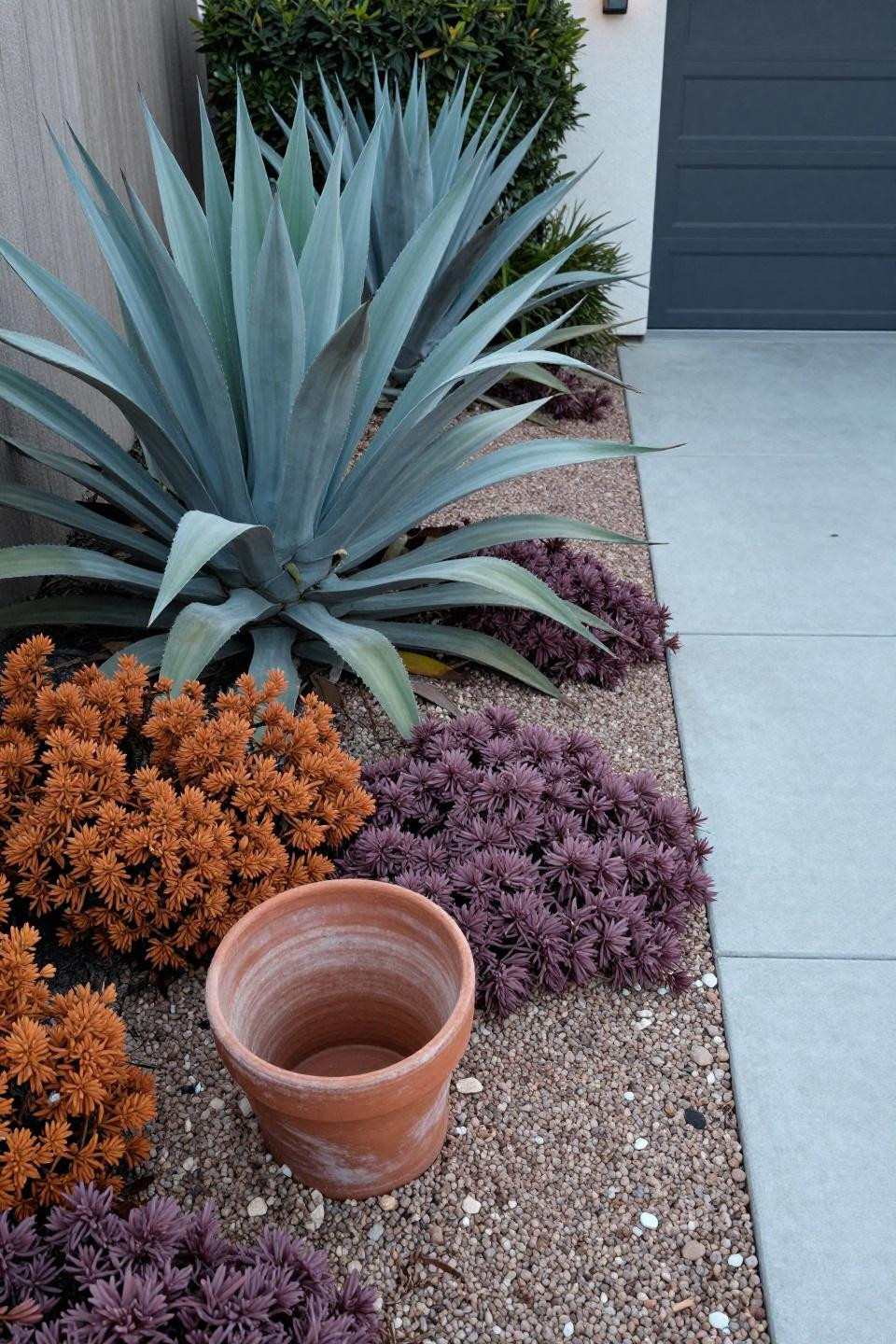
Architectural agave varieties like 'Blue Glow' stay compact (24-30 inches) and thrive on total neglect in zones 8-11. The low-growing sedum in burnt orange and dusty mauve fills gaps fast without choking out other plants, and decomposed granite drains instantly so roots never sit in water.
14. Native Meadow Garden with Steel Slatted Privacy Screen
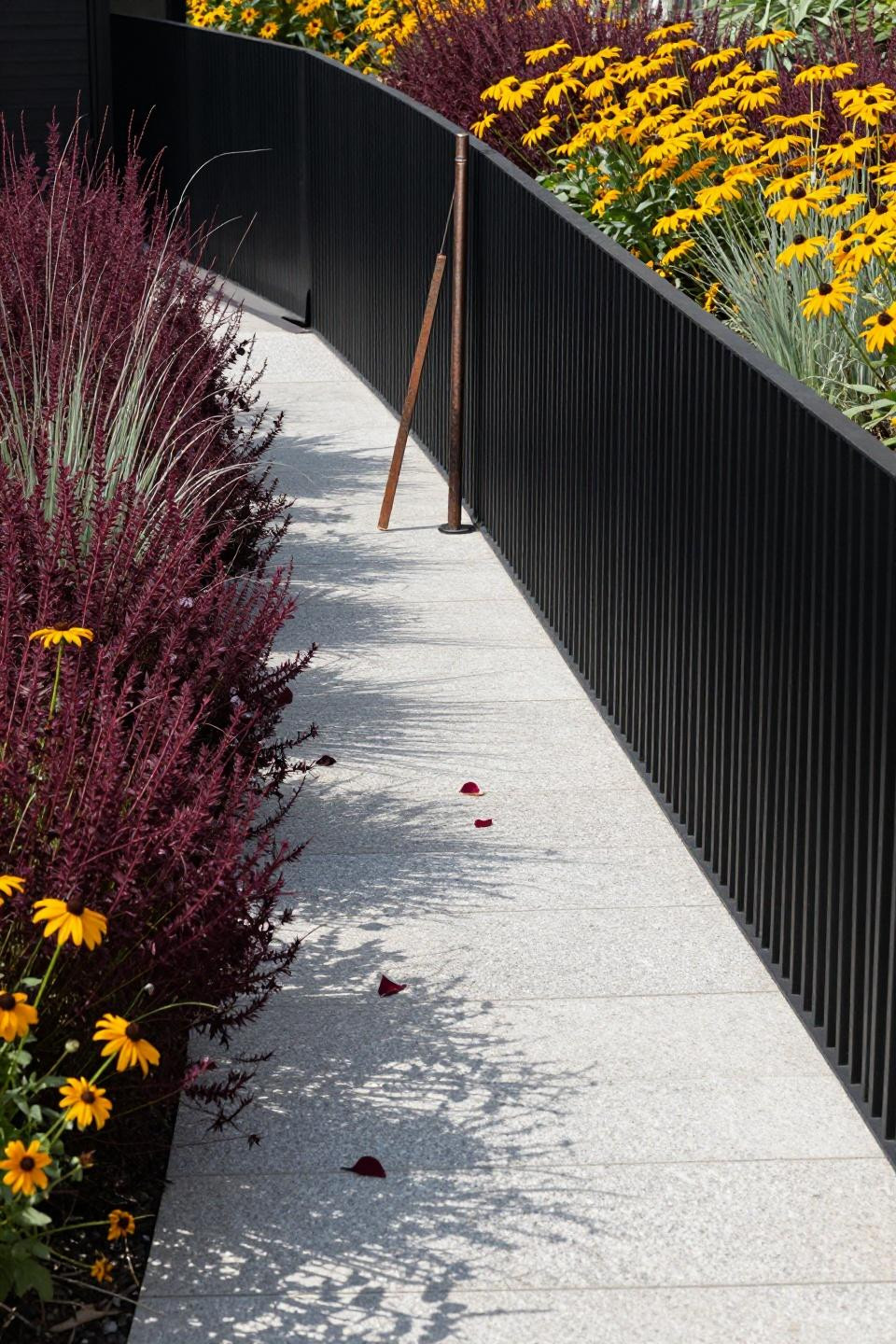
Deep burgundy monarda (bee balm) and yellow rudbeckia bloom for months straight with zero deadheading required. That blackened steel horizontal fence creates privacy without feeling fortress-like, and switchgrass softens the hard edge beautifully. Late afternoon linear shadows across the gravel are genuinely architectural.
15. Cottage Chaos Garden with Cosmos and Fennel Layers
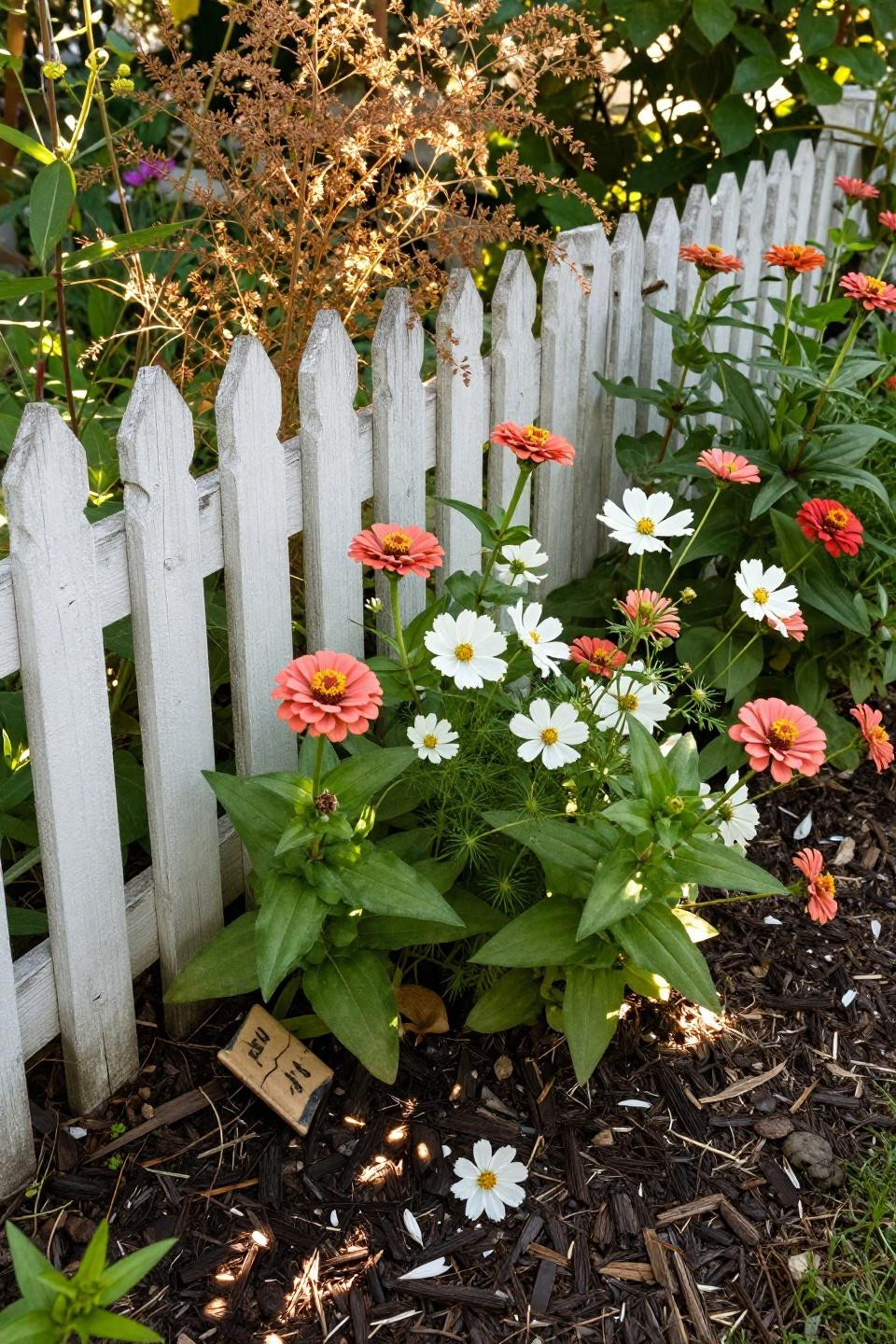
This looks wild but requires way less work than formal hedges. Coral zinnias and white cosmos reseed themselves annually, and that bronze fennel? It's technically a weed that looks expensive. The weathered picket fence adds charm even when paint is peeling because imperfection reads as character here.
16. Ornamental Grass Corner with Galvanized Edging Patina
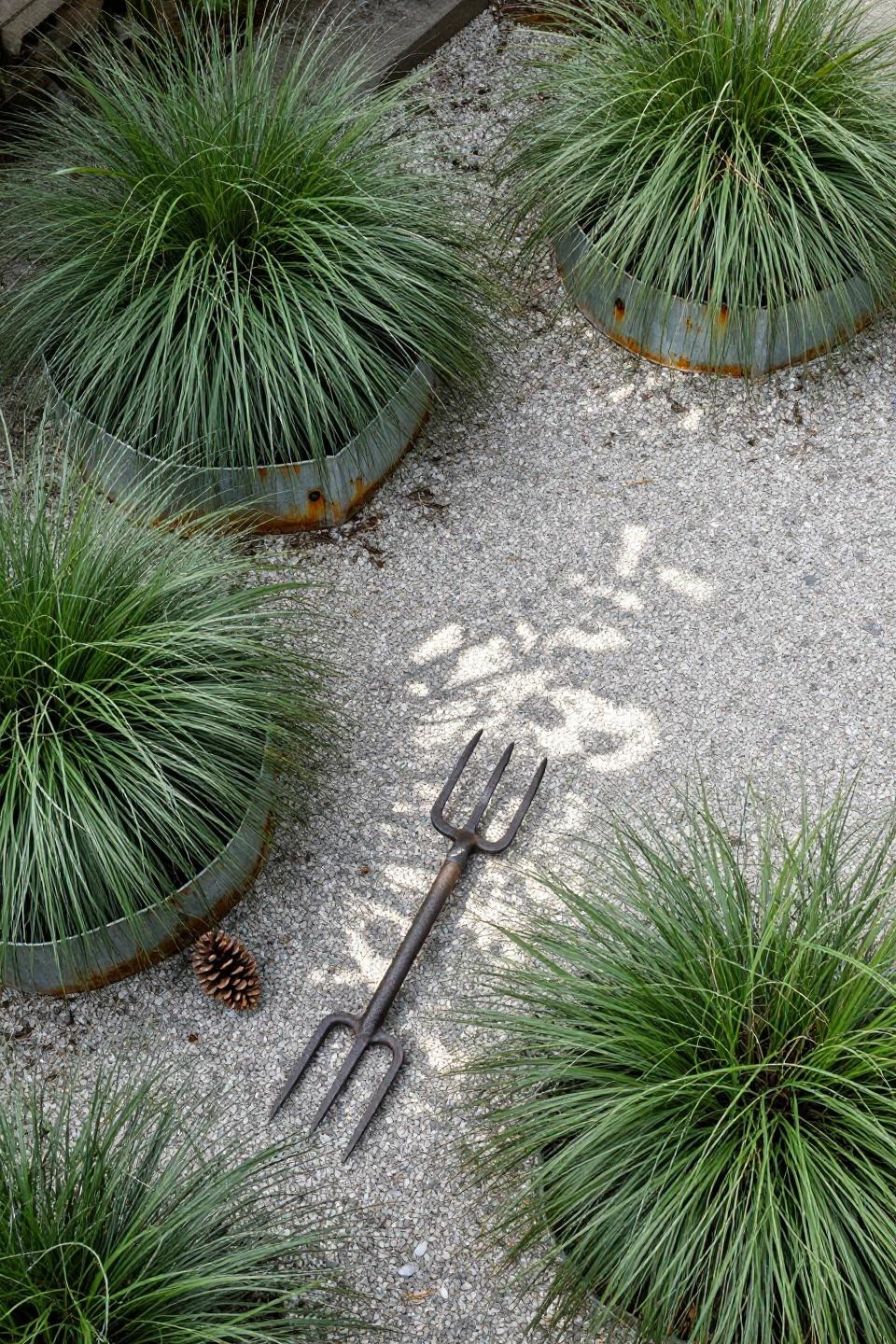
Feathery miscanthus creates year-round interest because the dried stalks look intentional all winter. That galvanized steel edging develops verdigris spots naturally in humid climates, which adds layered texture without any effort. Black mondo grass stays evergreen in zones 6-10 and spreads slowly enough that you're not constantly dividing it.
17. Modernist Succulent Terraces with Coastal Limestone
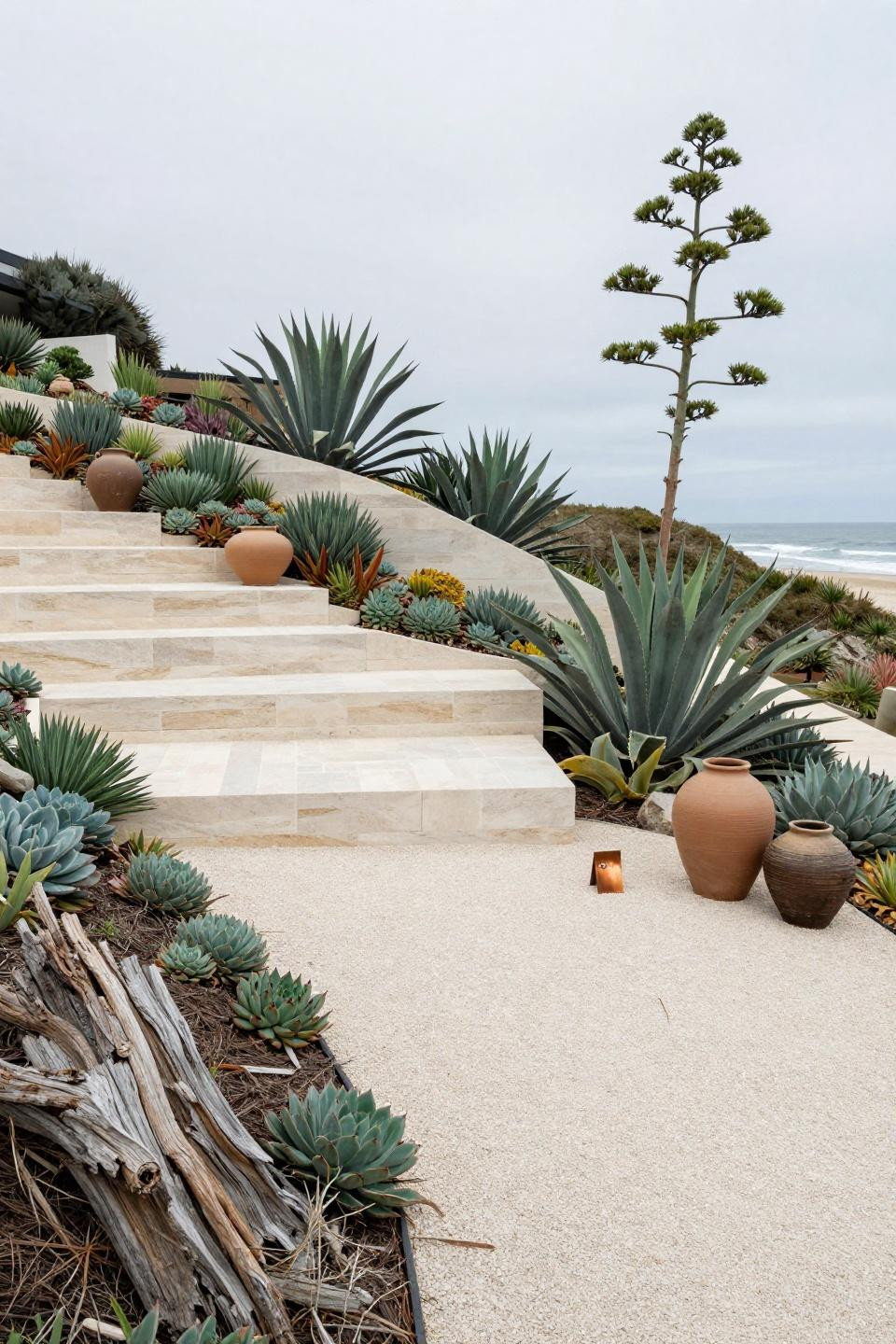
Architectural agave specimens handle full sun and sandy soil better than almost anything else. The pale limestone terraces and earth-tone ceramic vessels create a cohesive palette that feels curated. Weathered eucalyptus mulch smells amazing and repels most bugs naturally.
18. Geometric Corten Planters with Boxwood and Dusty Miller
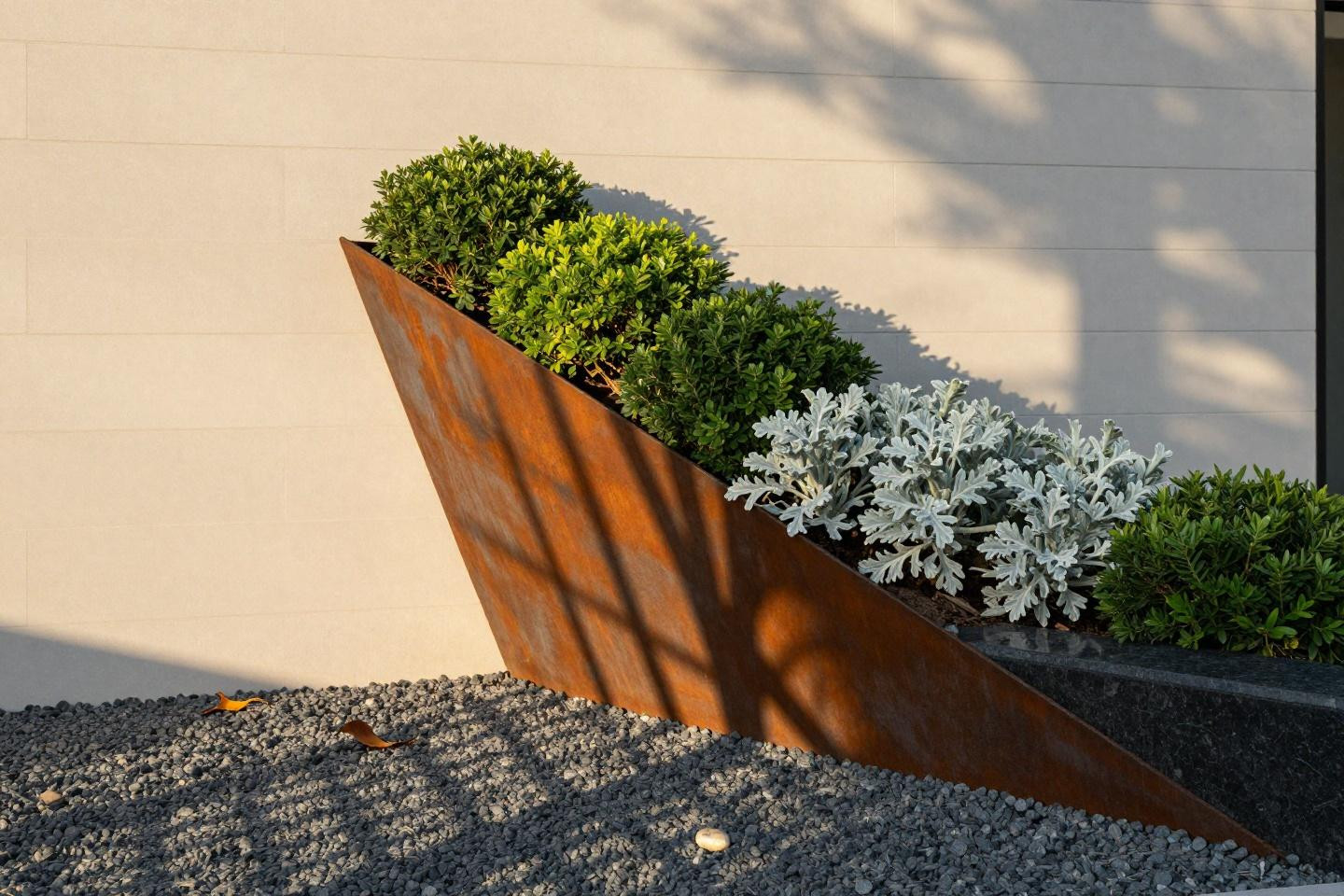
Emerald boxwood topiaries are surprisingly forgiving if you choose the 'Green Velvet' cultivar instead of formal English boxwood. The corten steel raised planters can be welded locally for around $300 each if you bring exact dimensions, which beats ordering prefab units online. That charcoal pea gravel stays cleaner than light-colored stone.
19. Compact Urban Corner with Russian Sage and Steel Trellis
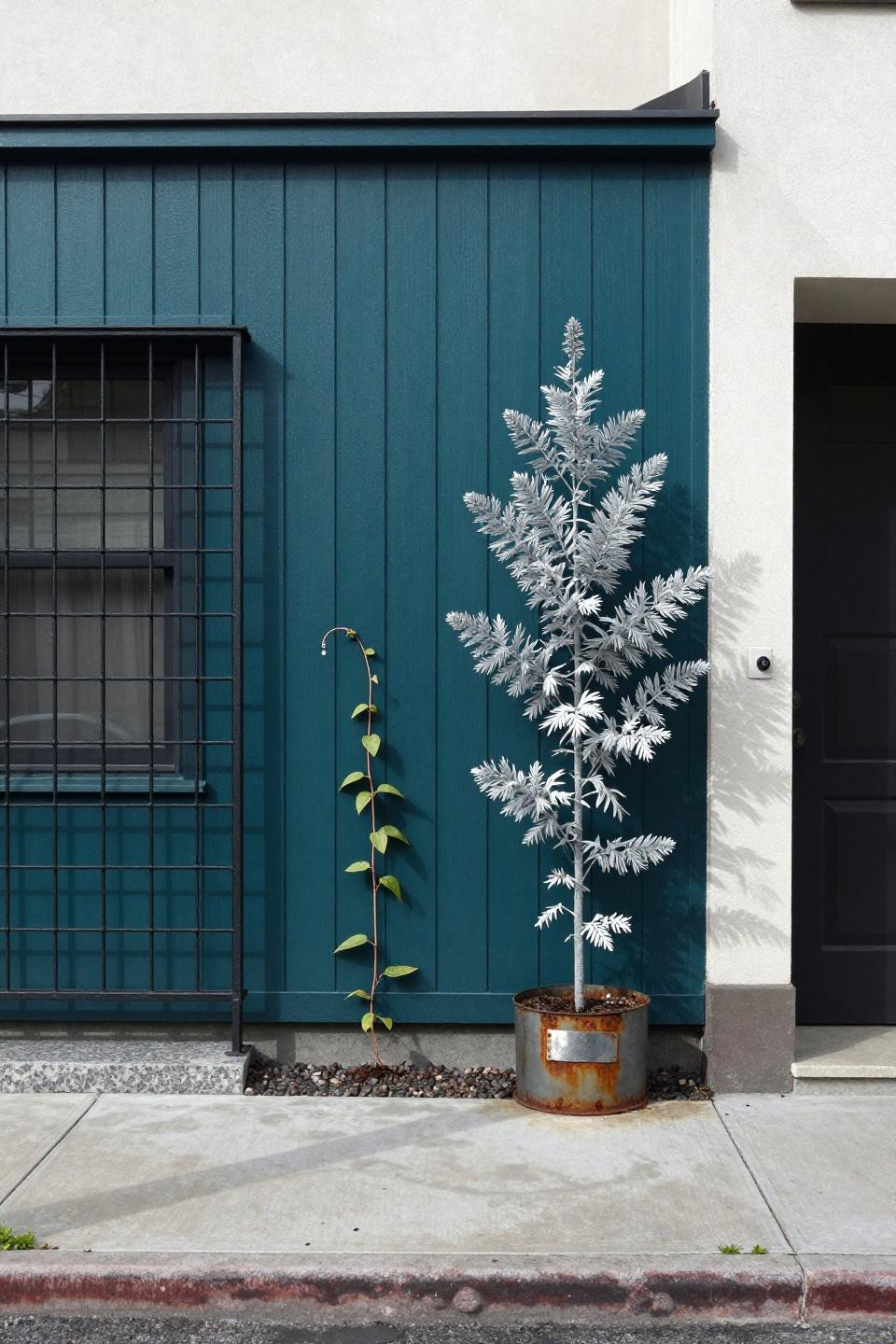
Silvery Russian sage blooms purple-blue for months and tolerates basically any soil conditions. That blackened steel grid trellis with climbing clematis creates vertical privacy on narrow lots where horizontal space is premium. The angular decomposed granite pathway costs way less than pavers and looks cleaner.
20. Layered Perennial Border with Native Stone Mulch
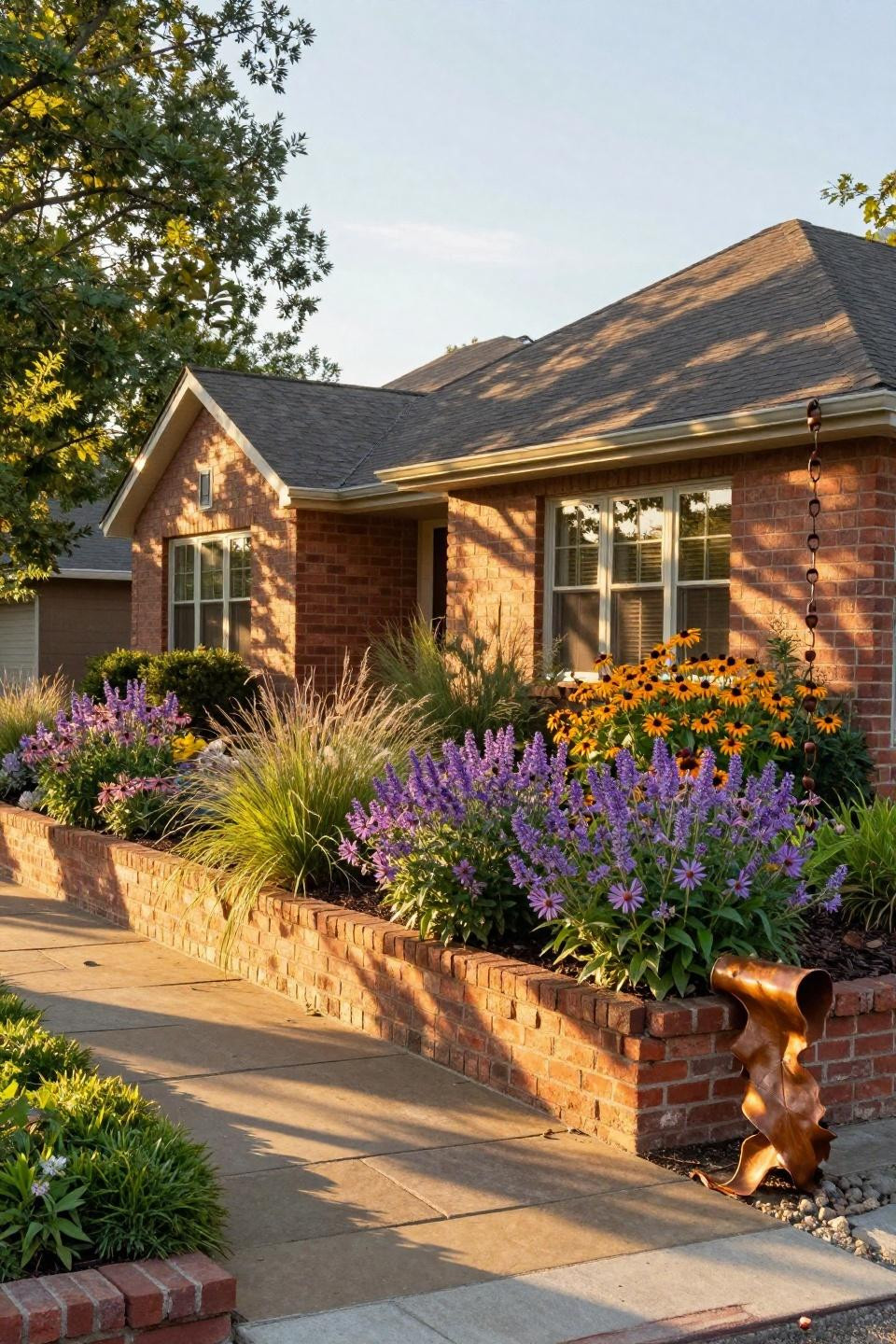
Purple coneflowers, black-eyed Susans, and ornamental grasses cascading asymmetrically create that expensive cottage garden vibe. Native stone mulch (not dyed stuff) suppresses weeds better than bark and never needs refreshing. The rustic cedar edging ages to silver-grey naturally and lasts 10+ years in direct ground contact.
21. Raised Steel Planters with Threshold Grasses
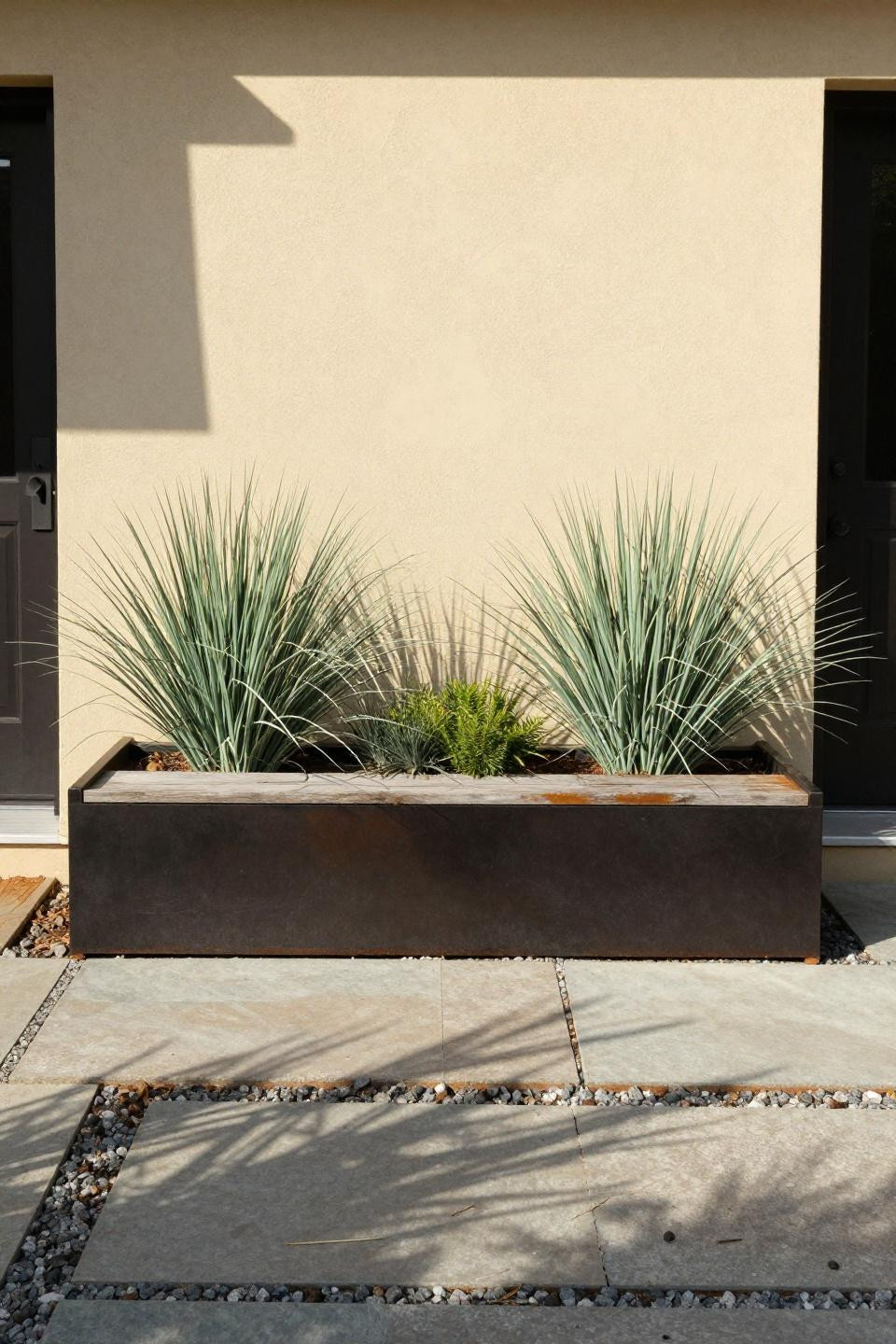
Sage-green ornamental grasses and architectural sedums in blackened steel planters give you instant architecture. The weathered wood threshold below adds warmth against industrial materials. Loose gravel catching morning light creates micro-moments of detail that feel professionally designed.
The Real Secret Nobody Mentions
The difference between landscaping that looks expensive and landscaping that looks DIY usually comes down to restraint, not budget. Fewer plant varieties arranged with actual breathing room beat crowded flower beds every single time, and hardscaping materials like steel edging or decomposed granite instantly elevate even simple plantings.
Start with one section that bothers you most. Get the hardscape right first (pathways, edging, gravel beds), then add three plant varieties maximum in that zone. You'll see more impact from one well-executed corner than from scattering improvements across your entire yard.